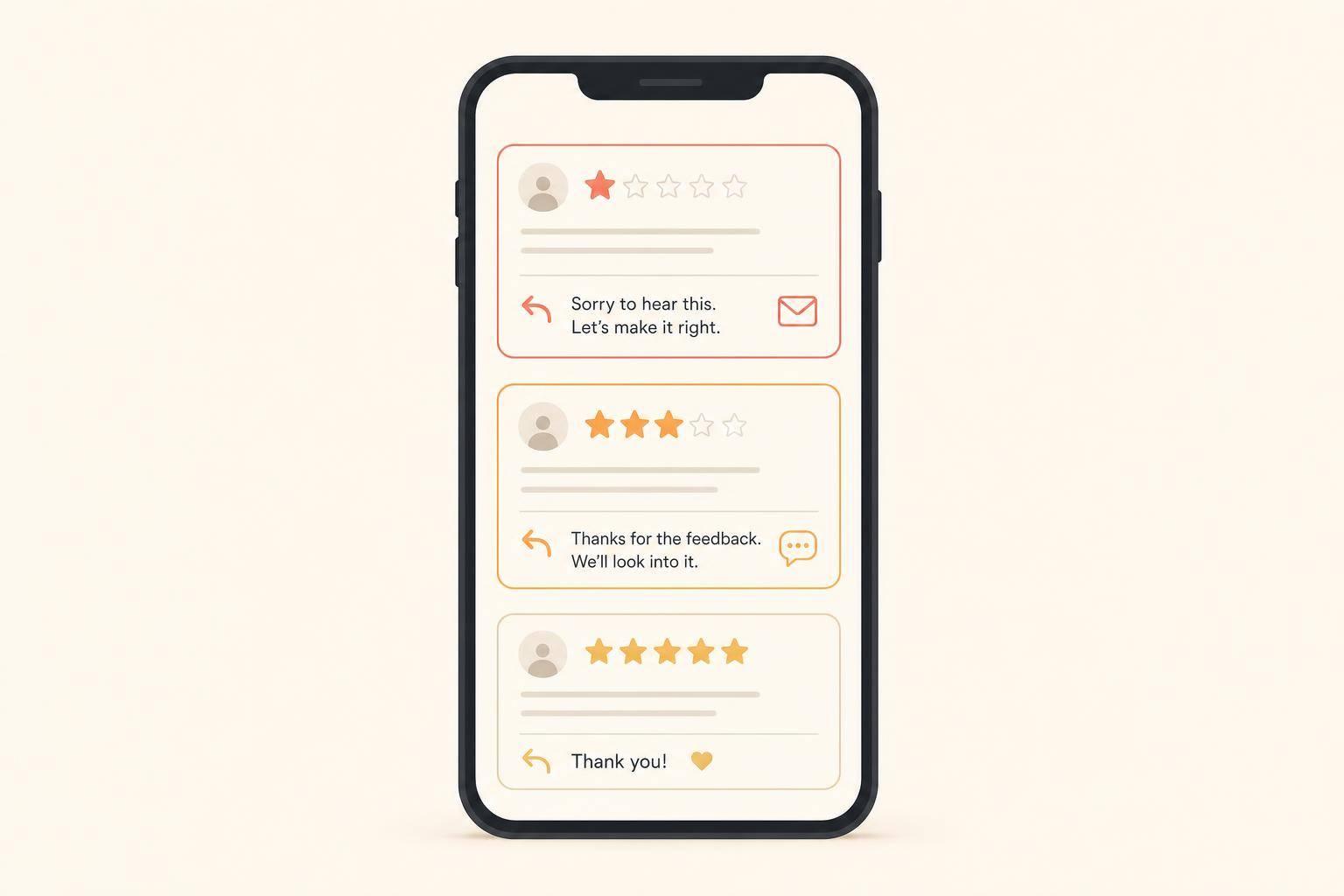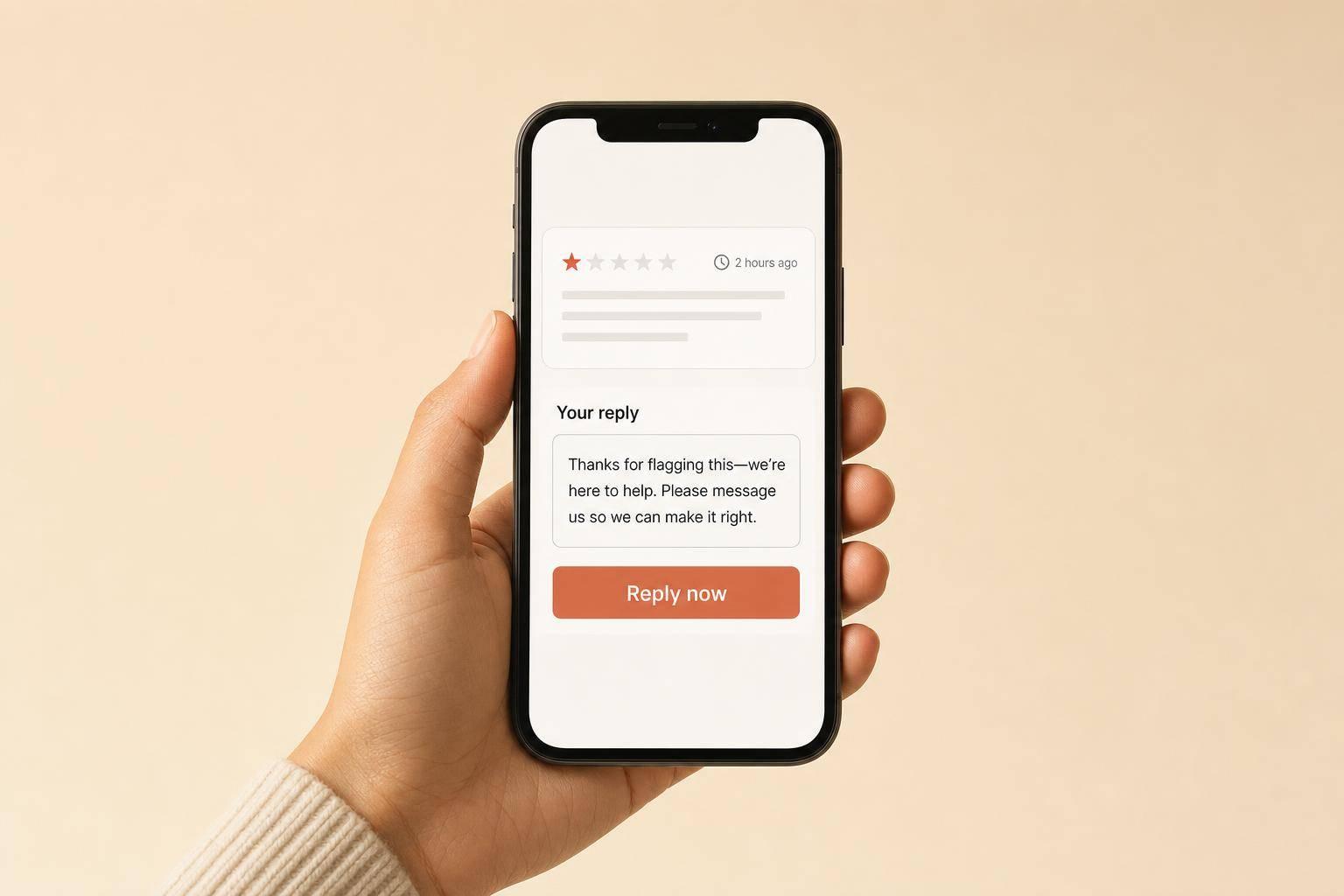
Yes. If I ignore Google reviews, I risk losing trust and leads even if my star rating looks good. The main upside is not better rankings by itself. It’s that more people feel okay choosing me after they read how I respond.
Here’s the short version:
If I only have a little time, this is the best use of it:
What matters most is simple: silence on a recent bad review can cost me calls, clicks, and bookings. A short reply can soften that and show I’m paying attention.
A quick side-by-side view:
| Approach | What people see | Likely result |
|---|---|---|
| I reply often | Active, attentive business | More trust and better chance of getting the lead |
| I ignore reviews | Unattended profile | More doubt, especially after a bad review |
So if I’m busy, I don’t need perfect coverage. I need a small system. Fast replies on the reviews most likely to hurt sales will do more than trying to answer everything at once.
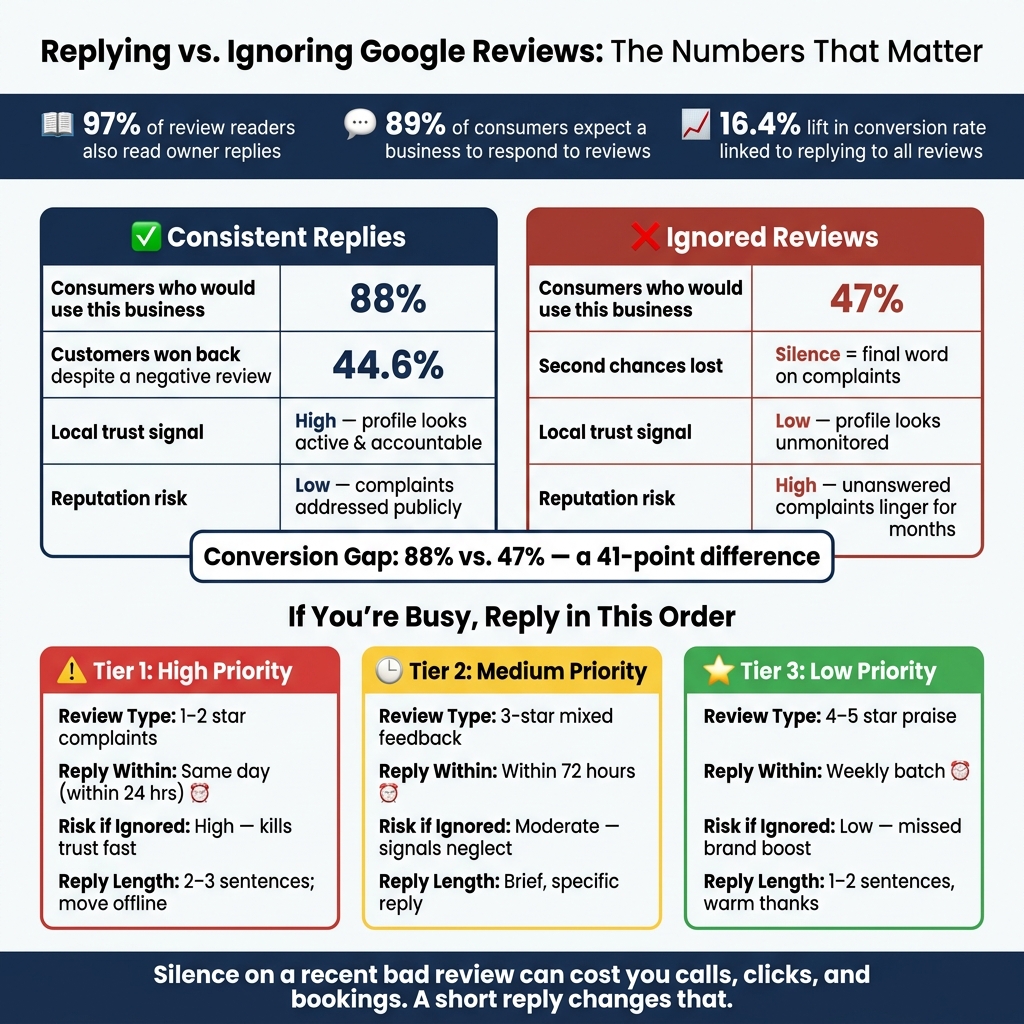
Replying vs. Ignoring Google Reviews: Stats That Affect Your Leads
Replying to reviews is not a direct Google ranking factor like relevance or distance. So if someone tells you that answering every review will shoot you to the top of local results, that’s too much hype. The effect is indirect. Still, it matters.
Steady engagement can set off a feedback loop: active profiles often bring in more reviews, and more reviews plus better ratings carry ranking weight [6][1]. Replies can also reinforce local keywords. If you naturally mention the service and location in a reply - say, a water heater in Mesa - you give Google more context about what your business does and where it does it [6][3].
Some studies connect steady replying with better local performance [2]. That makes replies less about gaming rankings and more about winning the click.
This is where replies matter most. When someone compares two plumbers, dentists, or caterers on Google, they’re not only looking at star ratings. They’re also watching how each business deals with feedback.
Responding to 100% of reviews is linked to a 16.4% increase in conversion rates [3]. That’s a big deal. A calm reply to a negative review shows future readers how you handle problems. In plain English, that’s a conversion tool, not just a polite gesture.
Visibility helps people find you; replies help them choose you.
If replies build trust, silence does the opposite. When someone lands on your Google Business Profile, unanswered reviews can make the business look checked out. The profile starts to feel unattended, and that sends the wrong message fast.
The data is pretty clear. 89% of consumers expect businesses to respond to reviews [2]. And more than half say they would not use a business that ignores its reviews [2].
Some unanswered reviews do more damage than others. The biggest problem is recent 1- to 3-star reviews, especially when they mention staff behavior, billing, or safety issues. Those are the reviews prospects read most carefully when comparing businesses. If a detailed complaint sits there with no reply, it can shape first impressions for months or even years.
A 2026 analysis of 229,882 Google reviews by UENI found that small businesses were three times more likely to reply to a five-star review (29.3%) than a one-star review (9.8%). And when owners did answer negative feedback, the average delay was 19.5 days [4]. Even one unanswered negative review can cost leads. That's why a small weekly reply habit often does more good than the occasional catch-up session.
| Consistent Replies | Ignored Reviews | |
|---|---|---|
| Local trust | High - business appears active and accountable | Low - profile looks indifferent or unmonitored |
| Lead conversion | 88% of consumers would use a business that replies to all reviews [3] | Only 47% would use one that doesn't respond at all [3] |
| Reputation risk | Managed - negative reviews are addressed publicly | High - unanswered complaints become the final word |
The conversion gap is what many owners miss. 44.6% of customers are willing to hire a business despite a negative review if the owner responds professionally [3]. Silence takes away that second chance.
That is why the goal is not perfect response speed. It is a simple system that keeps the reviews that matter most from sitting unanswered.
Once reviews start shaping trust, the next step is simple: where should you spend time first? You don’t need to answer every review the second it comes in. A basic triage system helps you deal with the ones that matter most first.
A recent one-star complaint has more weight than a fast thank-you on a five-star review. The easiest way to handle this is with a three-tier model:
| Priority Tier | Review Type | Suggested Response Time | Risk if Ignored | Ideal Reply Length |
|---|---|---|---|---|
| Tier 1 (High) | 1-2 star reviews; service complaints | Same day | High: cuts trust for future profile viewers | 2-3 sentences; take it offline |
| Tier 2 (Medium) | 3-star reviews; mixed feedback | Within 72 hours | Moderate: signals a lack of attention | Brief, specific reply |
| Tier 3 (Low) | 4-5 star reviews; short praise | Weekly batch | Low: missed chance for brand reinforcement | 1-2 sentences; warm thanks |
A short reply sent within 24 hours does more for customer perception than a longer one sent days later [1]. That’s why Tier 1 reviews deserve same-day attention.
Once you sort reviews by urgency, templates make the work much faster.
For most owners, the slowdown starts with the blank page. A small set of three or four reusable reply patterns solves that problem. These work for the most common cases:
| Scenario | Template Pattern | Example |
|---|---|---|
| Positive | Thanks + Specific Detail + Invite Back | "Thanks [Name]! Glad the same-day boiler service helped. See you next time." |
| Negative | Acknowledge + Take it offline | "We're sorry to hear this. Please contact us at [Email/Phone] so we can resolve this privately." |
| Wrong business | Brief clarification + Contact Request | "We can't find a record of this visit. Please reach out so we can investigate and help." |
The trick to avoiding that stiff, canned feel is simple: pull one specific detail from the review itself. Maybe it’s the service they mentioned, the product they bought, or the staff member they named. That one detail can make a template feel personal without taking much extra time.
For negative reviews, keep your reply short and steady. Acknowledge the issue, then move the conversation offline with a direct email address or phone number. Don’t post full surnames, appointment details, or payment information in a public reply, especially for healthcare or legal businesses [5].
Then handle the easy ones in a weekly batch.
Turn on alerts for 1- and 2-star reviews, then batch the rest into one 10- to 20-minute weekly block. Pick one person to own the task, and keep the template doc in a shared place so replies can go out fast.
Does replying to reviews matter enough to be worth the time? Yes - but mostly for trust and conversion, not rankings. In plain English: review replies help people feel better about choosing you, and that can matter more than a small rating gap. In fact, an active profile can beat a higher-rated but silent competitor [5].
The biggest danger is simple. If a recent 1-star complaint sits there unanswered for more than 24 hours, you're giving competitors a window to take that customer.
The minimum system doesn't need to be fancy:
That’s the core idea: don’t chase perfect coverage. Focus on fast replies to the reviews most likely to cost you leads.
If a Google review looks fake, don’t get into a public back-and-forth. That usually makes the situation worse. But if saying nothing might confuse actual customers, post a short, neutral reply.
Save your evidence as you go. That can include:
Then report the review through Google’s dispute process. If it keeps happening, treat it like a removal problem and escalate it, especially if the pattern looks coordinated or tied to a competitor.
Yes. Tools that connect with Google Business Profile can draft replies for you, then either line them up for one-click approval or post them automatically in your brand voice.
The best setup is usually simple: let the tool handle the first draft, then do a quick review before it goes live. That extra check helps you catch replies that sound too generic or miss the point.
If you want a more hands-off setup, turn on real-time alerts for new negative reviews and let automation take care of the rest.
For most small businesses, the owner or a senior manager should handle review responses. That helps keep the brand voice and tone consistent.
If you run a multi-location business, location managers can reply to reviews for their own sites. Then a central team can step in for escalated issues or anything more sensitive.
It also helps to draw a clear line around negative feedback: frontline staff generally shouldn’t handle negative reviews. Those replies can get tricky fast, and they often need a calmer, more measured voice.
Positive reviews are different. Other team members can reply to those, as long as they’re working from clear guidelines and know how the business wants to sound.
Discover strategies to elevate your business.