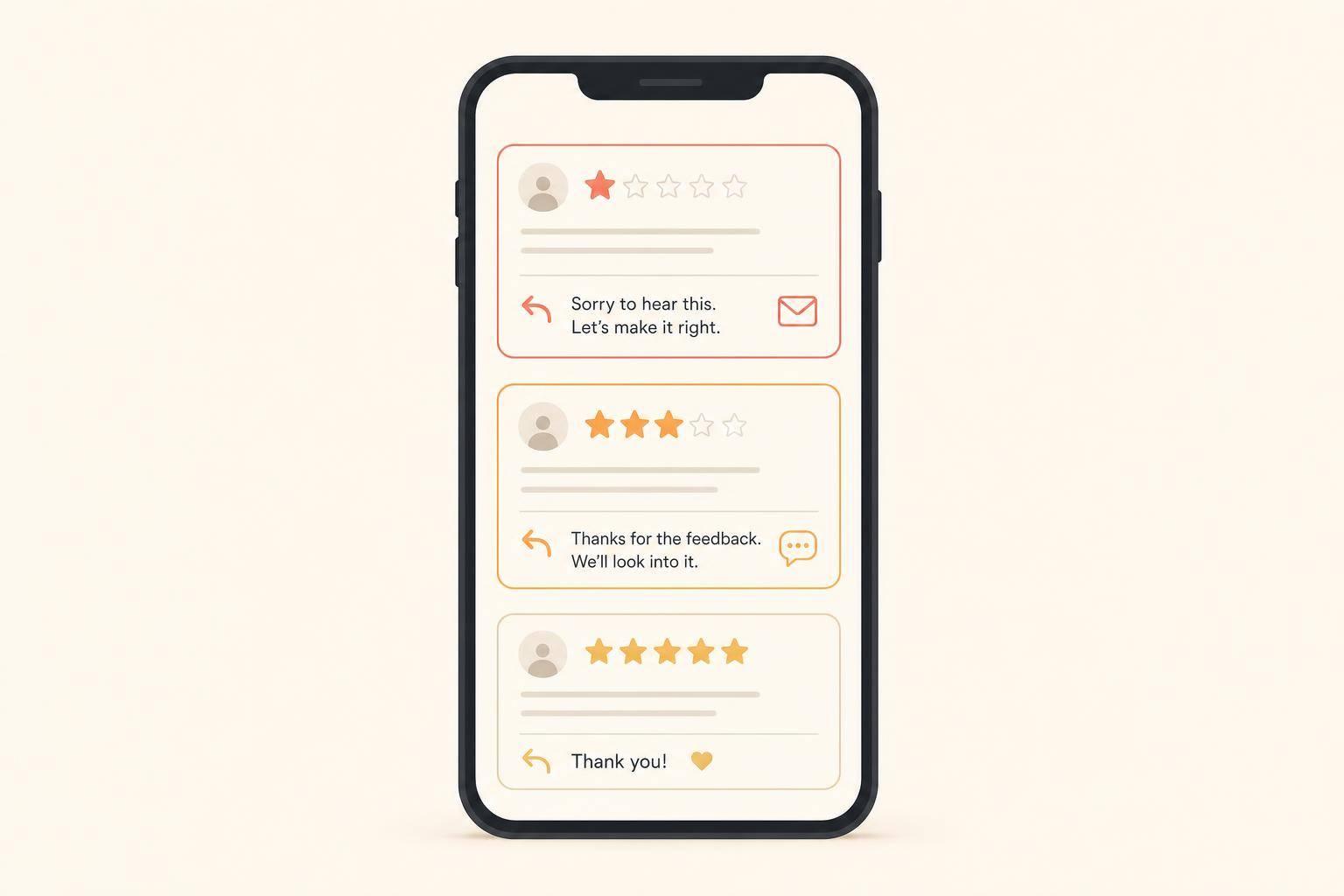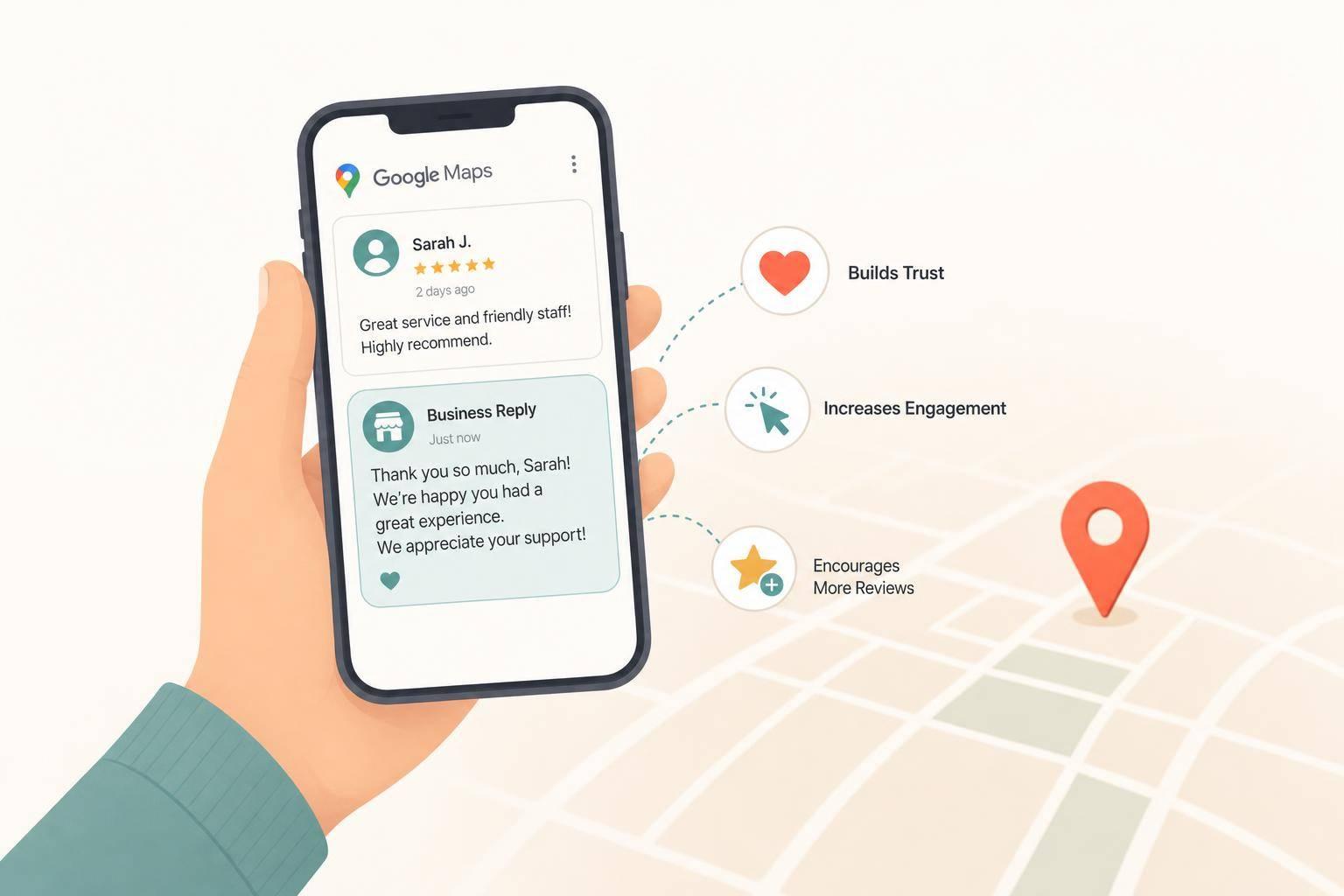
Short answer: not by themselves. If I reply to Google reviews, I should expect more help with trust, clicks, and new reviews than with direct Google Maps ranking gains.
Here’s the plain-English takeaway:
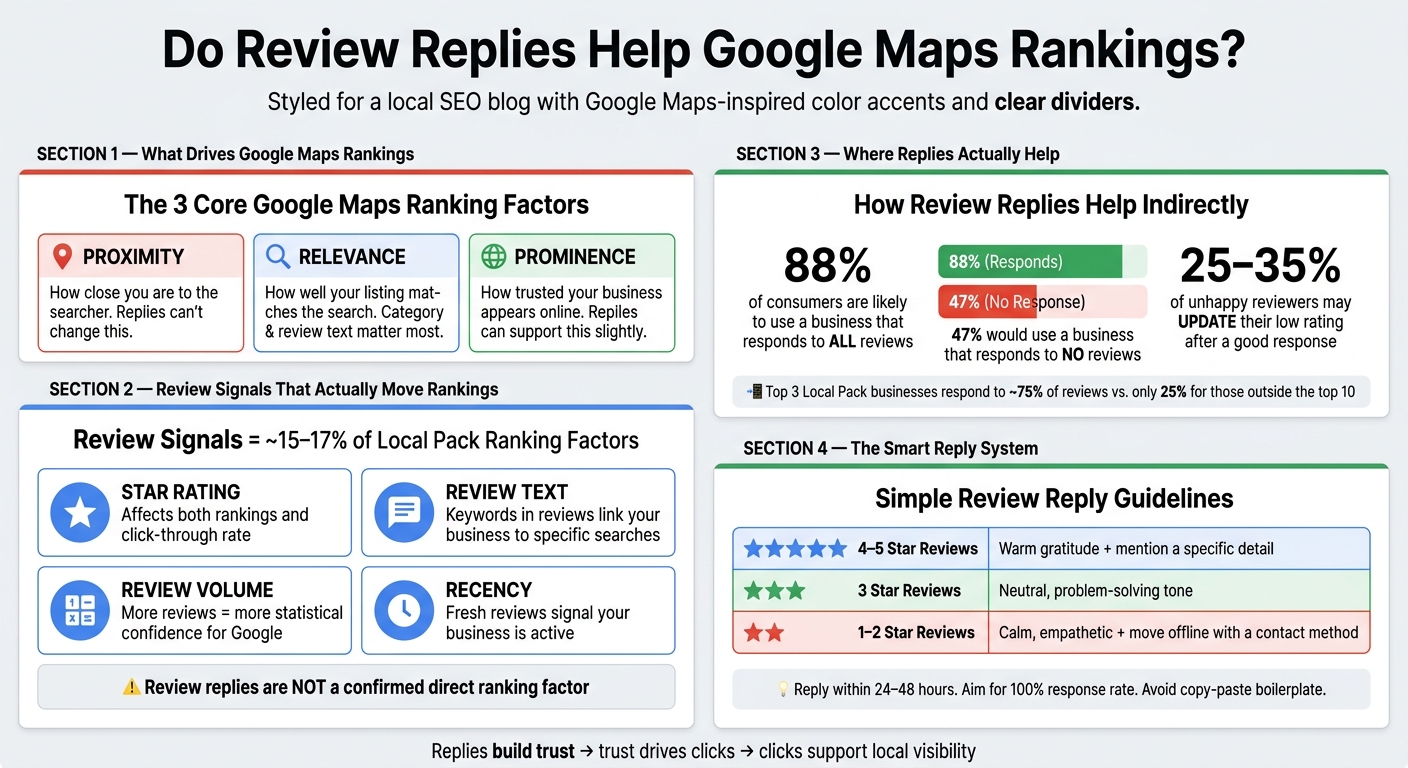
One stat stands out: 88% of consumers are likely to use a business that responds to all reviews, versus 47% for businesses that respond to none. And 25% to 35% of unhappy reviewers may change a low rating after a good response.
So if I want better local results, I should treat review replies as a customer response tool first and an SEO support task second. The main job is simple: reply often, reply politely, and use replies to help earn more of the review signals Google already uses.
Do Review Replies Help Google Maps Rankings? Key Stats & Signals
Google Maps rankings come down to three things: proximity, relevance, and prominence.
Proximity means how close your business is to the person doing the search. You can’t change that with replies.
Relevance is about how closely your listing matches what someone typed into Google. That includes your business category, services, and the keywords that show up in your profile and customer reviews. Picking a specific primary category - like "Italian Restaurant" instead of "Restaurant" - sends a much stronger relevance signal, and it’s one of the clearest things you can control [7][8][9]. Review replies may have a slight effect here, but not much.
Prominence is how well-known and trusted your business appears across the web. Google looks at things like reviews, directory listings, and links. This is where replies can help a bit. When you respond to reviews, you show that the business is active and paying attention. That can support prominence, even though it won’t change distance or category fit.
Once you look at it that way, the review signals that matter most are volume, recency, rating, and review text. Review-related signals are estimated to make up about 15% to 17% of Google’s local pack ranking factors [3][6].
Here’s the plain-English version:
That last point matters more than many people think. If several customers mention "emergency pipe repair," Google is more likely to connect your business with that phrase [3][10]. You can’t put words in a customer’s mouth, of course. But you can ask them to mention the service they used.
What you shouldn’t do is assume reply text carries the same weight. Review replies are not a confirmed direct ranking factor. So the next step is to look at whether the words in your replies change any of those signals.
Review replies do not seem to boost Google Maps rankings in a direct way. Their main job is to support trust and show that your business is active. They can't change distance or category fit, and they only play into the prominence side of local SEO. That matters, but not as much for raw rankings as for the trust signals that can lead to more clicks and more reviews.
Replies matter, but they aren't enough by themselves. They won't rescue a profile with low review volume or weak on-page SEO.
There is a clear pattern, though. Businesses in the top 3 Local Pack positions respond to an average of 75% of their reviews, while those outside the top 10 respond to only 25% [10]. But that still doesn't prove cause and effect. In many cases, businesses with higher response rates may also get better click-through rates and more conversions, and those signals can lead to more clicks and visits [10][2].
That is why replies are better viewed as a trust signal than a pure ranking lever.
Two ideas get repeated all the time in local SEO: adding city names and service terms into replies, and replying super fast to prove your business is active. The problem? There isn't much proof that either one works as a direct ranking factor.
Google can read review replies, but that does not mean those replies improve rankings [10][1]. So the smart move is pretty simple:
A good target is replying within 24 to 48 hours to help keep your listing active [10][1]. In practice, reply rate matters most. Speed helps with trust. Keywords should sound natural. Length only helps if the reply sounds like it came from a person.
Put plainly, getting your response rate as close to 100% as you can will likely do more for your listing than writing keyword-loaded replies to just a few reviews.
Next, look at how replies affect trust, conversion, and review volume.
If replies don't change rankings directly, this is where they still pull their weight. A reply won't push your listing up on its own. But it can help keep reviews coming in at a steady pace.
That matters because a steady flow of new reviews is one freshness signal Google values [11][4]. Replies don't create that signal by themselves. What they do is support the habits that lead to it: better customer goodwill, more follow-up, and more people feeling like it's worth leaving feedback.
When someone is comparing two similar plumbers, roofers, or dentists on Google Maps, the business that replies to reviews on a steady basis often gets the click. 88% of consumers are likely to use a business that responds to all of its reviews, compared to only 47% for businesses that don't respond to any [12].
That gap is hard to ignore. Those clicks, calls, and direction requests can help local visibility over time, even if replies aren't a direct ranking factor. So it makes sense to treat review replies as a conversion tool, not just an SEO play.
Trust is tested most when the review is negative. One poor reply can cancel out a lot of goodwill. And one unanswered 1-star review can shape how future customers see your business before they ever visit your site or call your team.
Between 25% and 35% of unhappy reviewers will update their original low rating if the business provides a helpful, professional response [5]. That can improve how your review profile looks and help protect the clicks and revenue you'd otherwise lose from a pile of ignored complaints.
A simple way to handle replies:
Replies do the most work when they build trust and show people you’re paying attention. So keep the system simple enough that you’ll stick with it. The goal isn’t to sound like a person - it’s to be readable like one.
For positive reviews, keep it short:
For example: "Glad the AC repair went smoothly, [Name]. Thanks for choosing us."
For negative reviews, the playbook is just as simple. Acknowledge the issue, apologize briefly, and move the conversation offline with one direct contact method [10][12].
For example: "We're sorry to hear this wasn't the experience we aim for - please reach out to us directly at [email] so we can make it right. - Sarah, Owner."
That matters because every reply is public. Future customers read them, even if they never leave a review themselves.
One thing to avoid: pasting the same reply under every review. Boilerplate responses can make it look like the business isn’t listening, both to customers and to Google [10][13].
Once your wording is simple, the main win comes from doing it on a steady basis. Reply promptly, and handle negative reviews first. Turn on email or push notifications in your Google Business Profile settings so reviews don’t sit there unread [13].
To keep the workload under control, use an AI-assisted draft-and-edit process. Let AI draft the reply, then edit it before you post. That can save a lot of time without making replies feel stiff.
If you have staff, give review responses to one person, even if it’s only part-time. Then make a short one-page tone guide so the replies stay consistent no matter who’s writing them [12].
This makes review replies a customer-first habit that can also help local visibility over time. They’re worth doing on a steady basis - not because they’ll directly move your listing higher in Google Maps, but because they build trust, improve engagement, and lead to more clicks and calls from people who feel good about choosing you.
Reply on a steady basis to build trust, get more reviews, and support local visibility. Rankings still depend most on review quality, relevance, and proximity.
Yes - try to reply to every review.
A high response rate shows your business is active and paying attention. It may also help local visibility, though it usually matters less than review volume and recency.
Replies do more than look polite. They build trust and add useful indexable content to your profile. When you can, respond within 24 to 48 hours, keep each reply personal and short, and handle negative reviews in a calm, professional way.
Yes. Responding to reviews can help you get more customer calls because it builds trust and gives potential customers one more reason to reach out.
It also shows that your business is active and paying attention. That matters. When people compare local options, a business that replies to reviews can feel more reliable than one that stays silent.
There’s also an SEO angle. Extra engagement, including clicks and calls, can send positive signals to Google. Over time, that may help support better local rankings, which can mean more visibility and more chances for customers to find and call your business.
For Google Maps rankings, proximity to the searcher matters more than anything else. In fact, it accounts for about 96% of ranking variance in local map pack results.
That means if two businesses look similar on paper, the one closer to the person searching will often win.
Other strong signals include:
Review replies can help, but mostly in an indirect way. They're secondary to relevance, distance, and prominence.
Discover strategies to elevate your business.