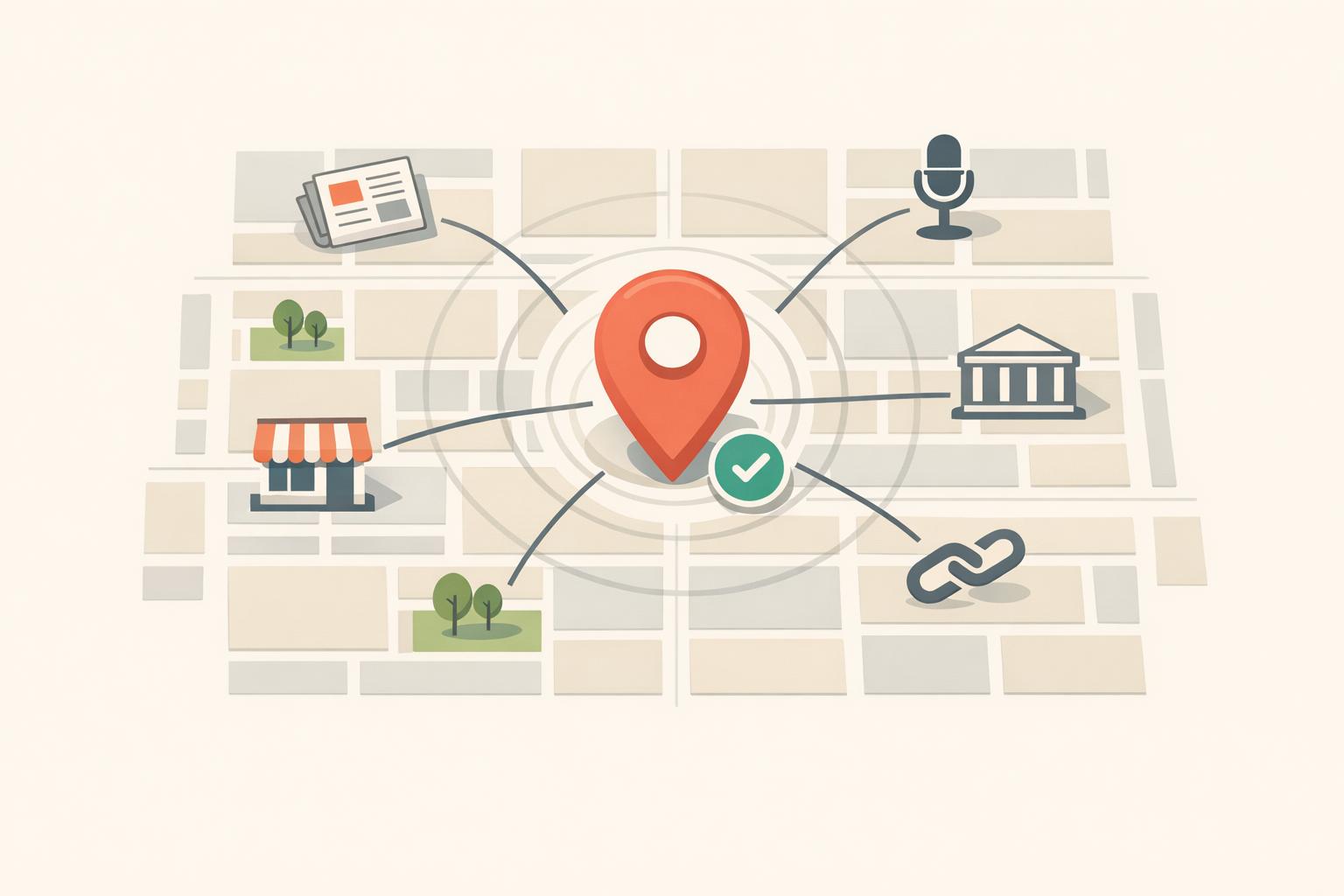
Digital PR is key to boosting local SEO. It helps businesses gain online mentions in trusted sources like local news outlets, blogs, and podcasts, improving visibility and credibility. Here's why it matters:
Digital PR builds authority through backlinks, media mentions, and improved E-E-A-T (Experience, Expertise, Authoritativeness, Trustworthiness) signals, which Google values highly. It also strengthens your Google Business Profile, drives local traffic, and encourages customer reviews.
Get started:
Digital PR isn’t just about SEO - it’s about becoming a trusted name in your community.
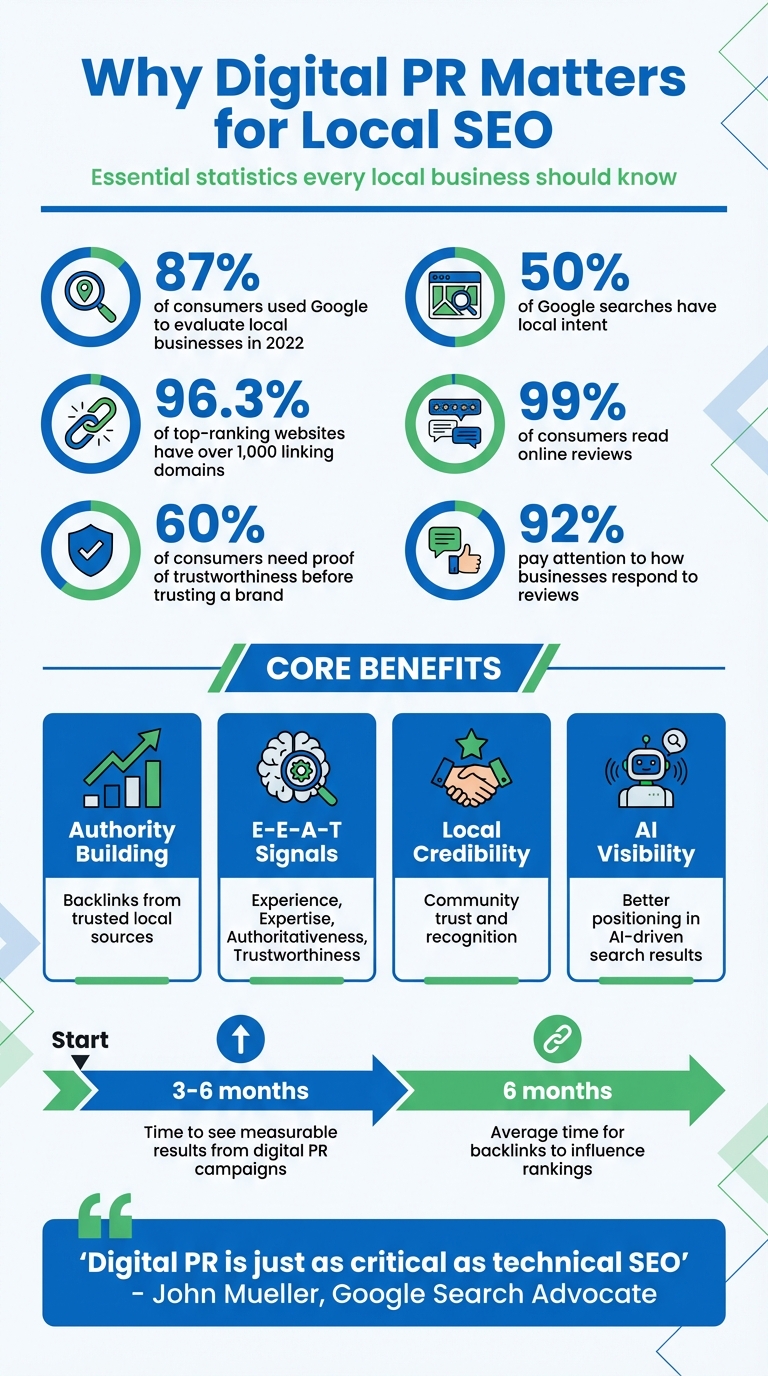
Digital PR Impact on Local SEO: Key Statistics and Benefits
Digital PR goes beyond basic marketing by helping local businesses establish a strong reputation that both customers and Google recognize. When your business gets mentioned by local news outlets or industry publications, it’s like receiving a stamp of approval from trusted sources. This kind of validation is especially important for small businesses navigating competitive markets.
Backlinks from respected local and industry websites act as endorsements, signaling your business’s credibility and trustworthiness [3]. Digital PR focuses on creating newsworthy content that attracts these valuable links.
Here’s an eye-opener: 96.3% of websites ranking in the top ten search results have over 1,000 linking domains [3]. But don’t let that number intimidate you - quality beats quantity. For example, a B2B healthcare software provider saw a 219% year-over-year traffic increase after earning just six highly relevant backlinks from local publications [7].
For small businesses, the most impactful links come from sources your customers already trust, like local newspapers, Chamber of Commerce websites, or niche blogs in your industry. These links not only boost your search rankings but also bring geographic signals that strengthen your local SEO. Even brand mentions without direct links can help. Google’s Knowledge Graph uses these citations to better understand your business.
By earning these quality backlinks, you also enhance your E-E-A-T (Experience, Expertise, Authoritativeness, Trustworthiness) signals, which are critical for local search success.
Google’s E-E-A-T framework evaluates a website’s credibility, and digital PR is a powerful way to improve these metrics. Why does this matter? Because nearly 60% of consumers need proof of trustworthiness before they’ll trust a brand [7]. Editorial coverage - like being quoted in articles or featured for your initiatives - provides that proof and strengthens your standing in local search results [6].
The inclusion of "Experience" in Google’s guidelines gives local businesses an edge. Let’s say a roofing company showcases case studies from neighborhood projects in local media. That’s the kind of authentic, location-specific content that helps them stand out from generic competitors [8].
| E-E-A-T Component | How Digital PR Enhances This | Local SEO Impact |
|---|---|---|
| Experience | Features on local projects in community publications | Demonstrates real-world service to local customers |
| Expertise | Staff quoted as experts in local news or blogs | Positions your team as trusted authorities in your area |
| Authoritativeness | Backlinks from local organizations like Chambers of Commerce | Signals your role as a community leader |
| Trustworthiness | Mentions in reputable publications | Provides third-party validation of your legitimacy |
To make the most of E-E-A-T, pitch stories using actual experts from your team instead of generic representatives. As Rebecca Cooley, a former journalist, explains:
"Genuinely specialist spokespeople... will also be able to provide more in-depth detail that drives the authority and value of the contribution beyond what anyone could Google" [6].
Adding detailed author bios with credentials and certifications to your website can further enhance your authority when working with journalists [6].
While E-E-A-T strengthens your online visibility, local media features also help you win over your community.
Digital PR doesn’t just boost your online presence - it builds trust where it matters most: in your local community. When people read about your business in a neighborhood newspaper or hear you mentioned on a local podcast, it removes the doubt that often comes with discovering a new business online. A story in a well-read local outlet can lead directly to more foot traffic or service inquiries.
The hyper-local focus of digital PR ensures the awareness you generate translates into tangible results. For instance, a feature in your city’s main news outlet can drive customers to your door or prompt calls for service [1].
This local credibility also plays a vital role in the era of AI-driven search. Platforms like ChatGPT and Google’s AI Overviews rely on reputation signals from trusted sources when recommending businesses [3]. Without mentions in local media, even a perfectly optimized website may struggle to appear in these recommendations - highlighting the importance of building local authority.
Over time, each mention in local media has a snowball effect. As journalists and bloggers recognize your business as a reliable part of the community, it becomes easier to secure additional coverage. For small businesses looking to enhance their local credibility through digital PR, tools like Humble Help (https://humblehelp.studio) offer practical solutions tailored to your needs.
Digital PR can be a game-changer for small businesses, especially when it comes to boosting local SEO. By focusing on creative and cost-effective strategies, you can build authority and visibility in your community.
Local news outlets are often stretched thin, making them eager for ready-to-publish stories. George Zlatin, Co-Founder of Digital Third Coast, highlights this opportunity:
"Local news outlets are understaffed and under-resourced, which makes journalists especially eager to use content with a compelling local storyline - less legwork means a faster publishing cycle." [10]
To take advantage of this, create data-driven stories with a local twist. For example, Digital Third Coast used Google Trends to analyze "Super Bowl party snacks" by state, which earned their client over 150 backlinks from high-authority sites [10]. Similarly, Go Fish Digital’s "The Most Googled Pie In Every State" study earned backlinks from 112 referring domains [2].
You can replicate these successes by tapping into free data sources like the US Census Bureau or the Bureau of Labor Statistics. Filter national data by city or county to create rankings or lists that grab local reporters' attention. A subject line like "[New Data] New Jersey #1 Most Bagel-Crazy State" can make your pitch stand out [10].
Another route is becoming a go-to expert for journalists. Use tools like HARO (Help a Reporter Out) or monitor the #journorequest hashtag on X (formerly Twitter) to find opportunities to provide quotes or insights. For instance, a plumber could offer tips on preventing frozen pipes during winter, or a gym owner might discuss fitness trends in the area. Christopher Long, Senior SEO Manager at Go Fish Digital, advises:
"Do as much upfront work for the journalist as possible. This means that your outreach needs to be short, direct, and easy to read." [2]
Don’t forget to follow up on your pitches - three follow-ups can increase response rates by 22% [9]. Also, consider adding a press page to your website with a clear brand story, high-quality logos, and contact details to make it easier for journalists to feature your business [9].
Forget big-name influencers - local influencers with smaller followings (10,000–50,000) often deliver better engagement at a lower cost [12]. Look for food bloggers, community advocates, or neighborhood personalities whose audiences align with your target customers.
Collaborating with other local businesses can also expand your reach. Think about teaming up with non-competing businesses that share your customer base. For example, a real estate agent could partner with a mortgage broker, or a gym could collaborate with a nutritionist [11]. These partnerships can lead to natural backlinks through shared referral pages, co-hosted events, or cross-promotional campaigns on social media and email.
Combining influencer partnerships with creative storytelling can significantly boost your local visibility.
Stories that connect your business to topics people already care about are the ones that get noticed. Jumping on trending events, or "newsjacking", can deliver quick wins. For example, a cleaning company might share post-holiday organization tips in January, or a plumber could offer Halloween advice on avoiding clogged drains from costume debris [1][3].
Community-focused stories also resonate well. Consider sponsoring local charity events, hosting neighborhood festivals, or addressing specific community needs. Even playful PR stunts can work. For instance, Wheat Thins announced a fictional "Wheat Thiccs" product in April 2024, which generated buzz and engagement [3]. While this was a national campaign, the same creative thinking can be applied locally to attract attention.
Using visuals like maps or surveys can make your stories even more engaging and relevant. Tools for budget-friendly surveys can help uncover local trends and turn them into compelling narratives [10].
John Mueller of Google emphasizes the importance of these efforts:
"[Digital PR is] just as critical as technical SEO" [3].
These tactics aren’t just optional - they’re essential for building the authority needed to succeed in local search.
For small businesses ready to integrate these strategies, platforms like Humble Help offer simple tools and guidance to help you grow your online presence effectively.
Digital PR can amplify every aspect of your local SEO efforts. By earning media coverage and backlinks, you strengthen location pages, enhance your Google Business Profile (GBP), and even inspire more customer reviews. Let’s dive into how you can blend digital PR with your local SEO strategy for maximum impact.
One powerful way to boost your local SEO is by using digital PR to drive links directly to your location-specific pages instead of just your homepage. While homepages are often easier to link to, targeting deeper, location-based landing pages ensures that authority flows to the pages that actually convert customers [1][3].
To make this work, tailor your PR campaigns by region. A single national data study can be broken down into multiple local stories. For instance, you could pitch a story like, “Texas’s favorite pie is pecan,” to outlets in Texas, directing links to a Texas-specific page.
Free resources like the U.S. Census Bureau or Bureau of Labor Statistics can help you create city- or county-specific rankings. When pitching, segment your media lists by location and personalize subject lines with the city or state name to boost open rates.
Interactive maps are particularly effective for earning links. Unlike static screenshots, they compel media outlets to link back to your location-specific pages, ensuring that link equity flows to the pages that matter most for driving conversions [3]. Plus, these localized backlinks don’t just help individual pages - they also strengthen your overall business profile.
Digital PR can significantly enhance your GBP prominence, which is a key factor in local search rankings. When local news outlets or industry publications mention your business, Google interprets this as a signal of trust and authority [14][4].
Since 2026, Google has shifted its focus to "Popularity" metrics for ranking in local search. This means engagement signals like photo views, Q&A clicks, and direction requests now carry more weight than traditional web presence [5]. Digital PR campaigns can drive traffic to your GBP, boosting these metrics and improving your visibility in local search results.
Moreover, these PR mentions feed into AI-powered search systems. For example, Google’s Gemini AI uses GBP data to create summaries, and digital PR ensures your business is mentioned in authoritative contexts [5][4]. This helps AI systems associate your brand with local expertise and services.
Alice Wicker, Content Executive at Reboot, captures this perfectly:
"Local digital PR can be the booster jet that launches your client's business from the shadows to the top of the local search results." [1]
To make the most of this, ensure PR mentions link to location-based landing pages rather than just your homepage [1][13]. Target highly trusted sources like local Chamber of Commerce websites or regional news outlets, which often include your NAP (Name, Address, Phone) details [13].
Digital PR campaigns naturally encourage customers to leave reviews and create user-generated content. Being featured in local media or a "Best of [City]" guide increases brand awareness, drawing in new customers who are more likely to leave feedback [1].
Product PR is another effective tactic. By sending samples to local bloggers or inviting journalists to try your services, you can earn editorial reviews or spots in "best of" lists [1]. These endorsements not only boost credibility but also help AI systems recognize your business as trustworthy [4].
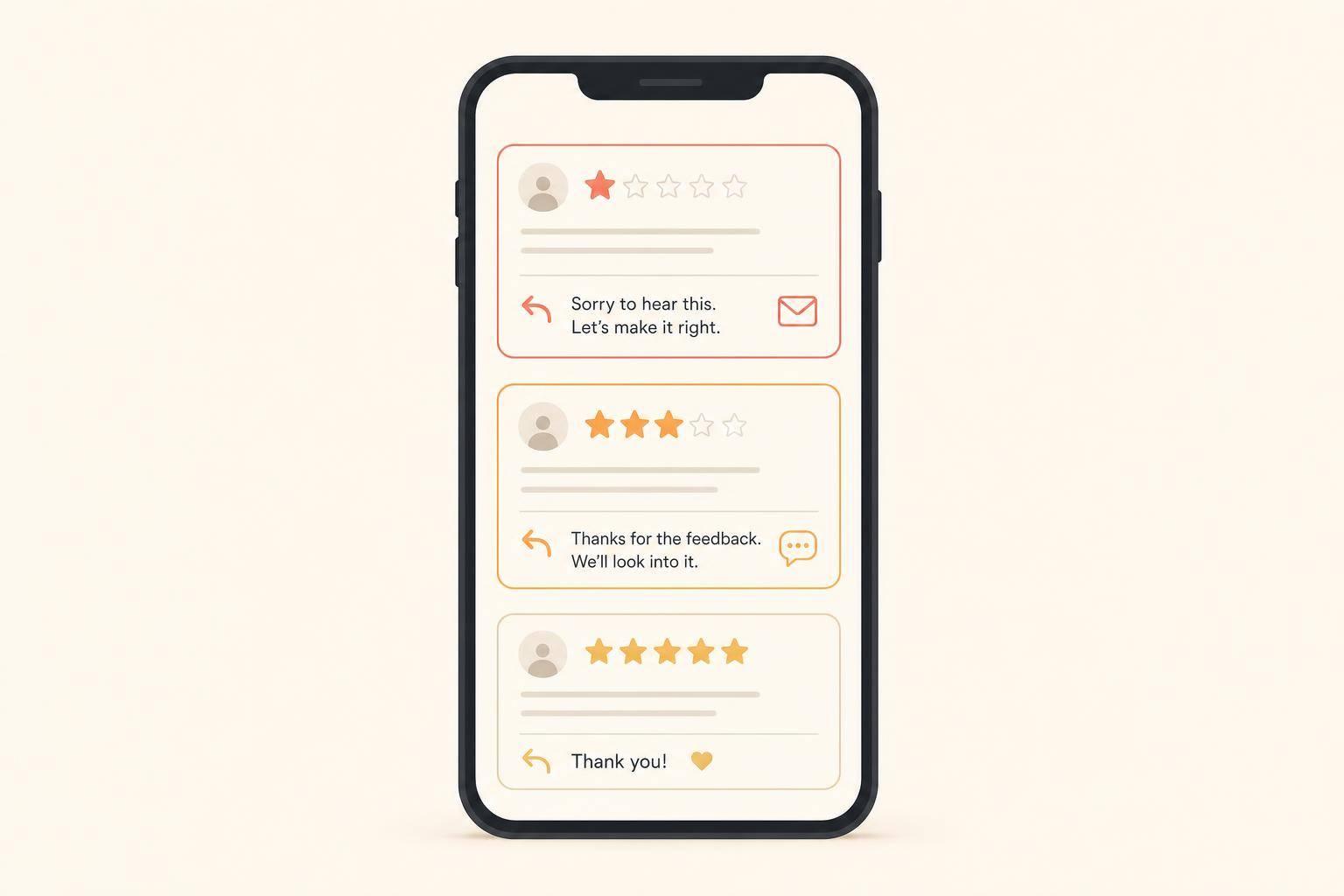
Here’s a key stat: 99% of consumers read online reviews, and 92% pay attention to how businesses respond to them [13]. By responding quickly and thoughtfully to reviews, you demonstrate engagement and reliability - qualities that both search engines and potential customers value. This approach strengthens your SEO rankings while enhancing your local reputation [15][13].
Miriam Ellis, Local Search Scientist at Moz, emphasizes the importance of reviews:
"Ignoring reviews results in a failure to serve and engage with your existing consumer base, win back customers who have left negative reviews, and benefit from the business intelligence gained when review sentiment is analyzed." [13]
Encourage customers to leave keyword-rich reviews by asking them to mention specific services and locations in their feedback. This helps your business appear in AI-generated summaries for relevant search terms [13]. Additionally, use your GBP Q&A section to address common questions tied to your PR campaigns, providing structured data for Google’s AI to leverage [5].
For small businesses looking to streamline these efforts, tools like Humble Help offer free resources such as a Business CRM and the Milo AI Marketing Coach. These tools can help you manage leads, nurture customer relationships, and identify areas for improvement - all in one place.
Measuring your digital PR results is essential for improving your local SEO efforts. Without tracking, it’s impossible to know which strategies are driving results and where adjustments are needed. By focusing on key metrics, leveraging the right tools, and using data to refine your approach, you can ensure your campaigns deliver meaningful outcomes.
Start by monitoring local search visibility, particularly your rankings for local keywords and your position in Google Maps' "Local Pack" [18]. These metrics reveal how well your PR efforts are boosting your local authority.
Your Google Business Profile (GBP) performance provides insights into customer interactions. Track search queries, profile views, phone calls, and requests for directions to understand how users engage with your business [18].
When it comes to backlinks, quality trumps quantity. Focus on securing links from relevant, high-authority sites. Vince Nero from BuzzStream emphasizes this point:
"For me, quality links are way more important than the pure quantity." [16]
Referral traffic from PR placements is another key metric. UTM parameters can help pinpoint which placements drive the most conversions [17]. For businesses with login portals, filtering out "direct traffic" to login pages prevents inflated brand awareness metrics [16].
Tracking brand mentions, both linked and unlinked, helps measure your "share of voice" across social platforms, news outlets, and forums [16][17]. As Hannah Smith, Founder of Worderist, explains:
"I think it's likely that Google treats some unlinked mentions... as a signal of authority and relevance." [16]
Don’t forget about AI search visibility. As AI-driven platforms like Google AI Overviews and ChatGPT gain traction, monitoring brand mentions in these summaries becomes crucial [3][17].
Lastly, use sentiment analysis to gauge the tone of media coverage and online conversations about your brand [17]. This can help you address potential issues before they grow into larger problems.
It’s worth noting that around 50% of digital PR professionals believe it takes 3 to 6 months to see measurable results from a campaign [16]. Backlinks often take about six months to influence rankings, so patience is key [16].
To track and analyze your PR efforts effectively, rely on these tools:
| Tool Category | Recommended Tools | Key Metric Tracked |
|---|---|---|
| Analytics | GA4, Google Search Console | Referral traffic, CTR, Impressions |
| Local SEO | BrightLocal, Whitespark, Semrush Local | Local Map rankings, Citation accuracy |
| PR/Backlinks | Ahrefs, Semrush | Domain Rating (DR), Referring domains |
| Brand Monitoring | Talkwalker, Mention, Google Alerts | Unlinked mentions, Sentiment |
| Call Tracking | CallRail, CallTrackingMetrics | Phone leads from local search |
| Reporting | Looker Studio, AgencyAnalytics | Centralized dashboards |
Once you’ve gathered the data, it’s time to turn insights into action. Start by correlating PR hits with SEO performance. For example, track the dates when high-authority mentions go live and look for related jumps in "Average Position" or "Impressions" in Google Search Console [21].
Check the "Crawl Stats" report in GSC after major PR placements. Increased GoogleBot activity often signals that your authority has received a boost [21]. Similarly, spikes in direct traffic can indicate offline impact, such as mentions on TV, radio, or in print [16][3].
Take inspiration from real-world examples. In November 2023, Stanley (Pacific Market International) saw a massive spike in brand interest after responding to a viral TikTok video about their tumbler surviving a car fire. The video garnered over 97 million views, and Stanley’s response generated global media attention [16]. Another case: Signs.com’s 2020 campaign featuring pandemic-related signage assets earned over 200 backlinks in just a few months, driving a noticeable increase in organic traffic [16].
Competitor reviews can also provide valuable insights. Analyze their reviews to identify service gaps or opportunities to stand out [18].
Finally, calculate your ROI by comparing campaign costs to the value of the traffic, leads, and conversions they generate. As Gini Dietrich, Founder of Spin Sucks, puts it:
"I always say it's the bane of our existence. You know if you have great PR, and you know if you have bad PR. But you don't know how to measure it." [17]
Digital PR has become a lifeline for local businesses striving to stand out in today’s competitive search environment. While traditional SEO strategies - like directory listings and on-page tweaks - still play a role, they simply can’t match the authority that comes from earned editorial coverage. By securing mentions from local media, industry-specific publications, and community blogs, businesses can strengthen their E-E-A-T (Experience, Expertise, Authoritativeness, Trustworthiness) signals, which search engines heavily value [3].
Here’s something to consider: 96.3% of top-ranking websites boast over 1,000 linking domains [3]. These links aren’t coming from basic directories - they’re earned through media exposure. And with nearly half of Google searches carrying local intent [22] and 87% of consumers using Google to assess local businesses in 2022 [1], third-party validation is no longer optional. Without it, your business risks being invisible.
AI tools are increasingly prioritizing trusted brand mentions. As John Mueller, Google’s Search Advocate, has pointed out:
"Digital PR is just as critical as technical SEO" [3].
When AI systems find your business referenced across multiple credible sources, they’re far more likely to recommend you. The key now is turning these insights into actionable steps.
Start small. Focus on a handful of local news outlets, bloggers, or community platforms your audience already trusts. Develop one compelling, newsworthy story - this could be original data about your market, expert insights on a trending topic, or a local initiative your business is spearheading. Link these media mentions back to your local landing pages for added SEO benefits. When reaching out, keep your pitch short and focused on why their readers will care.
You can also leverage tools like Help a Reporter Out (HARO) or track the #journorequest hashtag on X to offer expert quotes to journalists. These opportunities cost nothing but your time and can result in high-authority mentions in just days. Use tools like Google Search Console and Google Analytics 4 to measure which placements are driving traffic and leads.
For small businesses juggling operations and marketing, managing digital PR can feel like a tall order. If you’re struggling, Humble Help offers tailored growth systems and optional marketing support for service-based businesses in the San Francisco Bay Area and beyond. By starting with local partnerships and building from there, you can boost your digital authority and stay ahead of competitors already leveraging these strategies.
Digital PR shifts the focus to online platforms and strategies, setting it apart from traditional PR, which leans on outlets like print, TV, and radio. The goal? To earn high-quality backlinks, increase online visibility, and establish digital authority - all crucial for improving SEO performance.
Some common tactics include producing data-driven content, maintaining a strong online reputation, and working with digital journalists. Unlike traditional PR, Digital PR offers a more measurable and integrated approach, making it easier to track results and refine strategies.
Backlinks that pack the most punch for small businesses often come from local sources. Think about links from news websites, community organizations, chambers of commerce, local blogs, and regional directories. These types of backlinks send clear signals to search engines about your geographic relevance.
Connections with local influencers, partner businesses, and even community event pages can also work wonders. Not only do they enhance your visibility, but they also highlight your involvement in the community - building trust and improving your local search rankings.
To evaluate the return on investment (ROI) of digital PR in local search, you’ll need to keep an eye on both numbers and overall impact. Start by tracking revenue generated through local search and analyzing website performance metrics like traffic and conversions. Pay attention to your Google Business Profile activity, including calls, directions, and reviews, as these interactions often reflect local engagement.
For offline conversions, tools like UTM codes or call tracking software can help connect the dots between your digital efforts and in-person results. Don’t forget to measure backlinks and media mentions, as they indicate your growing authority and visibility in the local market.
Consistent analysis of these metrics allows you to fine-tune your strategy and clearly show how your efforts are making a difference.
Discover strategies to elevate your business.