
Want your Bay Area business featured in local news? Here's how to make it happen:
Pro Tip: Focus on stories that matter to the Bay Area, like diversity, local culture, or social impact. Consistency and persistence are key to building trust with reporters and securing valuable media mentions.

6-Step Process to Get Bay Area Local News Coverage for Your Business
Before diving into pitching, it’s important to pinpoint the right news outlets. The Bay Area offers a wide range of media options, from major regional publications to smaller newsletters. Your goal? Focus on outlets that resonate with your target audience.
Start with the heavy hitters that cover the entire Bay Area. For B2B news, San Francisco Business Times is a solid choice. It covers industries like banking, technology, real estate, biotech, and professional services, making it a great fit for businesses aiming to reach executives and decision-makers. On the other hand, KQED delivers in-depth stories on community issues, arts, and food, while SFGate and the San Francisco Chronicle offer broad regional coverage, including specialized sections for wine, food, and sports. If your business aligns with culture, arts, entertainment, or cannabis, SF Weekly is worth considering.
Another great resource is Bay City News, a regional newswire that spans all 13 Bay Area counties. If your story gets picked up here, it could appear in multiple publications, giving you a significant visibility boost. For perspective, SFGate alone attracts about 14.8 million visitors each month [6].
While major outlets provide broad exposure, smaller, hyper-local publications often offer a more focused connection with readers. These outlets are typically more open to covering local stories, which can improve your chances of getting featured. Publications like Mission Local, Oaklandside, Berkeleyside, and San Jose Spotlight focus on specific cities and neighborhoods. If your business caters to families, Bay Area Parent could be a great match. For even more localized coverage, look into neighborhood-focused outlets such as The Ingleside Light, Noe Valley Voice, or The Ark, which serves Tiburon, Belvedere, and Strawberry.
The Bay Area is also home to a vibrant network of ethnic and cultural media. For example, Mahalaya serves the Filipinx community, San Francisco Bay View focuses on the Black community, and El Tecolote connects with the Latino community. These publications allow you to directly engage with specific audiences. Additionally, resources like Eddie's List, with over 27,000 subscribers [5], provide a curated directory of independent newspapers and newsletters across the region.
The key is to align the outlet with your business. For example, a tech startup might find the Silicon Valley Business Journal more effective, while a restaurant might gain better traction through food sections in SFGate or local neighborhood papers. Take time to review recent articles from your selected outlets to understand their style and the types of stories they feature.
Once you've pinpointed your target outlets, the next step is crafting story angles that catch journalists' attention. Remember, journalists are looking for compelling stories - not thinly veiled advertisements [2].
Engaging with your local community not only builds goodwill but also makes your business more appealing to local media. Journalists often gravitate toward businesses that actively contribute to their neighborhoods [2].
Think about participating in community events like the Castro Valley Fall Festival, the San Lorenzo Halloween Parade, or the Cherryland Easter Egg Hunt [1]. Be sure to have your media kit ready to share. Beyond attending events, you could partner with local charities or start initiatives that align with your business’s values. For example, in June 2025, Oakmont Senior Living gained coverage in SFGate by showcasing its housing for LGBTQ+ seniors at Fountaingrove Lodge, tying their story to San Francisco's Pride Month and the city’s inclusive planning efforts [8]. Similarly, in July 2025, Oakmont of Westpark made it to ABC10 Sacramento when a resident celebrated their 106th birthday. Stories like these, which focus on human interest and community impact, tend to resonate with local media outlets [8].
Once you've established your community connection, the next step is to align your story with topics that matter most to Bay Area audiences.
To truly engage local readers, tailor your pitch to reflect regional interests - think tech, sustainability, food and wine, social impact, and local culture.
For San Francisco-based outlets, focus on themes like diversity, progressive values, and sustainability. Keep your tone authentic and steer clear of overly corporate language. On the other hand, Silicon Valley media often prefer stories backed by specific metrics or data, while outlets in Oakland and Berkeley lean toward stories about social justice and grassroots efforts [8].
Another approach is to localize national trends by showing how they affect the Bay Area specifically. For instance, you could explore how climate change impacts local wineries or how rising housing costs are affecting small business hiring [7]. By connecting your story to these regional concerns, you’ll make it more relevant and appealing to local journalists.
Getting media coverage starts with reaching out to the right journalist. As JournalistDB explains, "Send the perfect pitch to the wrong journalist and you'll hear nothing. Send a mediocre pitch to a mediocre journalist and you might still get coverage" [10]. The trick lies in identifying reporters who already cover businesses like yours and fostering a relationship with them before making a pitch.
Start by using Google News to search for industry-specific keywords like "San Francisco restaurants" or "Oakland tech startups." Look at the bylines, read reporter bios, and check their social media profiles to confirm their areas of focus and recent work [9][10]. Make sure the journalist has published at their outlet within the last 30–90 days - this helps you avoid pitching to someone who may have moved on [10].
For a more streamlined approach, tools like JournalistDB can be a huge help. JournalistDB offers access to a database of over 142,000 journalists, searchable by beat, outlet, and location. Free accounts are available, while full access starts at $79/month [10]. Don’t overlook freelance journalists either - they often contribute to multiple Bay Area outlets and can be valuable contacts [10]. A focused list of 25–75 journalists will almost always generate better results than sending out mass emails [10].
Once you’ve narrowed down your list, it’s time to focus on building meaningful connections.
After identifying the right reporters, take steps to engage with them and establish trust. Social media is a great place to start - platforms like X, LinkedIn, and Instagram let you interact by commenting on their posts, sharing their articles, or even starting conversations. Additionally, attending local events can provide opportunities to meet journalists face-to-face, so keep your media kit handy for these occasions [12].
"Public relations literally is relationship building. Not just with your audience, but first, you need to establish a trusting and working relationship with the journalists you want to work with." - SF Agency [11]
You can also invite reporters to attend events like store openings or milestone celebrations. Offering interviews with the owner or access to special guests gives them a reason to cover your story [12]. Some journalists even host office hours, where business owners can drop by to pitch ideas or discuss potential stories [9].
Now that you've established a connection with a reporter, it’s time to craft and send your pitch. Keep in mind that half of journalists receive over 50 pitches every week [13], so yours needs to grab attention immediately. Since 87% of journalists prefer email, make it your go-to method for outreach [13].
Your subject line is your first and best chance to stand out. Keep it under 100 characters and make it specific to the journalist’s audience or region. For example: "Story Idea: New Zero-Waste Café Opens in Oakland's Temescal District." Avoid clickbait - being upfront is always more effective [14].
Begin the email with a personalized greeting. Show you’ve done your research by referencing a recent article the journalist wrote. This demonstrates that your email isn’t just part of a mass send-out. Then, dive straight into the core of your pitch: explain why your story is relevant to their audience now. As Trevor Herrinton, Public Relations Coordinator at Zoox, advises:
"Find the why behind your stories. A pitch that doesn't emphasize a good story or have a direct correlation to a publication's audience will likely not entice a journalist" [14].
Keep the email concise - 200 words or less is ideal. Chris Harihar, EVP at Crenshaw Comms, highlights why brevity matters:
"Reporters get a more digestible story but it also forces the PR to cut the BS and speak like a human" [14].
Include your press release in the body of the email rather than as an attachment. Also, provide links to your media kit, high-resolution images, or additional resources. With 75% of journalists relying on media kits for research [1], make it simple for them to find what they need.
Timing is key: send your pitch Tuesday through Thursday between 9:00 and 10:00 AM [13] [15]. This window aligns with when journalists are planning their stories for the week.
Be ready to follow up if necessary.
Following up is an important part of the process, but it needs to be done thoughtfully. If you don’t receive a response, wait three to five business days before reaching out again [16]. Keep your follow-up even shorter than the original pitch. Add something new - like a fresh angle, updated data, or an additional expert source - rather than just asking if they’ve seen your email. Use the same email thread with "Re: [Original Subject Line]" to maintain context.
It’s worth noting that 64% of journalists believe you should follow up on a pitch only once [13]. If you’ve made two or three attempts and still haven’t heard back, it’s best to move on. Respecting their time ensures you maintain a positive relationship for future opportunities.
Reaching out to journalists manually can feel like an uphill battle - especially when only 3% of pitches even get opened. That’s where digital PR tools come in. These tools help you automate repetitive tasks, keep your contacts organized, and track the results of your outreach efforts, making the process far more manageable [17].
Take JustReachOut, for example. It helps you build targeted lists of journalists who cover your industry. Or consider HARO (Help A Reporter Out), which connects you directly with reporters actively seeking expert sources. Other platforms like Prowly and Propel offer templates and tracking features, making it easier to manage your pitches and follow-ups. Since 35% of email opens happen within the first minute, having a system that ensures quick and timely outreach is essential [17].
Another must-have? A digital media kit. Tools like Adobe Acrobat can help you create a professional kit, which you can host on a dedicated "Press" page on your website. Include essentials like your company overview, team bios, and high-resolution photos. This is critical because 70% of journalists prefer finding company information on their own rather than waiting for someone to respond [1]. As the Eden Area Chamber of Commerce puts it:
"Reporters make their coverage decisions before contacting a business. If your materials aren't accessible, you're often not in the running at all." [1]
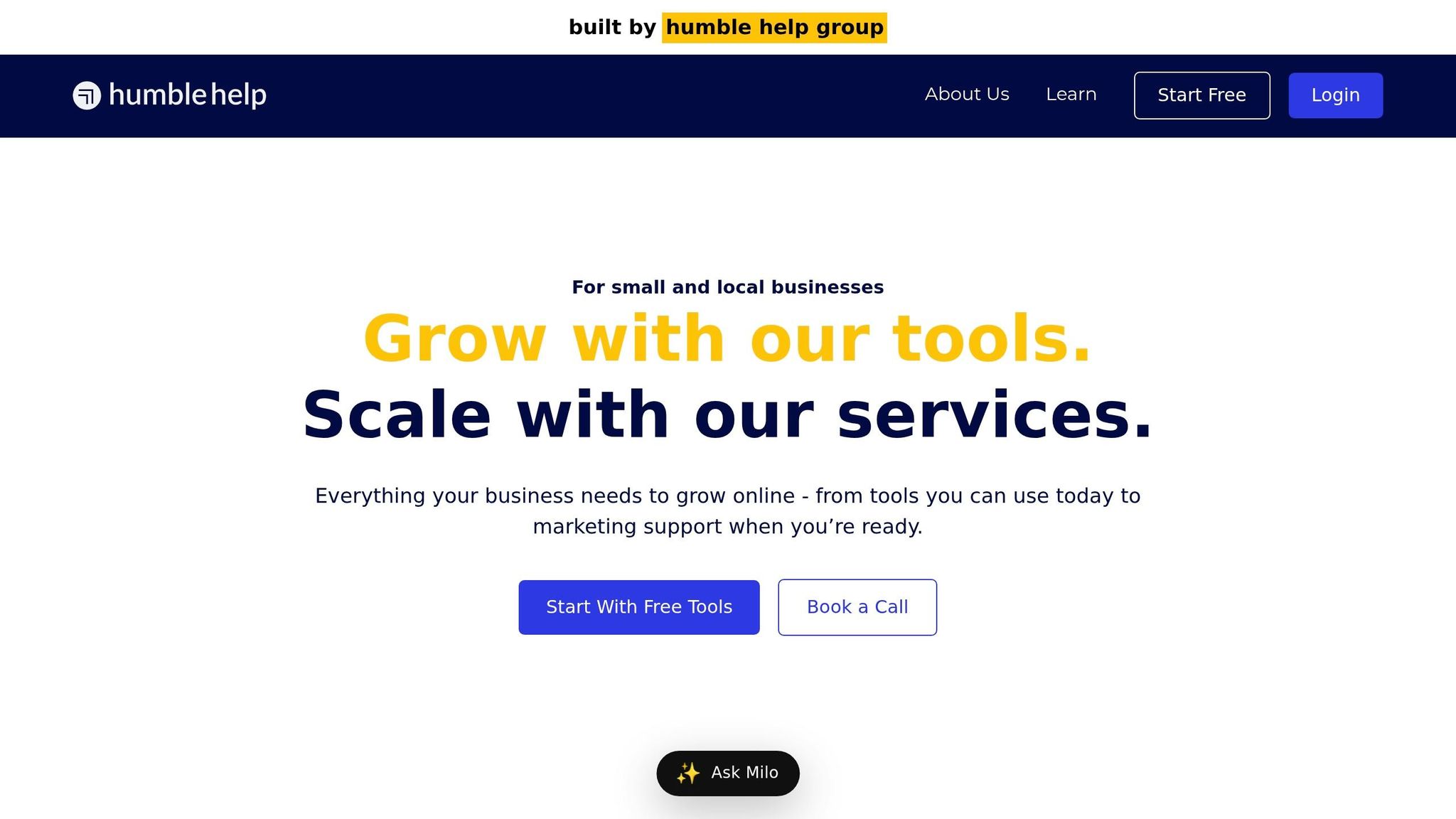
If managing PR feels overwhelming, Humble Help offers services to make it easier. They specialize in assisting Bay Area small businesses by identifying media outlets, crafting pitches, and building relationships with journalists. Their offerings include the Milo AI Marketing Coach, a free tool that provides step-by-step advice on improving your marketing, including outreach strategies. They also provide a free Business CRM to help you track leads and follow-ups, giving you more time to focus on running your business while still securing media coverage.
With these tools and resources, you’ll be ready to take the next step: sharing and measuring your media coverage effectively.
Once you've secured media coverage, the next step is making sure it reaches as many people as possible. Sharing your earned coverage amplifies its impact and keeps the momentum going. Start by posting the article on your social media platforms. Highlight key quotes in short, engaging posts, and don’t forget to tag both the journalist and the publication. A public thank-you not only shows appreciation but also helps nurture relationships for future opportunities [18].
Consider adding an "As Featured In" section on your website or creating a dedicated media page. Include publication logos and links to your coverage, and update this page every quarter with your latest mentions. This serves as a quick way to showcase your credibility to visitors.
Encourage your leadership team and employees to share the coverage on their LinkedIn, Facebook, and other networks. This can significantly expand your reach and reinforce trust in your brand [4]. For Instagram, using geotags can increase post engagement by up to 79%, which is especially useful for connecting with local audiences, such as Bay Area customers in specific neighborhoods [3]. Additionally, you can repurpose media mentions for sales decks, email newsletters, or even printed materials. As eReleases points out:
"Earned media builds 3x more trust than paid advertising, and when major publications feature your business, it instantly validates your brand in ways paid ads never could" [18].
After sharing your coverage, it’s crucial to measure how it’s performing. Tools like Google Analytics 4 (GA4) with UTM parameters can help you track traffic, leads, and sales generated from each media mention. When providing links to journalists, include UTM codes to monitor the effectiveness of your coverage [19][3]. It’s worth noting that 61% of PR teams currently use GA4 for tracking performance [19].
Look beyond direct clicks - monitor branded search volume through Google Search Console. Often, people will read about your business in the media and then search for your name directly instead of clicking a link. This "offline-to-online" behavior is a strong signal that your coverage is increasing brand awareness [19][20]. For local businesses, check your Google Business Profile insights for changes in map views, phone calls, and direction requests following media mentions [3][20].
Set up a tracking system that spans a 7-30-90 day window. At 7 days, measure immediate traffic and social shares. At 30 days, focus on branded search volume and lead attribution. By 90 days, assess SEO improvements and other longer-term impacts. According to Empathy First Media's 2025 ROI Benchmark Study:
"The 90-day window provides the most accurate picture of both immediate and mid-term press release value" [19].
Finally, link your analytics to a CRM system, like Humble Help's free Business CRM, to track how media mentions convert into paying customers. Don’t shy away from asking new customers how they heard about you - this can capture word-of-mouth referrals and "dark social" interactions that analytics tools may miss [3].
You now have a clear roadmap to secure local media coverage in the Bay Area. Success comes down to strategy, persistence, and crafting stories that resonate with local audiences. By identifying the right journalists, building authentic relationships, and presenting compelling narratives, you can achieve earned media that boosts your credibility in ways paid advertising simply can't.
Start by preparing a solid media kit that includes your company overview, team bios, and high-resolution photos. This makes it easier for reporters to feature your business without needing constant back-and-forth communication.
Remember, responses don’t always come quickly. Be patient, follow up thoughtfully, and don’t let a failed pitch sour a valuable relationship - there’s always a chance to collaborate in the future.
Consistent engagement with the media pays off in the long run. It enhances your local reputation, provides authoritative backlinks that benefit your SEO, and creates social proof that strengthens your overall marketing efforts. Staying visible in the community, regularly updating your materials, and maintaining active connections with reporters on social media further amplify these results.
Leverage tools like Humble Help's free Business CRM to connect your media efforts with measurable outcomes. By tracking which coverage drives actual customer conversions, you can focus on what truly impacts your bottom line. With time and persistence, your local PR efforts will position your business as a trusted name in the Bay Area, building credibility that ties seamlessly into all your marketing strategies.
When crafting a local news angle, it's important to focus on what matters to the community and what aligns with journalists' priorities. Timeliness and relevance are key - your story should connect to current events or ongoing conversations. Emphasize details that stand out, whether it's a new perspective on a familiar issue, a direct impact on the local community, or a unique twist that ties into broader trends. These elements can help ensure your story grabs attention and feels meaningful to your audience.
Target journalists who specialize in topics relevant to your industry or community. Start by researching local reporters who frequently write about your sector. Tools like Meltwater or Cision can make this easier by allowing you to filter contacts based on location and subject matter.
Building authentic relationships is key. Engage with journalists who have previously covered stories similar to what your business offers. By understanding their interests and focus areas, you’ll have a better chance of identifying the right reporters to cover your Bay Area business.
To figure out if press coverage is driving sales, keep an eye on your website traffic, where referrals are coming from, and conversions - like purchases or inquiries - that can be tied to media exposure. Tools can help you analyze media mentions, backlinks, and audience engagement to see what’s working.
Also, look for shifts in local search interest, views on your Google Business Profile, or direct responses such as calls or in-person visits. Pair this data with customer feedback to get a more complete understanding of how press coverage is influencing your sales.
Discover strategies to elevate your business.