Online review management is crucial for coaches looking to grow their business in 2026. Here's why it matters and how you can make it work for you:
To succeed, set up a consistent system for requesting and managing reviews, monitor key metrics like star ratings and review volume, and use feedback to refine your offerings. A strong review strategy can boost your visibility and help grow your coaching business.
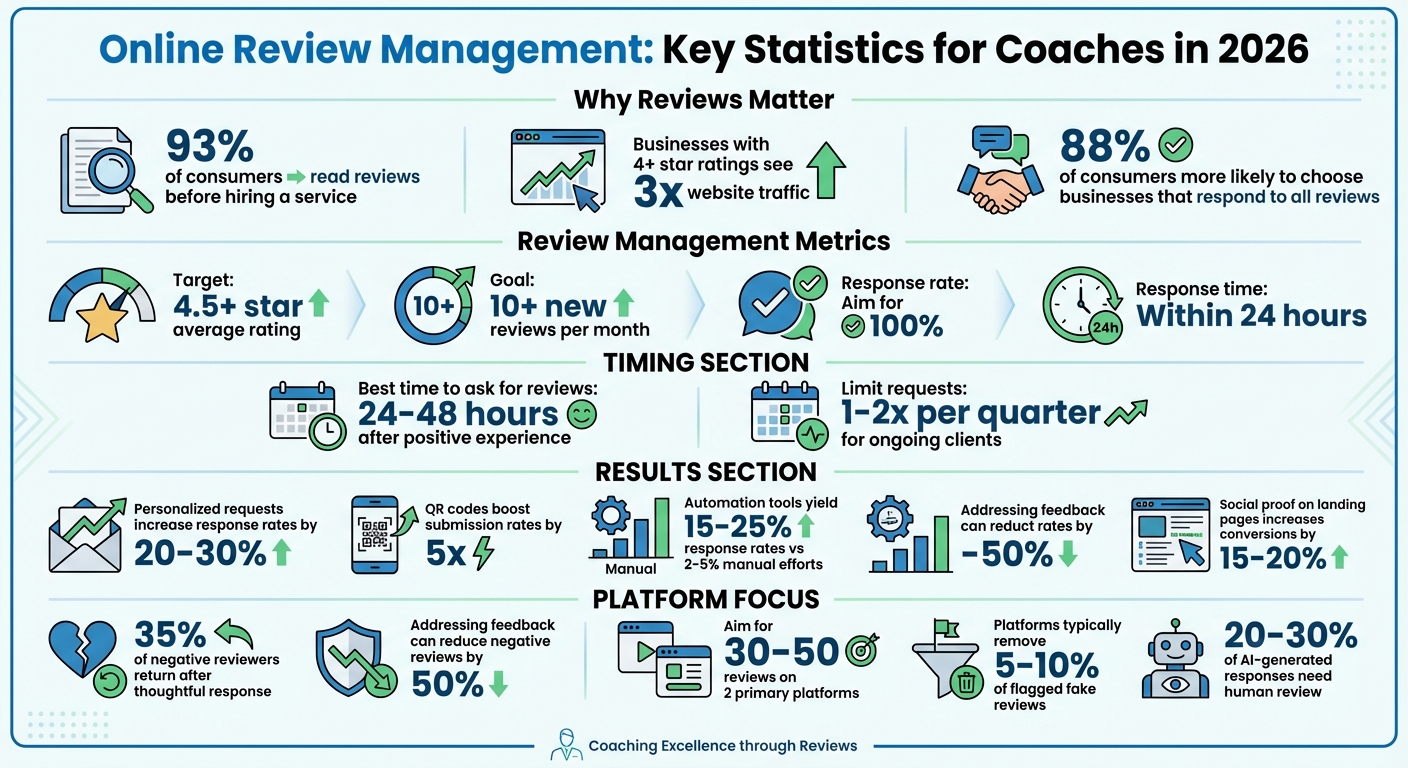
Online Review Management Statistics and Key Metrics for Coaches 2026
Now that you’re familiar with the key review platforms, let’s dive into how to set up and maintain an effective review system for your coaching business.
Start with your Google Business Profile - this is your central hub for local search visibility and maps. From there, choose one or two additional platforms that align with where your potential clients are most likely to search before hiring a coach.
For instance, if you’re an executive or leadership coach, focus on LinkedIn recommendations alongside Google, as corporate decision-makers often rely on professional networks for vetting. Health and wellness coaches might find platforms like Healthgrades or Zocdoc useful, especially if their clients are seeking therapeutic or holistic support. Meanwhile, career and life coaches typically benefit from combining Google with Yelp and Facebook, where service-based searches are more common.
Keep it simple: aim for 30–50 reviews on two primary platforms rather than scattering reviews across multiple sites. A good way to identify where to focus is by asking your existing clients, “Where did you search before deciding to work with me?” Their responses will guide you to the platforms that matter most.
Once you’ve chosen your platforms, your next move should be optimizing your Google Business Profile for maximum visibility.
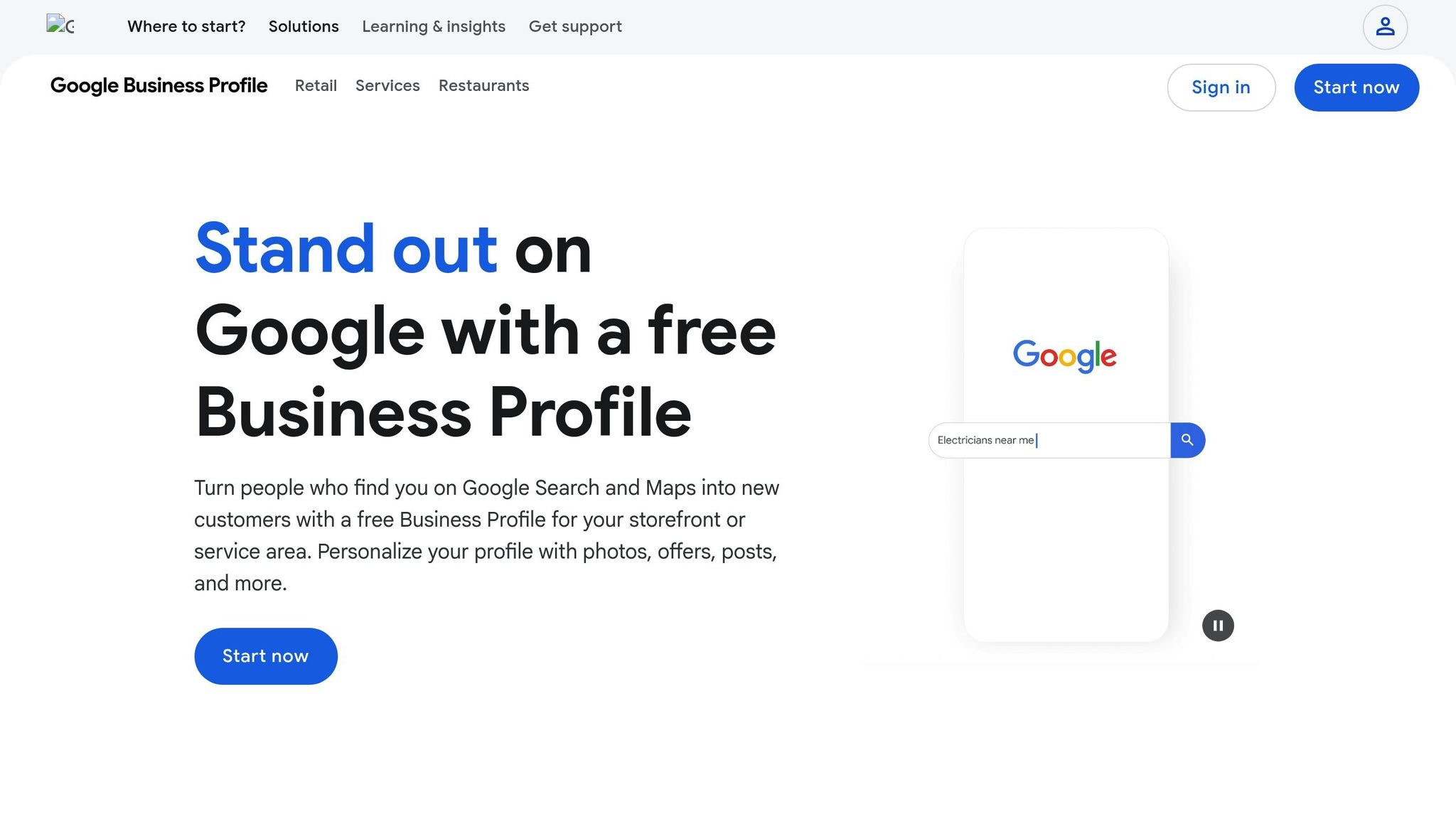
A properly set up Google Business Profile is essential. Use a dedicated account to log in and ensure your business name matches exactly with your marketing materials (e.g., "Humble Path Coaching LLC").
Choose your primary category thoughtfully - whether it’s "Life Coach", "Business Management Consultant", or "Career Counseling Service" - as this determines how Google connects your profile to relevant searches. If you operate in specific areas, select the “service-area business” option and list your regions. Include key details like your main phone number (with area code), website URL, and local business hours (e.g., 9:00 AM–5:00 PM, Monday–Friday).
Google requires verification through a postcard, phone, or email. Once verified, craft a concise business description that highlights your target audience and the benefits they’ll receive from working with you. Add professional photos - this could include a polished headshot, images of your workspace, or even approved screenshots from coaching sessions. If you can respond quickly to inquiries, enable the Messaging feature; quick replies often turn profile visitors into clients.
Consistency is key when it comes to your NAP (Name, Address, Phone number). Every detail must match across your Google Business Profile, Yelp, Facebook, and other directories. Search engines rely on this uniformity to verify your business, and any discrepancies could hurt your local search rankings or confuse potential clients.
Perform a biannual audit by searching your business name and phone number. Document the NAP details for each listing, decide on a "master" version (including specifics like "LLC", suite numbers, or whether to use local vs. toll-free numbers), and then update all profiles to match.
If managing this process feels overwhelming, consider working with a service like Humble Help, which specializes in personalized marketing solutions for coaches.
The best time to ask for a review is 24–48 hours after a positive experience. During this window, clients are still feeling the excitement of their success, making them more likely to share their feedback. Keep your requests reasonable - ask for reviews just once per client unless they volunteer fresh insights. For ongoing clients, limit requests to once or twice per quarter to avoid overloading them. Below are some effective ways to approach review requests.
Start with in-person requests during a session wrap-up or when a client shares a win. A simple ask can go a long way: "If you enjoyed working together, I’d love it if you could leave a quick review on Google."
For email follow-ups, send a personalized message within one to seven days after your engagement ends. Here’s an example:
"Hi [Name], thank you for choosing me as your coach. Your success could inspire others - would you mind sharing your experience on Google? [Short Link]. It only takes a minute!"
Personalizing your request can increase response rates by 20%–30% compared to generic messages[1].
Text messages are another great option, especially for clients who prefer quick communication. Keep it short - under 160 characters:
"Hi [Name], I’m so proud of your progress! Could you do me a quick favor and leave a Google review? [Link] Thanks so much!"
If you’re using a CRM, take advantage of automated review prompts. These can be triggered at key milestones, ensuring your requests are timely. Just make sure that any automated messages are neutral and don’t offer incentives like discounts or freebies, as such practices violate many review platform guidelines[1][5].
Simplifying the process is key to getting more reviews. Create a direct Google review link through your Google Business Profile (e.g., g.page/r/[your-profile-id]/review) and use a tool like Bitly to shorten it. This makes it easy to share via email, text, or social media.
QR codes can also help. Use a free tool like QRCode Monkey to generate a code linked to your review URL. Print these on business cards, session handouts, or thank-you notes. When clients scan the code, they can leave a review in seconds. This approach can boost submission rates by up to five times[3]. You can also place QR codes on invoices, email signatures, or small cards handed out at the end of a session to make it as convenient as possible for clients to share their feedback.
If you’re managing a high volume of clients, manual review requests can become a hassle. Automation tools like Birdeye, Podium, and Reputation streamline the process, saving time and ensuring consistency. These tools typically yield response rates of 15%–25%, compared to just 2%–5% for manual efforts[1][2].
For coaches looking to integrate review management into a broader marketing strategy, expert services like Humble Help can provide tailored solutions to attract and convert your ideal clients. Automation ensures that no client milestone goes unnoticed, helping you maintain consistent outreach without the extra workload.
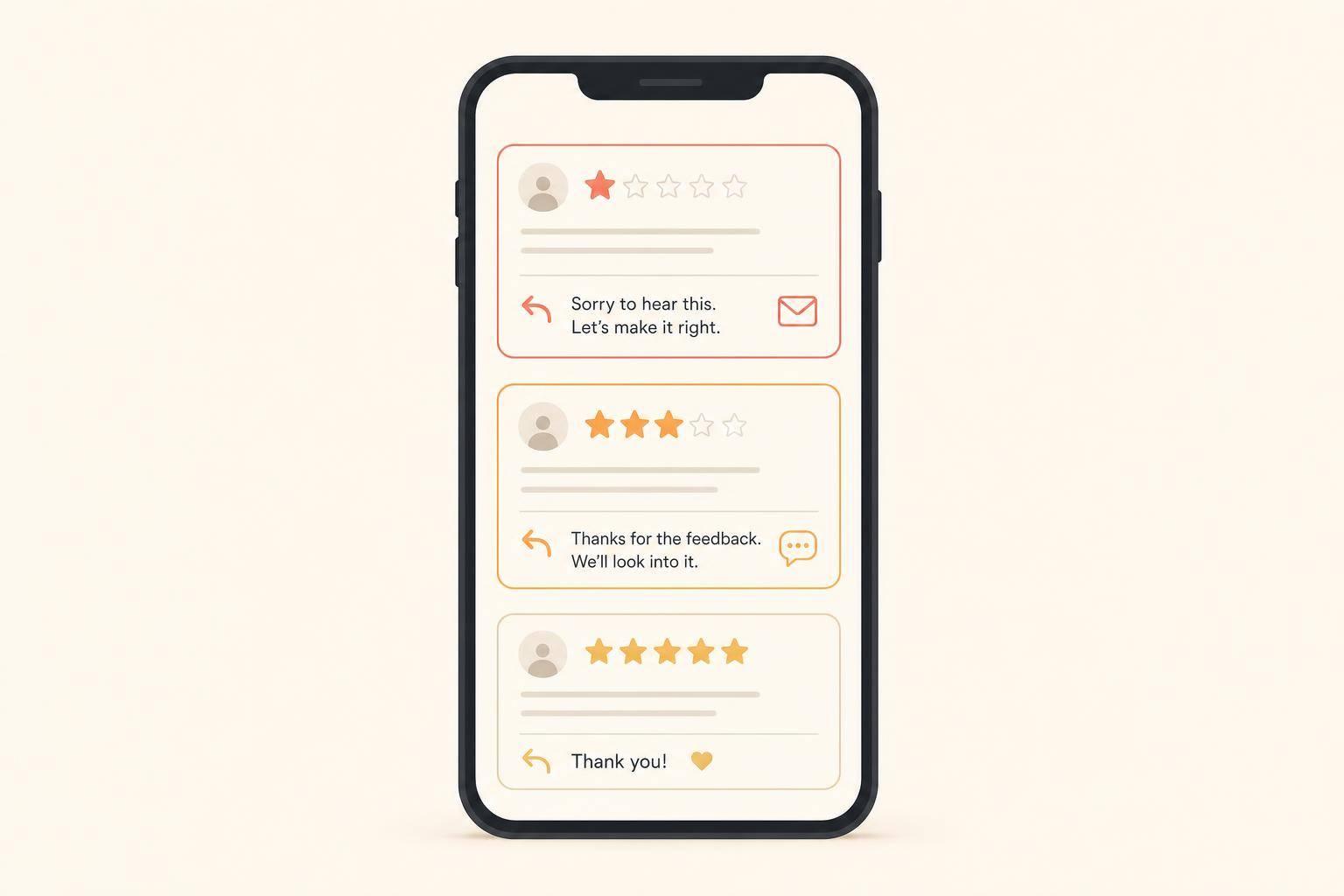
Replying to reviews isn't just good practice - it shows customers you value their feedback. In fact, 88% of consumers are more likely to choose a business that responds to all reviews[5]. A thoughtful response strategy helps build trust and reinforces your commitment to your clients. The trick? Stay professional while personalizing each reply. Use the reviewer’s name and reference specific points they mentioned to make your responses feel genuine.
Timing is critical. Aim to respond within 24 hours. Automated alerts can help you catch new reviews right away. Quick replies show you’re engaged and attentive, which not only improves how clients see you but can also boost your local search rankings. This promptness sets the tone for building stronger relationships through tailored responses.
Crafting personalized responses can strengthen your credibility and keep clients coming back. Using templates can save time and ensure consistency, but it’s important to add a personal touch to each reply. Here are examples for different types of reviews:
Negative reviews aren’t the end of the world. In fact, they’re a chance to show how committed you are to improving. Here’s how to handle them effectively: acknowledge the issue publicly without arguing, offer a sincere apology, and provide a solution or invite the reviewer to continue the conversation privately. Following up offline can often resolve the issue - and even turn critics into loyal clients. Did you know that 35% of negative reviewers who receive a thoughtful response are more likely to return[4]?
Fake reviews, on the other hand, require a different approach. Look for signs like generic wording, odd timing, or suspicious patterns that might suggest competitor interference. On Google, you can flag a review by clicking the three dots, selecting "Flag as inappropriate", and choosing "Fake" while providing evidence. On Yelp, use the "Report Review" button to highlight any policy violations, and on Facebook, click the "..." menu to report the review. Platforms typically remove about 5–10% of flagged reviews after investigation. While waiting for the platform’s decision, respond publicly to address the concern and reassure your clients that you’re handling it.
AI tools like Birdeye and MARA AI can help draft responses by analyzing sentiment and tailoring replies. For instance, Birdeye integrates with multiple platforms to create auto-drafts before posting, while MARA AI adapts responses to match your brand’s voice and style.
However, AI isn’t perfect. Around 20–30% of AI-generated responses need a final review to fine-tune the tone and add specific details[1][2]. Always review these drafts, personalize them, and ensure they align with platform guidelines. Think of AI as your assistant - it can save you time, but your personal touch is what strengthens client relationships.
Reviews are more than just feedback - they’re a window into your clients’ experiences and perceptions of your coaching business. Each review highlights what’s working well, what might be frustrating clients, and how your services are viewed in the market. By treating reviews as valuable data points, you can make smarter decisions about your offerings and marketing strategies. Start by focusing on key metrics: your average star rating (aim for 4.5 stars or higher), review volume (try to gather 10 or more new reviews each month), response rate (strive for 100%), and response time (respond within 24 hours, especially to negative reviews). Tools with centralized dashboards can help you collect and analyze this data from platforms like Google and Yelp, making it easier to identify trends over time[1][2].
These insights create a solid foundation for turning client feedback into actionable strategies for business growth.
The metrics you track should align with your business objectives. Beyond star ratings and the number of reviews, keep an eye on review velocity - how quickly new reviews are coming in. For example, a counseling service used automated post-session requests to grow their reviews from 50 to 950 over two years, building a steady stream of social proof[1][2]. Set up automated alerts and conduct weekly audits to stay on top of trends. If your reviews are growing by 5–10% each month, you’re heading in the right direction.
Sentiment trends are also important. Monitor the ratio of positive to negative reviews and note how it changes when you adjust your programs or communication style. These trends can reveal what’s resonating with clients and where improvements are needed.
Look for recurring themes in your reviews. For instance, if 30% of clients mention a “lack of accountability,” it’s a clear sign to incorporate weekly check-ins or progress tracking into your program. Tools that segment feedback by keywords can help you identify patterns more quickly. Organize reviews into categories like program pacing, personalization, or communication clarity.
If you notice that 40% of reviews mention “unclear outcomes,” it’s time to refine your onboarding process to set clearer expectations. Once you’ve made improvements, share those updates publicly to show clients you’re listening. This approach not only reduces negative reviews by up to 50% but also boosts overall client satisfaction[1][4][2]. Treat every piece of feedback as an opportunity to improve, not as a criticism to defend against.
Your best reviews can be powerful marketing tools. Highlight them on your landing pages, complete with star ratings and specific client quotes - this kind of social proof can increase conversions by 15–20%[1][4][2]. Embed Google review widgets on your website to showcase real-time feedback. Share standout reviews on platforms like LinkedIn or Instagram stories, tagging the original platform to add authenticity.
Pay attention to recurring phrases in your reviews, such as “helped me gain clarity” or “kept me accountable,” and incorporate that language into your website copy, email campaigns, and lead magnets. For PR efforts, emphasize your overall rating (e.g., "4.9-star rated by 500+ clients") to build trust and credibility. If you’re looking to create high-converting funnels or enhance your authority, services like Humble Help (https://humblehelp.studio) can integrate your review data into digital PR strategies that elevate your reputation. Just ensure you follow each platform’s guidelines when repurposing review content.
Managing online reviews isn’t something you can set and forget - it’s a continuous effort that builds trust, increases visibility, and supports steady revenue growth. Keep an eye on review platforms, respond to feedback within 24–48 hours, actively request reviews, and pay attention to recurring patterns in the feedback you receive.
Quick and thoughtful responses not only strengthen client trust but can also improve conversion rates. For coaches offering premium services, maintaining strong review habits can enhance local search rankings, bringing in more inquiries without needing extra ad spend.
Every review - whether glowing or critical - offers valuable insights into your services, communication, or onboarding process. Use this feedback to make improvements. When you address feedback publicly, you can reduce complaints and increase client satisfaction.
Turn these insights into action. Start small: review your Google Business Profile, set up a simple process for requesting reviews, and commit just 30 minutes a week to managing responses. If it feels like too much to handle, consider working with experts like Humble Help. They can help you seamlessly integrate review management into your marketing efforts, from funnels to landing pages to LinkedIn campaigns, turning your reputation into a powerful growth tool.
Dealing with negative or fake reviews can be tricky, but handling them calmly and professionally makes all the difference. Respond promptly to show you care about feedback, address any legitimate concerns with honesty, and always keep your tone respectful. For fake reviews, take advantage of the platform’s reporting tools to request their removal.
To keep your reputation strong, encourage satisfied clients to share their experiences by leaving positive reviews. A steady stream of good feedback not only balances your overall rating but also builds trust with future clients.
Coaches should concentrate on platforms that resonate with their audience and are widely recognized. Google Business Profile is a must-have for boosting visibility in search results, making it easier for potential clients to find you. Yelp plays a key role in establishing trust, particularly for local services, thanks to its reputation for hosting authentic reviews. Social platforms such as Facebook and LinkedIn are excellent choices for highlighting client testimonials. These platforms not only showcase reviews but also provide a professional or community-oriented setting where endorsements carry more weight. Focus your efforts on the platforms where your audience spends the most time to make the biggest impact.
Client reviews provide a window into what’s going well and where adjustments might be needed. By identifying patterns in feedback, you can tackle recurring issues, emphasize your strengths, and fine-tune your services to align more closely with client expectations.
Positive reviews can spotlight what clients genuinely appreciate about your coaching, giving you the chance to build on those aspects. Meanwhile, constructive criticism offers an opportunity to refine areas that need improvement. This approach not only enhances client satisfaction but also positions you to attract more clients by aligning your services with what they’re looking for.
Discover strategies to elevate your business.