Your video title matters. A great title grabs attention, boosts clicks, and helps you rank higher on YouTube and Google. For Bay Area audiences, focus on local interests - like tech, food, or outdoor spots - and use specific keywords. Why?
From hidden hiking trails to AI tools and budget-friendly food finds, tailoring your titles to Bay Area interests can make your content stand out.
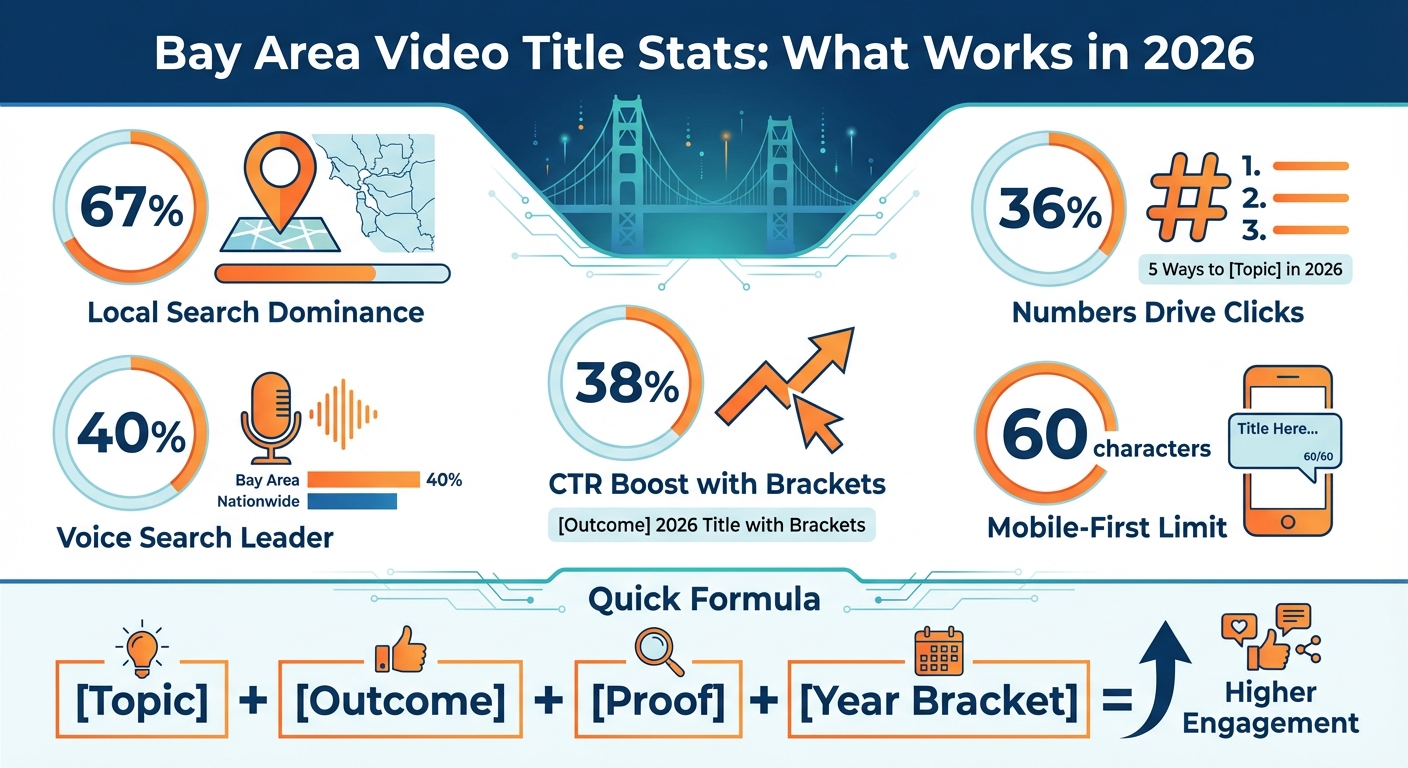
Quick tip: Keep titles under 60 characters for better mobile visibility.
Bay Area Video Title Optimization: Key Statistics for Higher Click-Through Rates
"A Day in the Life: Living in [Neighborhood Name] in 2026"
To connect with Bay Area audiences, focus on specific neighborhoods like the Mission District, Fruitvale, or Berkeley. People want relatable snapshots of daily routines - like grabbing coffee in SOMA or enjoying weekend strolls around Lake Merritt. A great example of this approach was Outdoor Afro’s "Making Waves" campaign in 2025, which highlighted community activities to build trust and engagement[3]. By highlighting the region’s geographic variety, this kind of storytelling creates a personal connection, boosting visibility on platforms like YouTube and Google.
"The Real Cost of Living in [City]: What $3,000/Month Gets You [2026 Guide]"
Bay Area residents are always searching for practical, no-nonsense information about living expenses. A title like "[2026 Guide]" can increase click-through rates by up to 38%[2]. Break down the costs of living in cities like San Jose, Oakland, or Palo Alto by showing real examples of apartments, their prices, and the trade-offs involved. This kind of content not only attracts clicks but also provides valuable insights for people researching how to budget or relocate to one of the priciest regions in the U.S.
"Hidden Gems: 5 Spots Locals Love in Marin County That Locals Cherish Over Typical Tourist Spots"
The Bay Area’s love for the outdoors is unmatched. Highlighting lesser-known spots like hidden trails in Muir Woods or quiet corners of Crissy Field can resonate deeply with viewers[3]. Titles like this spark curiosity and encourage exploration, especially when they promise insider tips. Stick to well-known landmarks for context but deliver fresh, authentic recommendations that feel more personal than overly curated[4]. This approach keeps viewers engaged and eager to uncover something new.
"I Tested Every AI Code Editor in San Francisco - Here's What Actually Works [2026]"
In the Bay Area, results matter more than promises. A great example? In November 2025, Anysphere, the company behind Cursor, raised a staggering $2.3 billion at a $29.3 billion valuation. Why? Their AI-powered code editor reportedly boosted developer productivity by 20–35% - a game-changer for professionals in the tech capital of the world[5]. Titles like this, which combine [Topic] + [Outcome] + [Proof], outperform generic how-to content because they cater to a results-driven audience hungry for practical, tested solutions[6].
"The Truth About Vibe-Coding: How San Francisco Startups Build Apps Without Developers"
Vibe-coding is shaking up how apps are built. Anton Osika, founder of Lovable, describes it as "building full-stack apps through natural language prompts"[5]. This method has helped his company scale its ARR and valuation at breakneck speed[5]. Titles with phrases like "The Truth About" or "Don't Buy" cut through the noise and spark curiosity, especially when they challenge conventional thinking[6]. For better visibility, always front-load your primary keyword within the first 60 characters - it ensures your content appears across all devices[2].
"5 Mistakes Silicon Valley Startups Made with AI Training Data (And How to Avoid Them)"
Fear of failure is a powerful motivator, and titles that highlight mistakes tap into this mindset. Take Mercor, for example - they grew their ARR from $75 million in February 2025 to over $450 million by September 2025 by shifting their focus to providing human domain experts for AI model training[5]. This aligns with Ali Ansari's prediction that "the AI training data market will grow from $10–15 billion today to nearly $100 billion within two years"[5]. Including brackets like [2026] in your titles can boost click-through rates by as much as 38%[2]. It's a simple tweak that grabs attention while offering actionable insights.
"The Secret Bay Area Waterfall That Falls Directly Into the Ocean"
Alamere Falls, located in Point Reyes National Seashore, is one of the rare Pacific Coast waterfalls that cascades directly onto the beach, forming a breathtaking tidefall. The best time to visit is late winter or early spring, right after the rains, when the waterfall is at its most impressive. Just make sure to check the tide schedules before embarking on the 14-mile round-trip hike[8]. Titles like this resonate with Bay Area locals, offering a chance to explore hidden gems that make them feel like tourists in their own backyard.
"I Climbed the Highest Peak in the East Bay (And Saw 40 Counties)"
Mount Diablo offers a view unlike any other. On clear days, you can see parts of 40 out of California's 58 counties from its summit, with visibility stretching all the way to Mount Whitney[7].
Geography expert Geoff Gibson notes, "The peak of Mount Diablo in the East Bay has one of the largest viewsheds of any spot in the western United States"[7].
This title grabs attention by blending the personal achievement of climbing the peak with the awe-inspiring payoff of its panoramic views. Including the location name at the start ensures it displays effectively on mobile devices[2].
"Inside SF's Brand New Oceanfront Park: Sunset Dunes [2026]"
San Francisco's Sunset Dunes Park is set to become the city's newest oceanfront attraction. Spanning a 2-mile stretch of the former Upper Great Highway, this park promises to be a fresh destination for locals and visitors alike[9]. Titles featuring new locations often perform well, as they signal timely and relevant content[2]. Adding brackets like [2026] can significantly increase click-through rates - by as much as 38%[2] - while the word "Inside" piques curiosity by hinting at exclusive details.
When it comes to engaging Bay Area audiences, focusing on localized, specific details is a winning strategy.
"This $6.50 Pork Chop Plate in SF's Excelsior District Has 1 Million Views"
Affordable food finds are a big hit in San Francisco, where dining can often come with a hefty price tag. In May 2023, Tim Cheung from "Bay Area Foodies" shared a video showcasing a $6.50 Hong Kong-style pork chop plate from Super Star Restaurant in San Francisco's Excelsior District. The video took off, racking up over 93,000 likes on Instagram and nearly 1 million views on TikTok. This surge in attention brought a wave of new customers to the restaurant[10].
"People usually associate San Francisco with expensive food, but if you look hard enough, you can find these hidden gems." - Tim Cheung, Bay Area Foodies[10]
This example shows how well-chosen details can spark curiosity and drive engagement. The mention of the exact price makes people stop and think - how can a meal in San Francisco cost less than $7? Including the neighborhood name and the social proof of viral success strengthens the appeal. Adding a year bracket (like [2023]) can further increase click-through rates by up to 38%[2]. Plus, leading with the price ensures mobile users see the most eye-catching detail right away.
The Bay Area's competitive and decentralized nature means generic video titles simply won't cut it. Adding local keywords to your titles not only boosts relevance for viewers but also signals importance to search algorithms. When you include specific neighborhoods like Rockridge or cities like Walnut Creek, you're doing more than just keyword stuffing - you're showing your audience that your content is made for them. And as AI continues to shape how people discover content, this approach becomes even more impactful.
Specificity is the secret to better click-through rates and stronger algorithmic recommendations. For example, using numbers in your titles can increase clicks by 36% [1]. Combine that with addressing real Bay Area challenges, and you create a connection that resonates with viewers. This connection fuels a cycle: higher click-through rates lead to more recommendations by the algorithm, which, in turn, boosts visibility.
"A generic, 'one-size-fits-all' local Search Engine Optimization (SEO) strategy is insufficient and destined to fail [in the Bay Area]." - Khacreationusa [11]
To make your content stand out, align your titles with the way Bay Area residents actually search. For instance, a plumber could swap "plumbing tips" for something like "Common HVAC Issues in Oakland's Craftsman Homes." A bakery owner might trade broad phrases for "How I Scaled My San Jose Bakery in 6 Months." These adjustments tap into the hyper-local, neighborhood-focused mindset of the region [11].
These examples highlight how focusing on local details can skyrocket engagement. Remember, video titles now act as data signals for AI, so keep them concise - under 60 characters - and ensure your content delivers on the promise of the title. Authenticity is key; Bay Area audiences can tell when you're being genuine, and they respond to it.
To find the right Bay Area keywords, zero in on hyper-local terms that highlight specific neighborhoods or landmarks. For example, instead of a broad term like "San Francisco restaurants", try something more precise like "best brunch spots in the Mission District." These localized phrases help capture the attention of people searching for something nearby and specific.
Mix in conversational language and current trends that reflect what locals are talking about. Tools like Google Trends or local SEO platforms can help you spot high-traffic keywords that align with what your audience is searching for. Always focus on terms that not only fit your niche but also match the way your community searches online.
To craft a title that connects with the Bay Area crowd, focus on relevance and accuracy. Use references that locals understand - whether it's mentioning iconic landmarks like the Golden Gate Bridge, nodding to the tech scene, or highlighting regional trends like sustainable living or foodie culture.
Keep the title short and clear, avoiding over-the-top promises or sensational claims. It should align with the content, offering a genuine preview of what readers can expect. Adding subtle local touches or relatable details - like referencing BART commutes or microclimates - can make the title feel more tailored and engaging, without veering into clickbait territory.
Keep video titles under 60 characters by using short, direct phrases that clearly convey the main idea. Start with important keywords to ensure they remain visible, even if the title gets cut off. Including numbers or specific terms can help make your titles both concise and attention-grabbing. Aim to balance brevity with a clear message that sparks curiosity and encourages viewers to click.
Discover strategies to elevate your business.