Expanding your service areas? Optimizing your Google Business Profile (GBP) is essential to increase visibility, attract local customers, and boost conversions. Businesses with complete and updated GBP listings see up to 70% more location visits and 50% more conversions. Here’s how you can effectively manage and grow your local presence:
Key takeaway: Accurate service area settings, fresh local content, and active customer engagement are crucial for GBP success in new markets.
Understanding how service area businesses (SABs) operate is essential for optimizing your Google Business Profile (GBP) to effectively target new areas. Unlike traditional storefronts, SABs serve customers directly at their locations, which means Google treats them differently. Let’s break down what SABs are, the rules they must follow, and the limits Google sets to help you create a successful profile.
Google defines a service area business (SAB) as:
"A business that visits or delivers to customers directly, but doesn't serve customers at their business address" [1].
Since SABs don’t have a physical storefront, they face unique challenges in gaining visibility in local search results. To overcome this, accurate and complete profiles are crucial - businesses with fully filled-out profiles attract 70% more visitors [2].
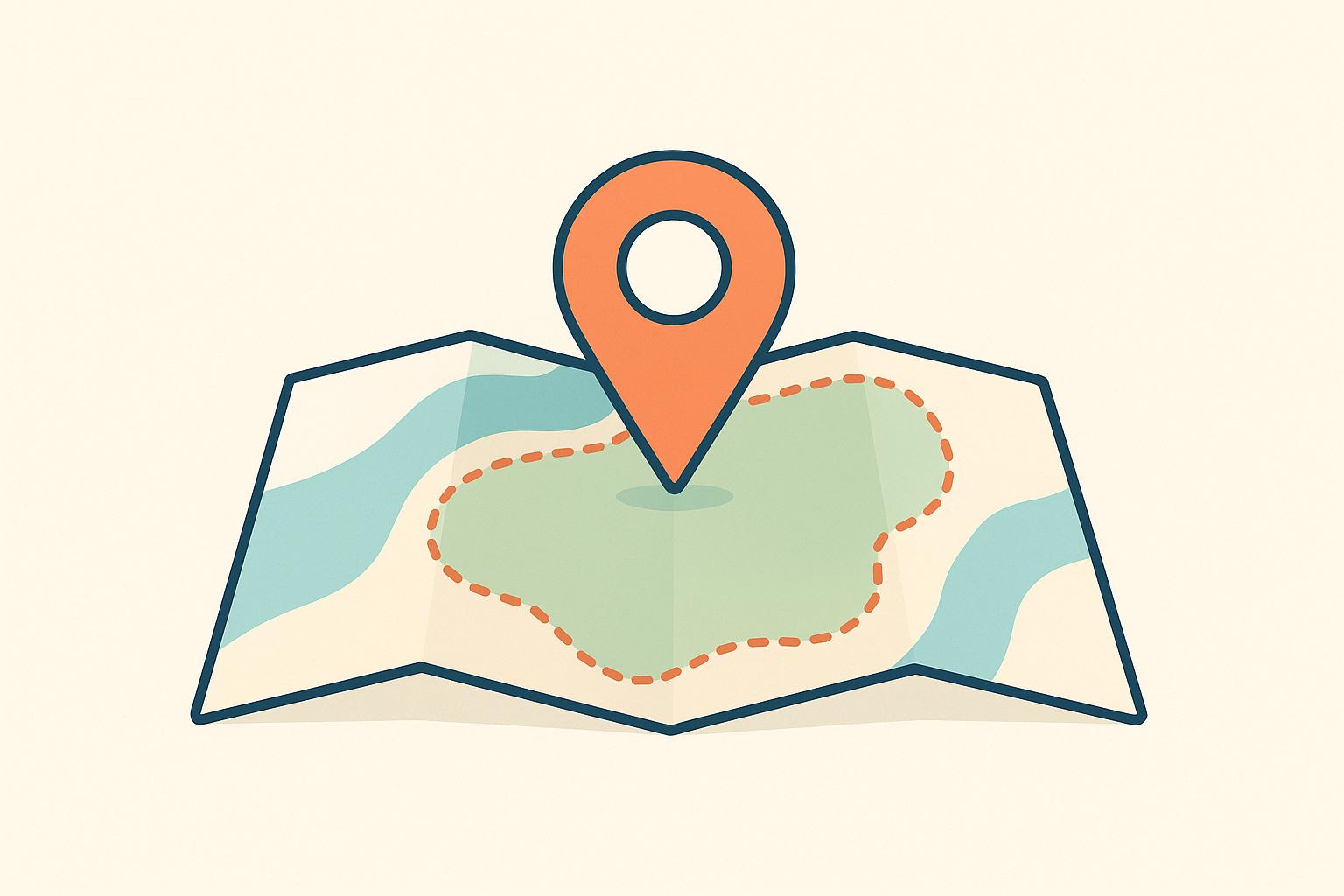
Google requires businesses to define their service areas by naming specific cities, ZIP codes, or geographic zones rather than using a simple radius on a map [3].
"When you set your service area, it helps people find your Business Profile. Your service area shows customers where you can provide your products and services" [3].
To ensure accuracy, Google recommends keeping service areas within about a 2-hour driving distance from your base location [3]. If your business doesn’t serve customers at its physical address, you should remove the address from your profile and only display the service area [3]. For businesses operating from private locations, mark them as not open to the public or hide the address entirely [4]. Additionally, businesses that deal in age-restricted products, like alcohol or firearms, must maintain a physical storefront [3].
Google enforces specific limits on how service areas can be set up to maintain quality and ensure customer satisfaction. For instance, businesses can define up to 20 service areas [3]. Exceeding this limit or providing inaccurate information can lead to negative outcomes, such as customer complaints, poor reviews, or even profile suspension [4][5][6].
| Service Area Limit | Google's Requirement | Business Impact |
|---|---|---|
| Maximum Areas | 20 service areas per business | Encourages realistic coverage |
| Distance Boundary | Approximately 2 hours driving time from base | Helps ensure reliable service |
| Area Definition | Cities, ZIP codes, or specific regions | Radius-based selections are prohibited |
Regular updates to your service areas are critical. As your business grows or changes, adjust your listed areas to reflect your actual capacity. Google uses this information to determine where your business appears in local search results, so keeping it accurate can significantly impact your visibility [4].
Being precise is key. If your services are limited to specific neighborhoods, make that clear instead of claiming the entire city. This level of honesty not only aligns with Google’s guidelines but also helps connect your business with the right customers. It reduces the risk of negative reviews from disappointed clients and strengthens your local search performance [4].
Using Google's service area guidelines as a foundation, here's how to configure your service areas in Google Business Profile (GBP) effectively.
To get started, log into your Google Business Profile account and navigate to the Info tab on your dashboard. In the Service Areas section, you’ll find the tools to add or modify your coverage zones. Instead of using a radius (like "within 25 miles of downtown"), Google now requires you to specify cities, ZIP codes, or neighborhoods. For example, instead of a radius, you'd list individual locations like "Austin", "Round Rock", "Cedar Park", and "Georgetown."
"When you set your service area, it helps people find your Business Profile. Your service area shows customers where you can provide your products and services" [3].
Keep in mind that Google limits the number of service areas you can list. If you're just starting to expand, it’s a good idea to begin with 5–10 carefully chosen areas. These should be locations where you can realistically deliver quality service, generally within about 2 hours of driving time from your base [3].
Once you’ve made updates, it can take up to 48 hours for changes to reflect on your profile [3]. During this time, avoid making additional adjustments, as frequent changes might trigger a review by Google's systems.
One common mistake businesses make when expanding is overextending themselves. The areas you select should match what your business can currently handle, not what you hope to manage in the future. To avoid this, assess your current capacity by considering factors like team size, available resources, transportation logistics, and workload.
Use measurable data to evaluate your capacity. Track metrics such as the number of service calls completed daily, average travel time between jobs, and seasonal fluctuations. For instance, a landscaping company might manage 12 jobs on busy days but only handle 6 during slower periods. To plan effectively, businesses often choose one of three approaches:
For most small businesses, the match strategy works best. Add one or two new service areas at a time, monitor your performance, and expand further only when you’re confident in your ability to manage the additional demand.
Seasonal changes can also impact your service area decisions. For example, a pool maintenance company might serve 15 areas during the summer but reduce to 10 in the winter. Training your staff to take on new skills can also help your team adapt to fluctuating demand [7].
Keeping your service areas up to date is essential for maintaining an accurate profile and attracting the right customers [4]. Plan to review your service areas quarterly or bi-annually to ensure they align with your operations [4]. During these reviews, ask yourself whether you’re consistently able to serve all the listed areas, if you’re ready to expand to new zones, or if certain areas should be removed due to low demand or profitability.
The frequency of updates depends on your industry and growth rate. Fast-moving industries might need weekly adjustments, while others may only require monthly or quarterly updates [8]. For example, a growing tech startup offering on-site IT support might adjust its service areas monthly as resources expand. Meanwhile, an established plumbing company might only need to review its areas every few months.
Certain changes, like updates to business hours, location, or services, are triggers for immediate updates [8]. When expanding, take a gradual approach. Add a few new areas first, monitor your performance for several weeks, and only then expand further if your team can handle the increased workload. For instance, if you’re planning to cover additional ZIP codes, start small, evaluate how well you’re managing, and adjust accordingly.
Lastly, keep detailed records of your service area changes and their outcomes. Track metrics like response times, customer satisfaction, and profitability for each area. These insights will guide your future decisions about where to expand or where to scale back.
With your service areas clearly defined and regularly updated, the next step is tailoring your profile content to resonate with each local market.
After defining your service areas, the next step is to fine-tune your Google Business Profile (GBP) for local customers. Skip the generic descriptions and focus on creating content that speaks directly to people in specific neighborhoods, cities, or regions.
Location keywords are crucial for improving visibility in local searches because they help search engines pinpoint where your business operates[9]. For example, if someone in Austin searches for "plumber near me" or "Austin plumbing services", Google uses location cues to connect them with relevant businesses.
To make the most of location keywords, weave them naturally into your GBP content. Start with your business description by explicitly naming the areas you serve. Instead of saying, "We provide landscaping services", try something like, "We provide landscaping services across downtown Los Angeles, Beverly Hills, and Santa Monica." Use your posts and updates to highlight specific areas where projects were completed. When uploading photos, use descriptive file names and alt text like "kitchen-renovation-georgetown-texas.jpg" to emphasize the local connection. Avoid overloading your content with keywords - it’s more effective to focus on clear, helpful language.
To take your local optimization further, consider building dedicated web pages for each service area.
While your GBP is your main tool for local visibility, having dedicated service area pages on your website can amplify your reach. These pages should offer content tailored to each area, avoiding the trap of using generic, repetitive templates.
For instance, a service area page that includes local insights and unique photos of completed projects will resonate more with local audiences[10]. Customize these pages with details that matter to the community - like weather patterns, nearby landmarks, or local events that might influence customer needs. Mention specific neighborhoods, schools, shopping centers, or other local features to showcase your expertise. Use a clear URL structure such as "yourcompany.com/plumbing-services-austin" and enrich meta titles and descriptions with relevant local keywords.
Make sure these pages are:
Visual content is a game-changer for local search rankings and customer trust. Upload photos that showcase your work in specific areas, such as before-and-after shots, team photos on-site, or equipment in action at local addresses. Each image should include descriptive alt tags with location-specific keywords[11].
Keep your content fresh by sharing seasonal updates. For example, a landscaping company could post about spring cleanup projects in different neighborhoods, while an HVAC contractor might highlight winter heating installations. You can also encourage customers to share photos of your work, adding authenticity to your local presence.
Lastly, maintain accurate and consistent business information - such as hours, contact details, service descriptions, and pricing - across your GBP, website, and service area pages. Regular updates like customer testimonials, case studies, and project highlights can further demonstrate your growing expertise in each market.
For those looking for professional help, companies like Humble Help offer marketing solutions tailored to local businesses. Their services include website creation, local SEO, and GBP optimization, combining AI tools with human expertise to streamline efforts and boost growth.
With a GBP that’s finely tuned for your local market, you’re well-prepared to take the next step: building stronger community ties through reviews and local engagement.
After optimizing your Google Business Profile (GBP), the next step is to strengthen your presence in new service areas through positive reviews and local engagement. Reviews play a crucial role in building trust - over 80% of consumers trust online reviews as much as personal recommendations [13]. Let’s dive into how to gather and manage reviews effectively in your new service areas.
The best time to ask for a review is right after completing a successful project. Make it easy for customers by providing a direct link or a QR code in your follow-up messages [13]. Interestingly, 86% of consumers are willing to leave a review, but they often need a gentle nudge [15]. Train your team to seamlessly incorporate review requests into conversations. For example, they could say something like: "We’d love to hear your feedback - could you leave us a quick review on Google?"
You can also include review links in thank-you emails, receipts, or even on business cards [13][14]. One business saw a noticeable improvement in both the number and quality of reviews by adding QR codes to receipts and coaching their staff to ask for feedback.
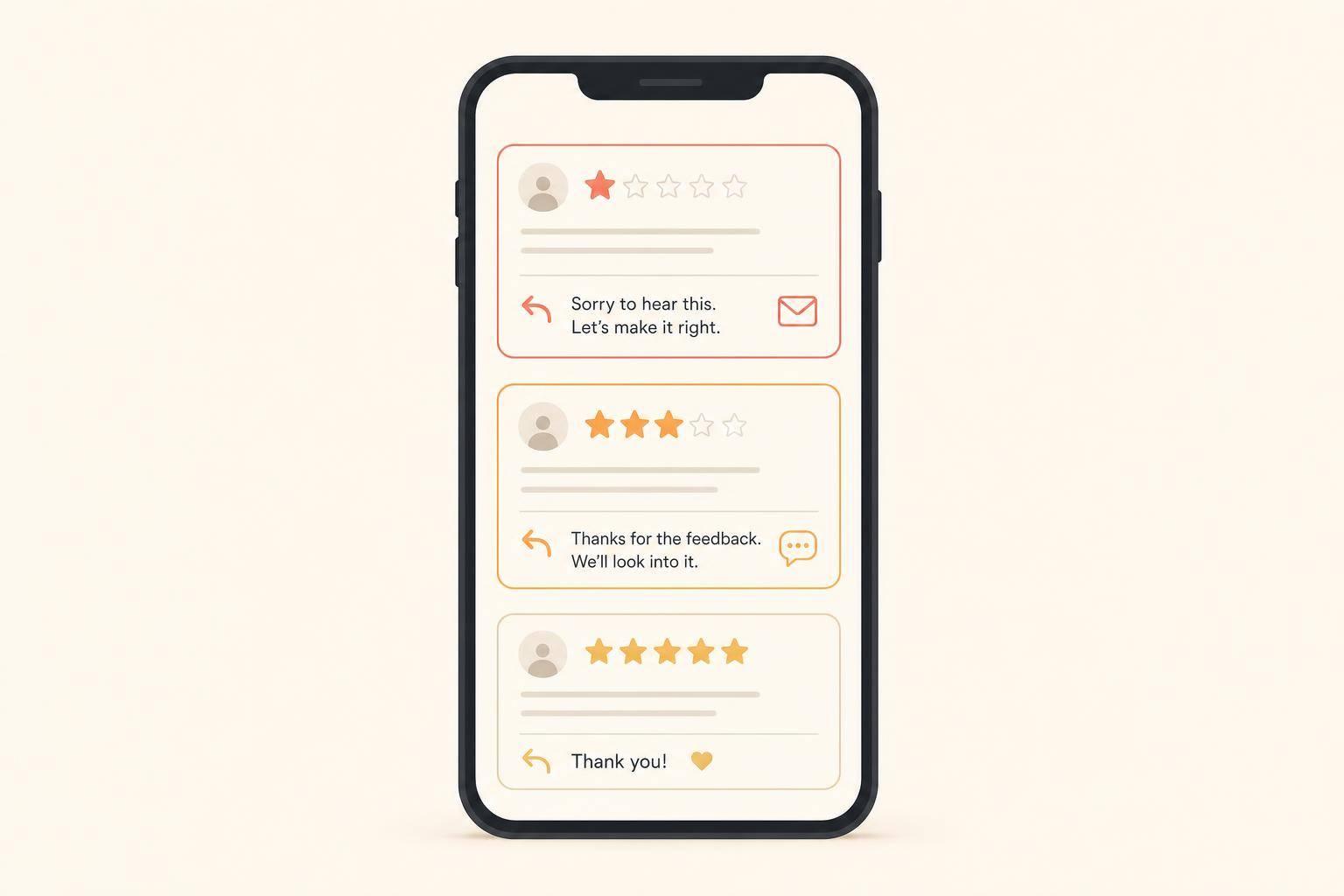
When reviews start coming in, make it a point to respond to all of them - both positive and negative [13][14]. This shows customers that you value their input and are actively engaged. In fact, 97% of consumers read businesses’ responses to reviews [15], so what you say matters as much as the reviews themselves.
Replying to reviews isn’t just about saying "thank you." It’s also an opportunity to highlight your connection to the community. Personalize your responses by using the customer’s name and referencing local details. For instance, if someone compliments your plumbing work, you could respond:
Thanks, Sarah! We’re so glad the kitchen pipe repair in Georgetown went smoothly. Our team loves serving that neighborhood and truly appreciates your trust in us.
This approach not only strengthens customer relationships but also reinforces your local presence. Eighty-eight percent of consumers are more likely to trust businesses that respond to all reviews, and 70% feel a business owner’s response increases their trust [17][18]. When addressing negative feedback, keep your tone professional and courteous. A "sandwich approach" works well - start with something positive, address the concern, and end on an encouraging note [16]. Responding quickly is equally important; 53% of customers expect a reply within a week, and many anticipate an even faster response [19]. Timely replies signal that you care about customer satisfaction and are actively managing your business.
In addition to personalized review responses, leveraging Google’s Q&A and Posts can help you engage with your local audience even further. The Q&A section allows customers to ask questions about your business, and your answers can build trust while naturally incorporating location-specific keywords [21]. Consider pre-filling this section with frequently asked questions like, "Do you service downtown Austin?" or "What’s your response time in the suburbs?" Respond promptly to any new questions to show you’re attentive [20].
"Engaging with customers through the Q&A section can improve the overall user experience and encourage more people to interact with your business profile. This increased engagement can signal to Google that your business is active and relevant, which can potentially improve your local SEO."
Google Posts, on the other hand, let you share updates, promotions, or project highlights directly on your profile. Use these posts to showcase work in specific neighborhoods, announce expansions, or share seasonal advice tailored to local conditions. High-quality photos and clear calls-to-action make these posts even more effective [22]. Regular updates not only keep your profile fresh but also show Google that your business is active and engaged [22]. Considering that 80% of local mobile searches lead to conversions and 50% of users visit a store within a day of a local search [23], maintaining an active profile can directly boost your business.
Handling multiple Google Business Profiles (GBPs) across different service areas can get overwhelming as your business grows. Thankfully, there are tools and services designed to simplify the process. These solutions can help you automate review management, centralize analytics, and maintain uniformity across locations. Below, we’ll look at some of the most effective tools and services that can streamline GBP management for businesses expanding their reach.
Effectively managing your Google Business Profile is a key part of boosting your local SEO in 2025, especially if you’re looking to expand your visibility in local search results [24]. The right tools can save time and effort by combining review management, social engagement, and analytics into a single dashboard. Features like automated review requests, unified inboxes, and multi-location management are especially useful for scaling operations.
Here’s a quick comparison of some leading platforms and their features:
| Platform | Starting Price | Best For | Key Features |
|---|---|---|---|
| Moz Local | $14/month | Small businesses | Keeps business information consistent across directories |
| Whitespark | $20/month | Local SEO focus | Offers rank tracking, listings management, and reputation-building tools |
| Local Viking | $29/month | Advanced tracking | Provides Geo-Grid rank tracking and scheduling capabilities |
| BrightLocal | $35/month | Agencies | Includes local SEO audits, citation management, and white-label reporting |
| Agorapulse | $49/month | Social integration | Combines GBP management with social media scheduling |
For larger businesses or franchises, enterprise solutions like Yext and SOCi offer tailored location-specific management [24].
Other standout tools include Birdeye, which focuses on customer experience by automating review generation and consolidating customer interactions. Brandwatch integrates GBP management with your broader marketing strategy, offering a unified inbox for reviews and social media interactions. Meanwhile, GMB Briefcase specializes in auditing profiles and providing actionable insights, such as a chatbot for answering common customer questions [24].
If you’d rather not manage everything yourself, professional services provide an excellent alternative for optimizing your GBP.
While DIY tools can be powerful, professional services take GBP management to the next level by combining technology with human expertise. Humble Help offers a complete solution for managing GBPs across multiple service areas. Their platform handles everything - from setup to ongoing optimization and performance monitoring - helping businesses maintain their profiles without the need for heavy in-house involvement.
Professional services also ensure your profiles stay aligned with Google’s latest updates and best practices [25]. For instance, businesses with photos on their profiles see 42% more requests for directions and 35% more click-throughs to their websites compared to those without [25]. Services like these ensure you leverage such opportunities to their fullest.
In November 2024, GMB Gorilla helped Dr. Mark E. Pruzansky, MD, climb to the #1 spot on Google Maps, generating dozens of new appointments each month [25].
"We used to spend countless hours trying to keep up with Google and all the new opportunities. Thanks to GMB Gorilla, my staff can spend their time focusing on caring for all the new patients they bring to the practice each week."
- Dr. Ava Shamban, Ava MD, Skin Five [25]
Humble Help's Brand Boost Package offers a free tier that includes a website check-up, a fresh design layout, three press features, and three blog posts - allowing you to explore their services with no upfront cost. For businesses managing multiple locations, the time savings alone can make professional services a worthwhile investment. They handle everything from creating location-specific content to managing reviews and tracking performance, freeing up your team to focus on other priorities.
Ultimately, the choice between DIY tools and professional services depends on your time and expertise. As Azim Premji, Chairman of Wipro Limited, once said:
"The important thing about outsourcing is that it becomes a very powerful tool to leverage talent, improve productivity, and reduce work cycle." [26]
If you’re unsure, consider starting with a small pilot project to evaluate the results before committing to a long-term solution. Whether you go with self-service tools or professional management, consistent optimization across all your service areas is the key to improving your local search visibility.
Expanding your Google Business Profile (GBP) into new service areas requires a well-organized strategy that blends technical precision with consistent engagement. To start, ensure every detail of your business information is accurate and complete across all profiles. This includes maintaining consistent NAP (Name, Address, Phone number) details and selecting the most relevant categories to represent your business effectively.
Visual content plays a major role in improving local search performance. Google reports that businesses with photos see 42% more requests for directions and 35% more clicks to their websites [28]. Even more striking, listings with over 100 images receive 520% more calls and 2,700% more direction requests compared to the average GBP listing [29]. To keep your content fresh and appealing, consider using a photo calendar to update images regularly.
Another key element is implementing a strong review strategy. Prompt customers for feedback immediately after service and respond quickly to reviews to show active engagement. For context, listings with more than 50 reviews experience 266% more click-throughs than those with fewer than 10 [29]. Additionally, publishing regular local posts not only enhances your profile’s visibility but also reinforces your relevance within the community.
Your website should also support your GBP efforts by including dedicated pages for each service area. These pages reinforce local SEO signals, helping you rank higher in search results.
For businesses operating in multiple service areas, centralized management is essential. Tools like Google Business Manager simplify this process by allowing you to group locations, assign roles, and maintain consistency. Keep a master NAP spreadsheet, conduct regular audits, and stay organized to manage your locations effectively.
Real-world examples highlight the success of these strategies. For instance, Hansford McDaniel – Workers' Compensation secured 11 new cases in just 30 days after reaching the top of the local 3-pack by strategically incorporating competitor keywords into their business name [27].
Consistency is the cornerstone of success. Regularly post updates, refresh photos, and respond to reviews across all service areas. Treat each location as its own local market while maintaining a unified brand presence. This approach allows you to capture local search opportunities without compromising your overall identity.
To boost your local search rankings, ensure your Google Business Profile clearly represents the areas you serve. Include specific cities, neighborhoods, or ZIP codes in your service area settings. Incorporating location-focused keywords in your business description, services, and FAQs can help match what local customers are searching for.
Ask satisfied customers to share positive reviews, ideally mentioning your services and location - this can go a long way in building trust and improving your visibility. Keep your profile up-to-date by adding fresh photos, posts, and accurate business hours to remain relevant in local search results.
To handle customer reviews efficiently across various service areas, consider using a centralized reputation management tool. This allows you to monitor and respond to feedback quickly and consistently. Develop a clear response policy to ensure a professional tone when addressing both positive and negative reviews. Encourage happy customers to share their experiences - positive reviews not only build trust but also enhance your visibility in local search results. Additionally, feature standout reviews on your platforms to highlight customer satisfaction and draw in more potential clients.
Managing your Google Business Profile across expanding service areas is much simpler when you have the right tools at your disposal. Some of the most popular options include:
These tools can help fine-tune your profile, keep tabs on how it's performing, and ensure you're reaching potential customers in new locations effectively.
If you'd rather leave it to the pros, services like Humble Help offer tailored support. They focus on optimizing Google Business Profiles and improving local SEO, giving small businesses the boost they need to thrive in competitive markets.
Discover strategies to elevate your business.