LinkedIn is one of the best platforms for coaches to attract clients without sending cold DMs. By focusing on creating a strong profile, sharing engaging content, and building genuine connections, you can position yourself as an expert and draw in leads naturally. Here's how:
This approach is all about building trust, providing value, and letting potential clients come to you. With consistency, LinkedIn can become a powerful tool to grow your coaching business.
Think of your LinkedIn profile as your digital storefront - it’s often the first impression potential clients have of you. Within moments, they’re deciding whether you’re the solution they’re looking for. A well-crafted profile doesn’t just showcase your qualifications; it highlights how you can solve your ideal client’s problems while building trust through your accomplishments.
Your headline is one of the most important parts of your profile. Don’t just list your job title - use this space to communicate your value. For example:
Executive Career Coach | Helping Leaders Land 6-Figure Roles | ICF Certified
This tells visitors exactly what you do, who you help, and the results they can expect. Include your niche, key outcomes, and any standout credentials to immediately establish your expertise.
Your summary, or "About" section, is another high-visibility area often overlooked by professionals. This is your chance to tell your story and back it up with results. Start with a clear statement of the value you bring, briefly share your background, and include specific achievements. Avoid vague claims and focus on tangible results, like:
"I've helped over 100 professionals transition to leadership roles at Fortune 500 companies."
Statements like these not only build credibility but also help potential clients imagine achieving similar outcomes with your help.
Don’t forget to end your summary with a call to action. Whether it’s inviting visitors to connect, schedule a consultation, or download a resource, this simple step can significantly increase engagement with your profile.
Your Experience section is where you prove your expertise. Use this space to highlight your professional background, certifications (like ICF, ACC, or PCC), and any specialized training. Be specific about your coaching approach and use measurable outcomes to demonstrate the impact of your work. For instance:
"Helped a client increase sales by 30% in six months"
or
"Guided 15 executives through career transitions, resulting in an average salary increase of $25,000."
These details make your results more relatable and impactful. Client testimonials are another powerful way to establish credibility. Ask satisfied clients for recommendations and display them in the Recommendations section. You can also weave short success stories into your descriptions, focusing on the challenges your clients faced and the results you helped them achieve.
When crafting this section, use language and examples that speak directly to your target audience. Address their pain points, aspirations, and industry-specific concerns while showing how you’ve delivered results for clients with similar goals.
Visuals play a big role in making your profile stand out. Start with a professional headshot - high-resolution, with you in business attire against a clean, neutral background. Profiles with professional photos get up to 21× more views and 9× more connection requests, so this step is worth the effort.
Your banner image is another opportunity to reinforce your brand. Use it to showcase your tagline, logo, or a relevant visual. This could be a photo from a speaking engagement, a quote that aligns with your coaching philosophy, or a graphic that highlights your value proposition.
Take it a step further by adding multimedia to your profile. A short introduction video, a client success story, or samples of your coaching materials can make your profile more dynamic and personal. These elements give visitors a sense of your personality and approach, helping them connect with you on a deeper level.
Finally, enable Creator Mode to unlock LinkedIn features that boost your visibility, such as content hashtags and enhanced analytics. This setting not only makes your profile easier to discover but also provides insights into what’s resonating with your audience, helping you refine your strategy over time.
Content is the backbone of LinkedIn success. By consistently offering meaningful insights, you position yourself as an authority in your coaching niche. This approach shifts the dynamic - you’re not chasing clients; they’re coming to you because you’ve already proven your expertise and earned their trust.
LinkedIn’s algorithm rewards posts that spark engagement, like comments and shares, by expanding their reach. That means quality content doesn’t just showcase your knowledge - it amplifies your visibility, drawing in more of the right audience. Pair this strategy with a polished, optimized profile, and you’ve got a winning formula for attracting ideal clients.
Your LinkedIn posts should zero in on the challenges your ideal clients face. Instead of spotlighting yourself, focus on their pain points and offer practical solutions.
Educational posts are especially effective for coaches. Share actionable frameworks or step-by-step processes that reflect your expertise. For instance, a leadership coach might outline a decision-making framework, while a career coach could provide a salary negotiation template. These posts give potential clients a clear sense of how your coaching can help them tackle obstacles.
Don’t shy away from sharing personal insights. Lessons learned, mistakes made, or behind-the-scenes moments from your coaching journey can make your content relatable and build trust. People connect with authenticity, especially when they see parallels to their own experiences.
Commenting on industry trends or offering your take on current events can also position you as a thought leader. Whether you’re challenging conventional thinking or sparking discussions around emerging topics, these posts can expand your reach and encourage meaningful engagement.
The secret to engaging posts often lies in the hook. Start with a question like, “What’s the biggest mistake leaders make during transitions?” or “How do you navigate career setbacks effectively?” Then, dive into your insights and wrap up with another question to encourage comments and interaction.
While some coaches notice better engagement during traditional work hours, the key is consistency. Post regularly at times that align with both your schedule and your audience’s habits. By sticking to these strategies, you’ll set the stage for demonstrating your value and expertise.
Success stories are one of the most compelling ways to build credibility. They show potential clients what’s possible and offer real-world proof of your coaching’s impact. When sharing these stories, structure them to highlight the challenge, the approach you took, and the measurable results. This format helps readers visualize how you could help them achieve similar outcomes.
Always prioritize your clients’ privacy. Get their permission before sharing details, and if needed, use first names or let clients share their own stories, which you can then expand upon for added context.
Specific metrics make success stories more relatable and believable. For example, instead of saying a client “became a better leader,” you could mention how their team’s productivity increased by 30% after implementing your strategies. Mix up your formats - share quick updates about recent wins, detailed case studies, or even carousel posts that break down the transformation step by step.
Don’t overlook the power of celebrating smaller victories. Highlighting incremental progress can resonate deeply with those currently facing similar challenges. These authentic stories not only inspire but also create opportunities to diversify your content.
Video content is a standout on LinkedIn, often outperforming text-based posts. It gives potential clients a chance to see your personality, hear your voice, and get a feel for what it’s like to work with you.
Short videos - under two minutes - are great for sharing quick tips, celebrating client successes, or addressing common challenges. The focus should always be on delivering value, so keep introductions brief and dive right into the content.
LinkedIn Live offers another way to connect. Use it for interactive Q&A sessions, mini-workshops, or casual chats that engage your audience in real time.
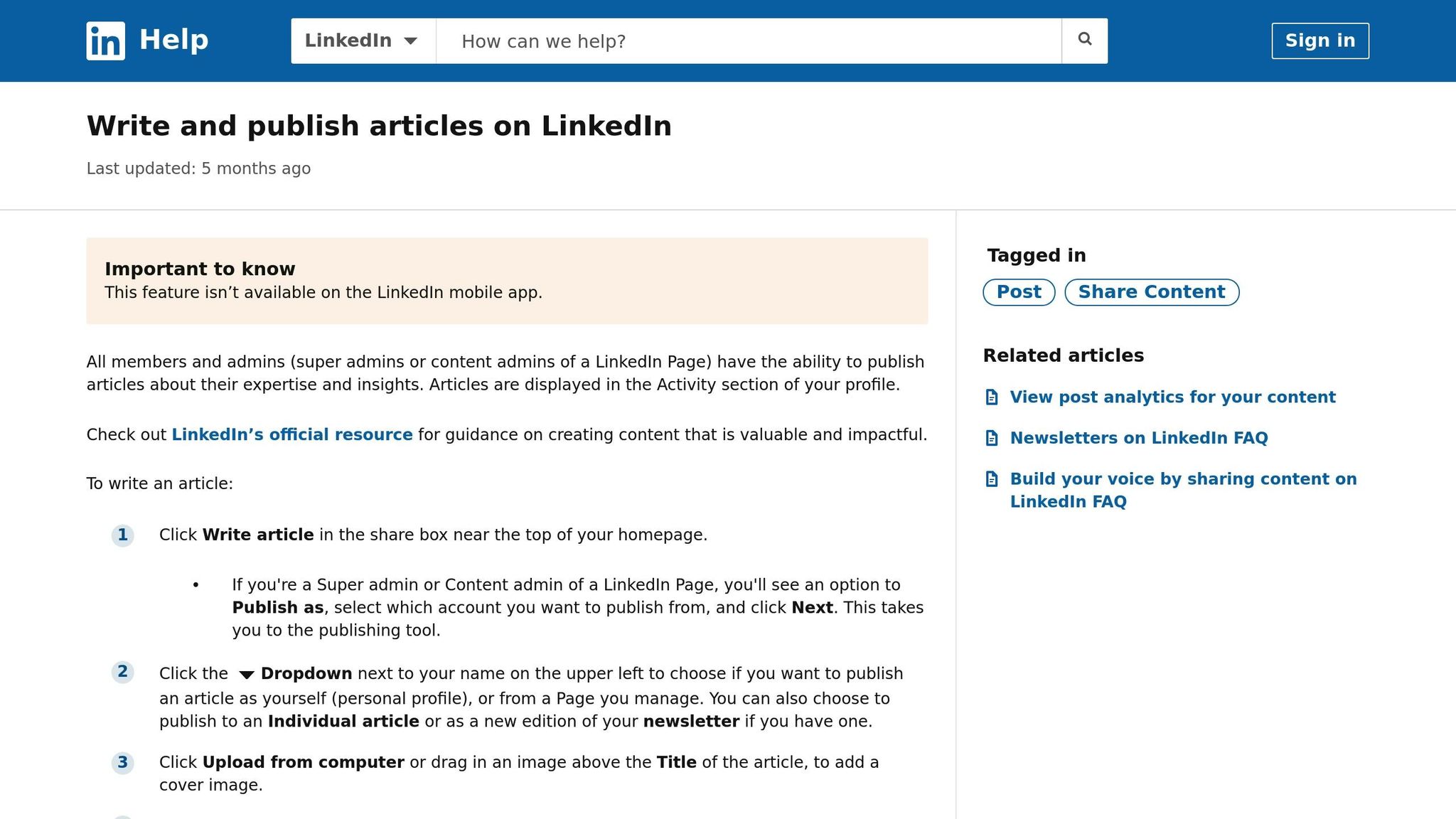
On the other hand, LinkedIn Articles let you dive deeper into complex topics. These long-form pieces are perfect for showcasing your expertise through detailed insights. Unlike regular posts, articles have staying power - they remain visible and continue to attract readers long after they’re published.
When crafting articles, stick to evergreen topics like how-to guides, industry analyses, or in-depth case studies. Use clear headings, bullet points, and short paragraphs to make them easy to read. You can also repurpose this content - turn a successful article into a series of posts or create a video highlighting its main points.
Whether you’re creating videos or writing articles, the goal is the same: to share your expertise and build authentic connections. Focus on providing value in every piece of content, and meaningful client relationships will naturally follow.
The best coaches on LinkedIn know that building genuine relationships always outshines aggressive outreach. Instead of blasting out mass messages, they focus on meaningful engagement that draws the right clients naturally. Sure, it takes time, but this approach creates stronger, more lasting connections that can lead to real business opportunities. And it fits perfectly with using LinkedIn as a tool for connecting with quality clients.
Interestingly, LinkedIn’s algorithm rewards this kind of authentic interaction. When you actively engage in professional conversations - commenting thoughtfully and prioritizing quality over quantity - you increase your visibility and boost your chances of appearing in others’ feeds [1][2]. This kind of organic reach is far more effective than sending cold messages. It lays a solid groundwork for all your networking efforts.
Thoughtful commenting is one of LinkedIn’s most overlooked tools for networking. By engaging with posts from your ideal clients or industry leaders, you position yourself right in front of the people you want to connect with. The trick is to add value - don’t just drop generic phrases like "Great post!"
For example, if a CEO shares a post about team challenges, a leadership coach might jump in with a brief framework they use or share a relevant experience. This not only showcases expertise but also sparks meaningful conversations.
Focus your efforts on engaging with your target audience, peers, and industry leaders [5]. Dedicate 15–20 minutes daily to commenting on content from potential connections before reaching out [6].
LinkedIn Groups are another great way to expand your network. These niche communities let professionals demonstrate their expertise through discussions and content sharing, which helps build credibility [6]. Join 3–5 groups that align with your coaching focus, and don’t just sit back - actively participate. Share advice, ask questions, and contribute to discussions to increase your visibility [2][3].
For instance, an executive coach might join groups for C-suite leaders, while a career coach could find value in professional development communities. The idea isn’t to sell - it’s to share knowledge and show how you can be a resource, naturally attracting people to your profile.
Your connection request is often your first impression, so make it count. Generic messages tend to get ignored, but a personalized note referencing shared interests or mutual connections stands out.
Before sending a request, take a moment to research the person’s activity. Mention something specific, like a recent post or a mutual connection. For example: “Hi Sarah, I saw your post about leadership challenges in remote teams. I specialize in helping executives navigate similar issues and would love to connect and exchange ideas.”
Pay attention during conversations and follow up with personalized messages [4]. Taking notes on key details after interactions can show that you’re genuinely interested and paying attention [4].
The most successful coaches approach connections with curiosity about the other person’s goals and challenges. Instead of pitching your services right away, focus on building a real relationship. This sets the stage for meaningful professional growth down the line [3].
Connecting is just the start - keeping those relationships alive is where the magic happens. Coaches who consistently attract clients understand that staying top-of-mind requires regular, valuable interactions.
Offer value to your network by sharing useful content, making introductions, or providing expertise when someone asks a question [3]. Celebrate milestones like promotions or achievements with a personal note. If someone posts about a challenge you’ve helped others overcome, share a quick tip or resource.
Set aside time each week to check in with your network. Share insights, congratulate achievements, or introduce people who might benefit from knowing each other. These small acts of engagement build trust and familiarity, making it easier to transition into client conversations when the time is right.
In July 2025, Forbes noted that coaches who “post thoughtful content on Tuesday morning and book discovery calls by Thursday” and “send connection requests that get accepted and start conversations that convert” are building six-figure businesses without relying on cold calls or misaligned networking events.
The key is to stay consistent without overdoing it. Engage regularly, but avoid overwhelming your connections by commenting on every single post they make. Mix up your interactions - like a post one day, share it with your own insights another, or send a direct message when something resonates deeply.
Networking on LinkedIn is a long game. The connection you make today might not turn into a client for months, but they could refer someone to you next week. By focusing on genuine relationship-building rather than immediate sales, you’ll create a network that naturally leads to opportunities over time.
Lead magnets are a fantastic way to turn casual connections into paying clients. They give potential clients a glimpse of your expertise while growing your email list. Think of them as a complement to the organic relationship-building strategies we’ve already discussed.
The beauty of lead magnets is that they work in the background, quietly capturing interest while you’re busy engaging with your network.
The key? Create a resource so valuable and relevant that people willingly share their contact information. It should solve a real problem or offer practical insights that reflect your coaching style. Let’s dive into what makes a lead magnet stand out for coaches.
The most effective lead magnets are both specific and actionable. Broad, generic advice often falls flat because it doesn’t address the unique challenges your ideal clients face.
Resources like checklists and frameworks tend to perform well. For instance, a career coach might create a "30-Day Job Search Action Plan" packed with daily tasks and email templates. Similarly, an executive coach could offer a "C-Suite Decision Framework" that outlines five key questions leaders should ask before making critical decisions. These tools provide immediate value while highlighting your structured approach to solving problems.
For more complex topics, mini-courses are a great option. A short 5-day email series on leadership habits, for example, can build trust while delivering actionable strategies.
Assessment tools also work wonders because they offer a personalized experience. A business coach could design "The Entrepreneur Readiness Assessment" to help users evaluate their preparedness for launching a business while offering tailored recommendations. Templates and worksheets are equally effective. A life coach might provide "The Values Clarification Workbook", while a productivity coach could share "The Weekly Planning Template" to help clients organize their time.
The format you choose is less important than the relevance and specificity of the content. Your lead magnet should feel custom-made for your target audience. If you coach divorced professionals, you could create "The Career Pivot Playbook for Life After Divorce." If your focus is burned-out executives, something like "The Executive's Guide to Sustainable High Performance" might resonate more.
LinkedIn is a prime platform for promoting your lead magnets, and integrating them into your content strategy can make all the difference.
Start by featuring your lead magnet in the Featured section of your profile. This prominent spot ensures your offer is visible to anyone visiting your page. Use an eye-catching graphic and write engaging copy that emphasizes the benefits. For example, instead of saying, "Download my free guide", try something like, "Learn the 3-step framework to reduce decision fatigue and simplify your workday."
You can also promote your lead magnet through regular content posts. Share a valuable tip or a snippet from your resource, then invite readers to access the full guide for more insights.
LinkedIn Articles provide even more room to elaborate. Share a client success story tied to your lead magnet, explaining how the resource contributed to their results. Keep the tone educational rather than overly promotional.
Don’t underestimate the power of direct engagement. If someone comments on your post about a challenge your lead magnet addresses, offer to send it to them directly. This personalized approach feels helpful and genuine.
Video content and LinkedIn Stories are other great ways to showcase your lead magnet. A short video walking through part of your worksheet or explaining how to use your template can give viewers a quick preview and encourage them to download the full resource.
Timing matters too. Share your lead magnets when your audience is most active, and avoid over-promoting the same offer. Rotate between different resources or tweak your lead magnets for specific audience segments.
Once your lead magnet is live, it’s time to measure its success. LinkedIn provides basic metrics like likes, comments, and shares, but for a deeper understanding, you’ll need additional analytics tools.
Landing page analytics, from platforms like Google Analytics or your email service provider, can show how many visitors convert into downloaders. While conversion rates vary by industry, a strong rate is a good sign that your lead magnet is hitting the mark.
Email marketing metrics are also invaluable. They reveal which lead magnets attract subscribers who stay engaged - whether they’re opening emails, attending webinars, or booking calls. Sometimes, a lead magnet that generates fewer leads initially may attract higher-quality prospects over time.
Use source tracking, like UTM parameters or unique landing pages, to pinpoint which promotional methods work best. Are people converting more from your Featured section, content posts, or direct interactions? Knowing this can help you refine your strategy.
Don’t overlook qualitative feedback. A quick survey asking subscribers what drew them to your lead magnet and what they found most helpful can provide valuable insights for future improvements.
Experimentation is key. Test different headlines, descriptions, or even topics to see what resonates most with your audience. Over time, tracking how many leads turn into paying clients will reveal which lead magnets deliver the best results.
If creating lead magnets feels overwhelming, companies like Humble Help specialize in designing high-performing resources for coaches. They focus not just on growing your email list but also on converting those subscribers into booked calls - something many coaches miss.
Regularly reviewing and optimizing your lead magnets ensures they continue to perform well. By analyzing trends and feedback, you can make adjustments that consistently attract and convert your ideal clients.
Once you've got your profile polished and your content strategy in place, LinkedIn offers a suite of tools to help you find and connect with potential clients. These features can provide valuable insights, point you toward warm leads, and build your credibility - all without resorting to cold outreach.
LinkedIn Analytics is your go-to for tracking how your content is performing. It shows you metrics like profile views, connection requests, and engagement on your posts. Keeping an eye on follower growth, post impressions, and interaction rates helps you fine-tune your strategy to better connect with your audience.
Advanced Search Filters are perfect for narrowing down potential clients. You can filter by industry, company size, job title, location, or even recent activity to find the people who fit your ideal client profile.
If you’re serious about prospecting, Sales Navigator is a game-changer. It offers advanced search capabilities, real-time insights, and tools for saving and tracking leads. Plus, its InMail feature boasts an impressive 85% response rate, making it a powerful way to reach out to prospects [7].
Don’t overlook the value of tracking who’s interacting with your profile. The "Who Viewed Your Profile" feature can signal potential interest, giving you the chance to send a personalized connection request at just the right time.
Finally, LinkedIn Recommendations are a great way to build trust and credibility. Endorsements from clients and peers act as social proof, making it easier for prospects to see the value you bring to the table.
As we've covered in earlier sections on profile optimization, content creation, and networking, building a thriving coaching practice on LinkedIn hinges on four key strategies that work together to naturally attract clients. While your optimized profile lays the groundwork, these strategies help transform that foundation into a client-generating machine.
1. Share content that solves problems. Consistently post helpful content that tackles your audience's pain points. This positions you as the go-to expert in your niche without coming across as overly promotional. The goal is to provide value and demonstrate your expertise.
2. Build real connections, not just a contact list. Forget the hard sell. Instead, focus on genuine interactions. Comment thoughtfully on posts from your ideal clients and industry peers. When sending connection requests, personalize them by referencing something specific about their profile or content. This creates a more meaningful connection.
3. Use LinkedIn's tools to refine your approach. Take advantage of LinkedIn's analytics to see what resonates with your audience and identify the best prospects. For more advanced targeting, consider Sales Navigator. It offers powerful features to help you find and engage with potential clients who fit your ideal profile.
4. Offer lead magnets to turn interest into action. Create resources that address specific challenges your coaching clients face - think guides, templates, or checklists. Share these strategically to collect contact details from prospects who are genuinely interested in your services.
When these strategies are combined, they create a steady flow of warm leads. The most effective coaches on LinkedIn treat this process as long-term relationship-building, ensuring prospects already feel connected to you before they even schedule a discovery call.
To connect with your ideal clients on LinkedIn, focus on sharing meaningful and relatable content that directly addresses their challenges and goals. Post actionable advice, share real client success stories, and offer insights from your coaching journey to establish yourself as a trusted resource. Skip the aggressive sales pitches - your goal should be to educate, inspire, and build trust.
Experiment with different content styles to keep your audience interested. Try short-form posts, engaging videos, or eye-catching visuals. Stay active by responding to comments, participating in discussions, and forming genuine connections with others. By prioritizing authentic interactions and offering real value, you’ll naturally attract the right audience to your profile.
Coaches on LinkedIn are seeing great results with lead magnets that deliver instant value while highlighting their expertise. Popular options include quizzes, checklists, cheat sheets, mini-courses, and templates. These tools not only grab attention but also offer potential clients a sneak peek into the coach’s methods and skills.
The most effective lead magnets tackle a specific problem or goal that resonates with your audience. For example, a career coach might share a free resume checklist, while a wellness coach could design a quick quiz to help users identify stress triggers. The secret? Make sure your resource is practical, straightforward, and tailored to meet the needs of your ideal client.
LinkedIn Sales Navigator offers an excellent way for coaches to find and connect with potential clients. Its advanced search filters let you zero in on your ideal audience by narrowing down criteria like industry, location, or company size. Plus, you can enable real-time alerts to keep track of your prospects’ activities and use lead recommendations to uncover new connections that align with your coaching focus.
To create meaningful connections, prioritize personalized messaging and save important prospects into well-organized lead lists. This approach helps you engage in a way that feels natural and avoids the impersonal nature of cold outreach, streamlining your client acquisition process while keeping it authentic.
Discover strategies to elevate your business.