In 2026, winning local clients requires a shift in strategy to keep up with changing search behaviors and AI-driven tools. Here's what you need to know:
Start by optimizing your Google Business Profile, targeting local keywords, and engaging with reviews. Use tools like Humble Help CRM and Milo AI Coach to stay organized and track results. Focus on these steps consistently, and you'll see more local clients coming through your door.
Local Search Statistics 2026: Key Data for Small Business Owners
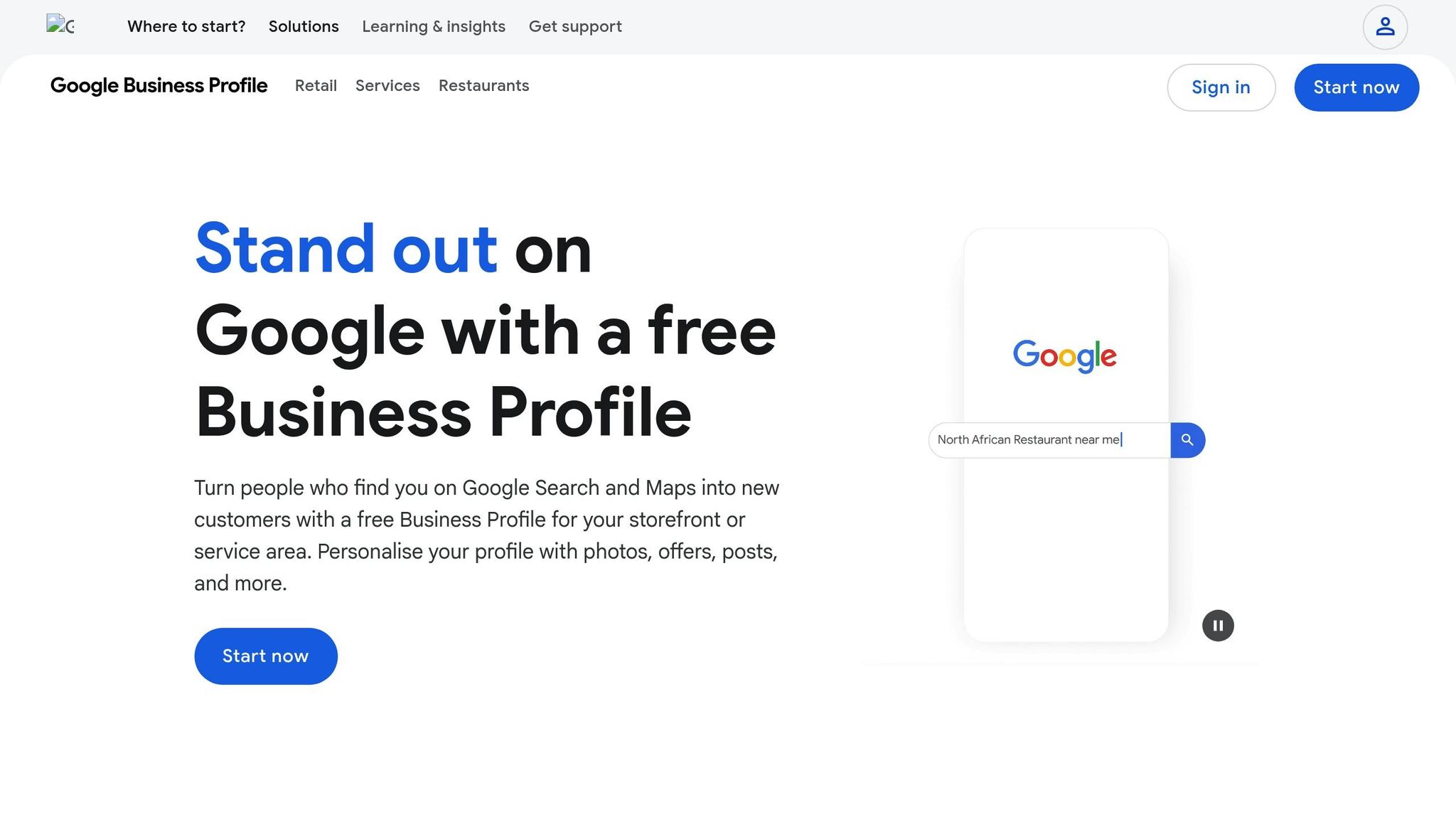
Your Google Business Profile is a free tool that acts as your digital storefront, helping you show up in local searches and on Google Maps. When set up and maintained properly, it can significantly boost your visibility and attract more customers. Here's how to make it work for you.
Start by searching for your business on Google Maps. If you see the option to "Claim this business" or "Own this business?", click it and follow the steps to verify your profile. Verification methods include phone, text, email, or video. If your business doesn't already have a profile, you can create one by visiting business.google.com/add. Just keep in mind that your profile will only go live after it's verified.
If you find that someone else has already claimed your profile, you'll need to "Request Access" from the current owner instead of creating a duplicate. For service-area businesses, make sure to hide your home address and define up to 20 service areas within about a two-hour driving radius. To comply with Google's guidelines, toggle off the "Show business address to customers" option. Once you're verified, focus on refining your profile by selecting precise categories and attributes that best represent your business.
Selecting the right primary category is critical for improving your local search rankings. Your primary category should describe what your business is, not what it offers. For example, choose "Pizza Restaurant" instead of "Drive-through." Stick to one to three highly relevant categories and opt for the most specific one available - like "Nail Salon" rather than the broader "Salon."
"Categories are what you ARE... Services are what you DO."
– Olly Olly
Make sure your business name matches exactly what’s on your signage, avoiding extra taglines or promotional codes. You can also enhance your listing by adding attributes such as "Wheelchair accessible", "Women-owned", or "Veteran-led", which provide additional context and appeal to potential customers.
Visual content can make a huge difference in how customers perceive your business. Upload at least three high-quality photos of your interior and exterior from different angles and times of day. Include authentic images of your team in action, and rename the files with descriptive titles like "Plumber-repairing-faucet-Atlanta.jpg" to improve search relevance. You can also create a short video tour of your business using your smartphone to engage potential customers further.
List your services clearly using Google’s predefined options, or add custom services if needed. If you’re in retail, consider showcasing popular products with photos, pricing, and even an "Order Online" option to make it easier for customers to take action.
"GBP is the one platform that people visit with the intent to BUY, so lean into that."
– Darren Shaw, GBP Expert
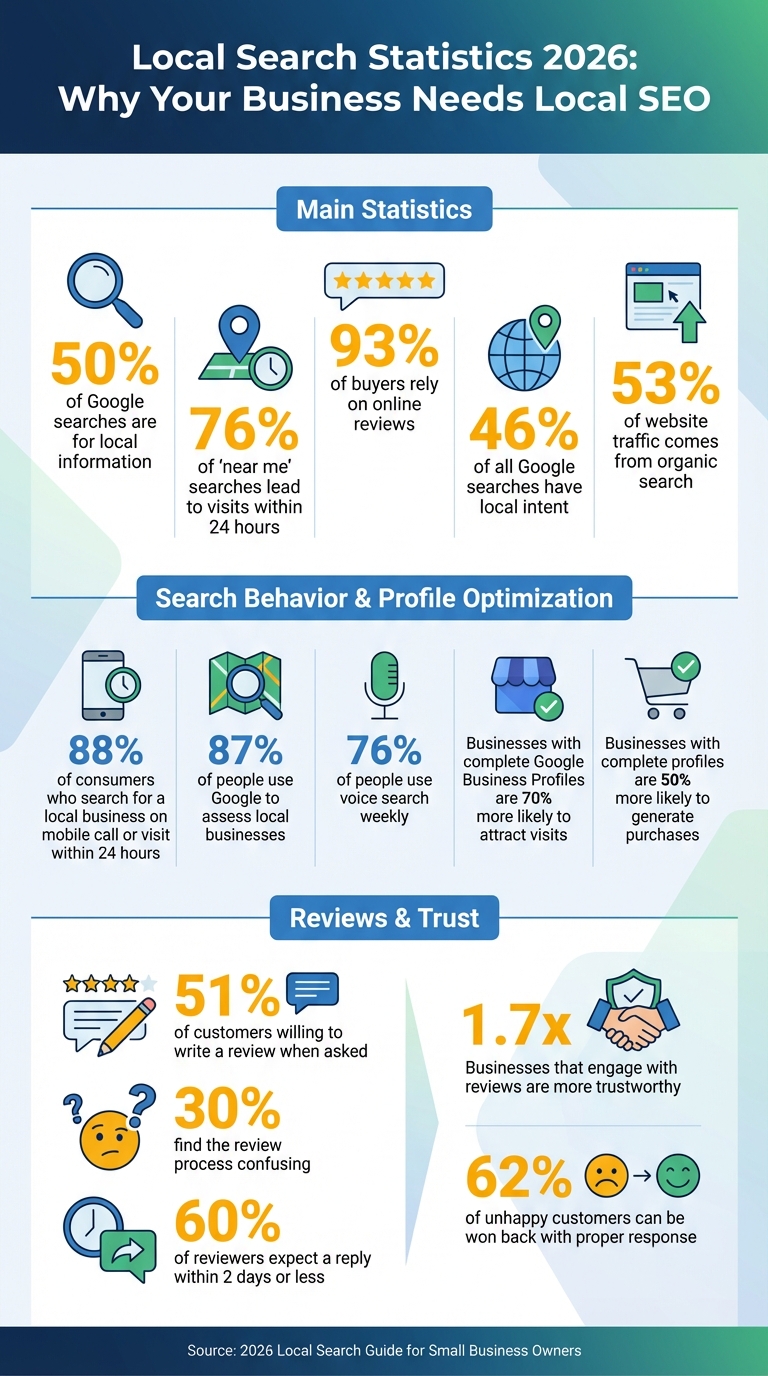
A complete and regularly updated profile can make a big impact. Businesses with complete profiles are 70% more likely to attract visits and 50% more likely to generate purchases [5][6]. Keep your profile fresh by adding new photos and videos regularly. This not only signals to Google that your business is active but also helps you connect with local customers in a more engaging way.
Improving your local visibility online requires more than just setting up a Google Business Profile. With 46% of all Google searches having local intent and 53% of website traffic coming from organic search [7], tailoring your website specifically to your geographic audience is essential. The good news? You don’t need a massive budget or advanced skills to make a real difference.
Understanding how customers search for your services is key. Focus on both explicit keywords (like "emergency plumber Austin") and implicit phrases (such as "plumber near me") to capture a range of search intents, from immediate needs to research-based queries [11][13].
Dive into customer feedback - review contact form submissions, chat transcripts, and Google reviews to uncover the exact language people use when seeking your services [9]. This can reveal overlooked long-tail opportunities, including hyperlocal phrases like "plumber near Dodgers Stadium" [7].
For additional ideas, explore autocomplete suggestions and the "People Also Ask" section on Google. These insights often highlight high-volume local queries, which are especially effective for voice searches - something 76% of people use weekly [12]. Once you’ve gathered your keywords, refine your strategy to align with local search intent.
| Keyword Type | Example | Search Intent |
|---|---|---|
| Explicit Local | "Emergency plumber in Austin" | Ready to hire (Transactional) |
| Implicit Local | "Plumber near me" | High urgency (Immediate need) |
| Informational | "How to fix a leaky faucet" | Research (Top of funnel) |
| Service-Specific | "Commercial pipe retrofitting" | High-value (B2B/Large contracts) |
Once you’ve identified your target keywords, integrate them naturally throughout your website. Prioritize fast mobile load times and maintain a clear URL structure [2]. Focus on three main areas: your homepage, service pages, and location-specific landing pages.
Incorporate "LocalBusiness" Schema markup into your site’s code. This structured data helps search engines and AI systems understand details like your business hours, services, and reviews. With Google’s AI Overviews increasingly pulling information from this data, it’s a step you can’t afford to skip [1][2]. Embedding a Google Map on your "Contact" or "About" page further reinforces your geographic relevance [1][7].
Consistency is critical for your Name, Address, and Phone number (NAP) across all pages. Ensure your NAP matches exactly what’s listed on your Google Business Profile. Even small inconsistencies - like "Street" vs. "St." - can confuse search engines and weaken your local signals [1][7].
Once your website is optimized, the next step is building local authority with backlinks and citations.
Google evaluates your local ranking based partly on Prominence, which measures how authoritative and well-known your business appears online [8][15]. Backlinks from reputable local sources play a significant role in this.
Start with easy wins. Join your local Chamber of Commerce for a credible, geographically relevant link that also includes a consistent NAP citation [1][14]. Reach out to suppliers, contractors, or nearby non-competing businesses to see if they’ll list you on their "Partners" or "Suppliers" pages [1]. Sponsoring local charities, sports teams, or community events is another effective way to earn links - small donations often lead to a spot on their "Supporters" page [1][9].
"The more involved you are in the communities you serve, the more reason you will be giving local people to talk about and link to your business." – Miriam Ellis, Local Search Scientist, Moz [1]
Focus on two types of citations:
In 2026, the quality of citations matters more than sheer quantity. Prioritize high-authority platforms and industry-specific directories over spamming low-quality sites [9]. Conduct an NAP audit to ensure your business information is consistent across the web. Any mismatched or outdated details can undermine your local ranking [1][10].
Online reviews hold incredible sway over consumer decisions. In fact, 93% of people say reviews influence their purchases, and 87% specifically turn to Google to assess local businesses [16]. The way you handle feedback - both the glowing and the critical - can play a huge role in whether potential customers choose you over a competitor.
Make it easy for customers to leave feedback. While 51% of customers are willing to write a review when asked, 30% find the process confusing [17][18]. Simplify things by using tools like Google short links or QR codes on receipts and business cards [16][18].
Timing matters too. Ask for reviews right after delivering excellent service - when the experience is fresh. Train your team with simple, natural scripts to make these requests feel authentic. For follow-up reminders, combining email and SMS can increase response rates to 26%, compared to just 15% for email alone [18].
Stay within Google's guidelines when requesting reviews. Offering incentives like discounts or gifts is a no-go and could lead to penalties. Similarly, avoid "review gating", where only satisfied customers are encouraged to leave feedback [18][19]. A better approach? Use a Net Promoter Score survey to identify happy customers (those scoring 9–10 out of 10) and then ask them for a public review on Google [18].
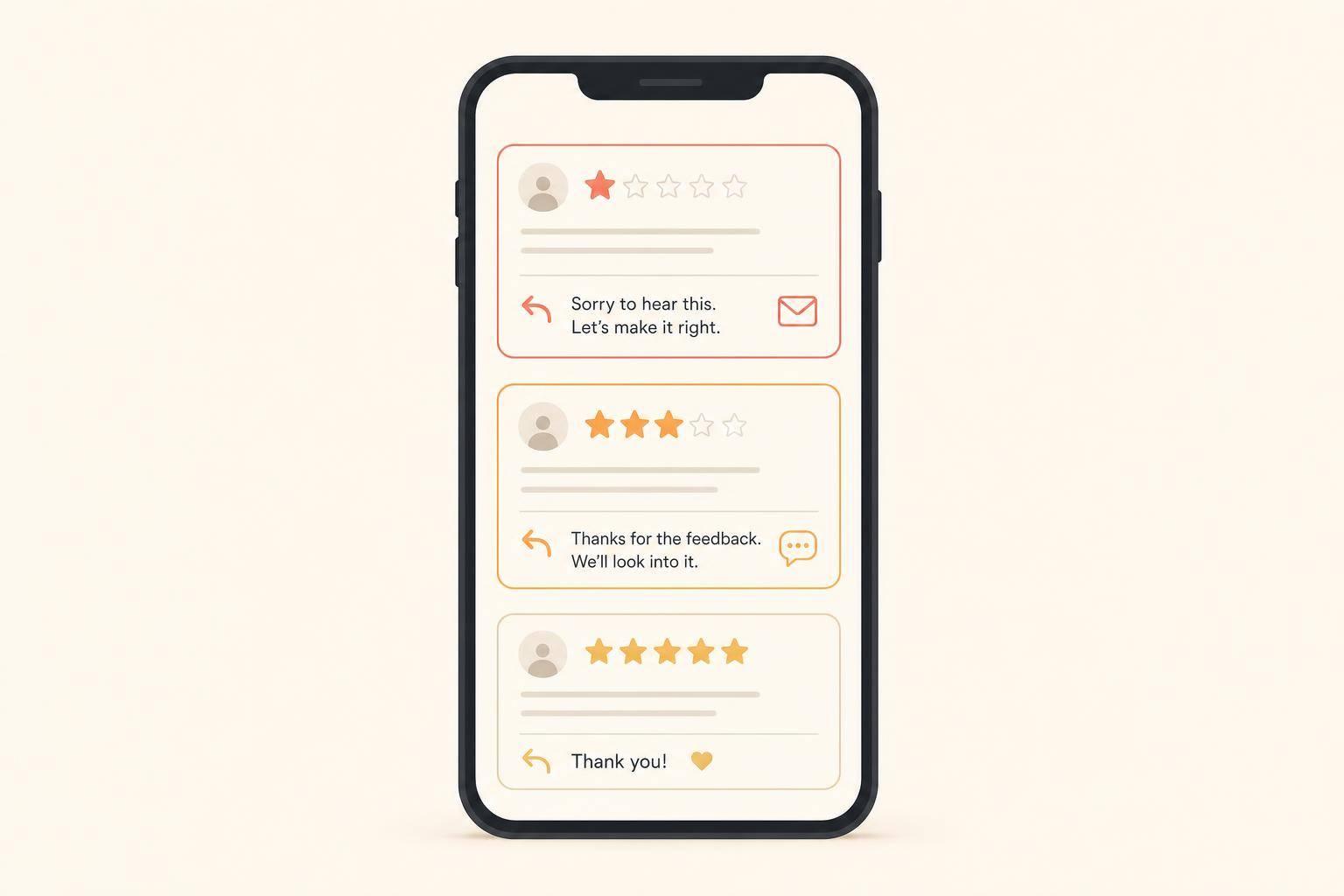
Once reviews start coming in, respond to all of them - not just the negative ones. Businesses that engage with reviews are seen as 1.7 times more trustworthy [20][21]. For positive feedback, thank the customer by name and invite them to return. For negative reviews, respond quickly and professionally: apologize, offer a solution, and provide direct contact details. This approach can help win back 62% of unhappy customers [22][23].
Take Collective Hearts, a jewelry brand, as an example. When a customer left a 1-star review due to poor support, the owner immediately reached out, offered a resolution, and provided direct contact information. The customer updated their review with a higher rating after the issue was resolved [18]. This highlights the importance of prompt and sincere responses - 60% of reviewers expect a reply within two days or less [17].
Beyond reviews, addressing customer inquiries directly can further build trust and show your commitment to engagement.
While managing reviews, don’t overlook the value of the Q&A section. This feature allows you to address common questions, showcasing your expertise and reliability. Start by posting the top 5–10 questions your business frequently receives via phone or email, along with clear and professional answers [24].
Google’s AI Overviews increasingly use this content to generate summaries for local searches, making it an important factor for improving visibility [24].
"Use the Q&A feature proactively by answering common questions before customers ask them."
– Chris Raulf, Founder, Boulder SEO Marketing [24]
Make it a habit to review the Q&A section weekly, responding to new questions promptly. Provide detailed, accurate answers that align with the information on your website’s local pages. This consistent activity not only reassures customers but also signals to Google that your business is active and engaged, which can boost your local search rankings [24].
You don’t need a huge budget to attract local clients. With the right free tools, you can stay organized, make smarter marketing moves, and track what’s actually working - all without overcomplicating your day. These tools work hand-in-hand with the local SEO strategies and profile optimizations mentioned earlier, helping you boost efficiency and results.
When potential customers reach out, staying on top of every conversation, follow-up, and deal is crucial. Humble Help CRM is a free, user-friendly tool built for small business owners to manage leads effectively.
The CRM automatically captures leads from your website and organizes them into a visual pipeline. Considering that 88% of consumers who search for a local business on their mobile device either call or visit within 24 hours [26], responding quickly can make all the difference. By centralizing your lead information, you’ll be ready to act fast when it matters most.
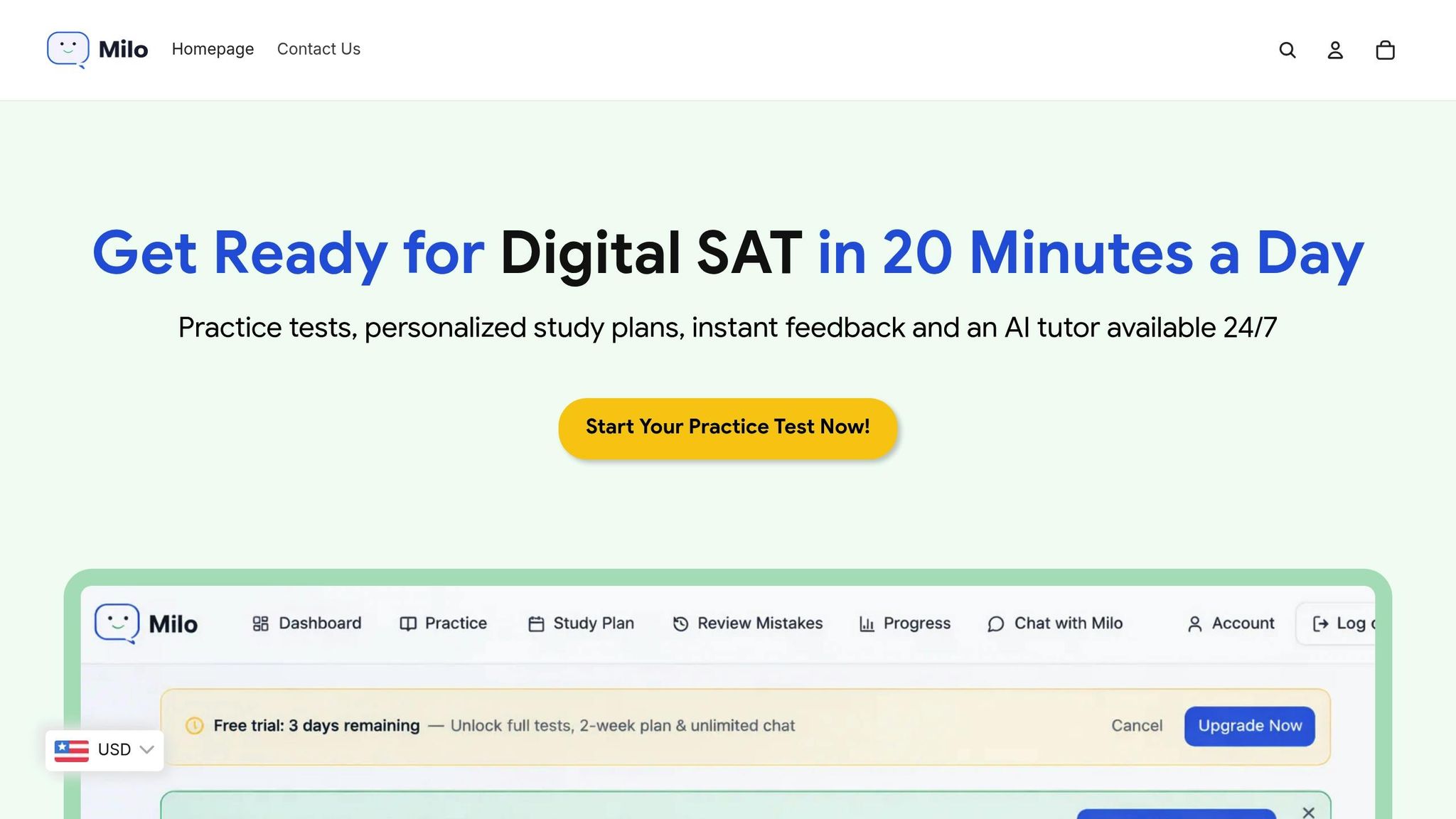
Not sure what to do next? Milo AI Coach offers step-by-step marketing advice tailored to your business. Instead of guessing which strategies might work, Milo analyzes your current setup and provides actionable recommendations - whether it’s fine-tuning your Google Business Profile, improving your website copy, or rethinking your approach to reviews.
"AI handles a lot of tedious tasks so you can focus on getting meaningful work done." – Notion AI [25]
Milo takes the guesswork out of marketing and helps you focus on the changes that will make the biggest difference in your local visibility. While advice is important, keeping tabs on your data is just as critical.
Knowing where your traffic comes from and how visitors interact with your business is key to growth. The free Analytics Dashboard from Humble Help pulls together all your website traffic, visibility stats, and performance data into one easy-to-use interface.
You can track which local searches lead to visits, calls, or direction requests and identify customer behavior trends. This insight helps you refine your local SEO efforts by doubling down on what works and addressing what doesn’t.
Growing your local client base in 2026 is all about consistency and building a system that delivers results over time. Instead of trying to tackle everything at once, focus on creating a strong foundation and refining your efforts as you go. With local search habits constantly changing, relying on data to guide your decisions is more important than ever. Start by claiming your Google Business Profile (GBP), ensuring your NAP (Name, Address, Phone) details are accurate, and targeting local keywords that resonate with your audience. Over time, consistent effort in local SEO will pay off [9][3].
Make it a priority to respond to reviews quickly and keep your profile updated regularly to maintain engagement. Strengthen your presence by building local citations through community directories, such as your local Chamber of Commerce, or by participating in sponsorships. Regular updates and listening to customer feedback will help you maintain momentum.
Leverage free tools like Humble Help CRM, Milo AI Coach, and the Analytics Dashboard to make data-driven decisions. Track your progress by reviewing GBP Insights, monitoring your Map Pack rankings, and measuring real-world conversions, such as phone calls and direction requests.
Keep in mind that local search efforts typically take 4–6 months to show significant results [4]. To stay on track, commit to monthly updates - refresh your content, gather new reviews, and keep your profile active. These ongoing efforts will help you build long-term visibility and trust within your community.
The path to success in 2026 is clear: Stay consistent, engage authentically with your local audience, and maintain a strong, visible presence. Start with one strategy today, build from there, and keep the momentum going.
To get the most out of your Google Business Profile (GBP) and draw in more local clients, start by confirming that your business meets eligibility requirements and is fully verified. This means verifying your physical location or service area and completing Google's verification process.
Make sure every detail on your profile is accurate and complete. Include your business name (without adding unnecessary keywords), address, phone number, operating hours, and website. Select the most relevant primary category for your business, along with a few secondary categories, to help Google better understand what you offer. Write a concise, clear description that highlights your services, the areas you serve, and naturally includes a few important keywords.
Boost your profile by adding high-quality photos and videos that showcase your business, products, or services. Encourage satisfied customers to leave reviews, and make it a habit to respond to all feedback - this helps build trust and credibility. Finally, keep your profile fresh by regularly posting updates, events, or special offers, and ensure your hours and other details are always accurate. Following these steps can increase your visibility and bring in more local traffic.
To boost your local SEO in 2026, start by honing in on local keyword optimization and keeping your Google Business Profile (GBP) up-to-date. Use keywords that tie your services to your city or neighborhood, and weave these into your website’s service pages. Make sure your GBP reflects accurate details like your name, address, and phone number (NAP). Add high-quality photos and post regular updates - Google heavily factors GBP into local rankings.
Next, focus on your website’s technical health. Implement structured data (like the LocalBusiness schema), ensure your site is mobile-friendly, and optimize for fast load times. Publishing content tailored to your community - think blog posts or FAQs that address local topics - can enhance your relevance and even attract backlinks from respected local sources.
Lastly, build trust with customer reviews and directory listings. Encourage satisfied customers to leave detailed reviews on Google, and respond to them promptly. Consistency is key - make sure your business information matches across local directories like Yelp and niche-specific platforms. By staying consistent and visible, you’ll drive more local traffic and set your business up for growth in 2026.
Responding to online reviews is a key part of building trust and keeping your local reputation strong. With about 90% of customers relying on reviews - and many expecting businesses to reply - your responses can make a big impact. Whether you're addressing a complaint or thanking a happy customer, thoughtful replies not only improve your brand's image but can also turn a one-time interaction into long-term loyalty.
To stay on top of reviews, make it a habit to check them daily and respond within 24–48 hours. For positive feedback, express gratitude, highlight something specific they mentioned, and encourage them to return. For instance, you could say, "We're thrilled you loved our friendly service - can't wait to welcome you back!" For negative feedback, acknowledge the issue, apologize sincerely, and offer a way to resolve it. A response like, "We’re sorry to hear about your experience - please contact us directly so we can make things right," shows accountability and a willingness to improve. Keep your tone professional, your replies concise, and avoid turning responses into sales pitches. If further discussion is needed, take it offline but let others know publicly that you're addressing the concern.
Engaging with reviews regularly demonstrates that you value customer feedback and care about their experiences. By personalizing your responses and staying proactive, you can build stronger ties with your community and enhance your business's reputation.
Discover strategies to elevate your business.