Local SEO has become the cornerstone of success for small and local businesses. It’s the difference between consistent lead flow from Google and being invisible in search results. If you’re a business owner juggling day-to-day operations and struggling with marketing, this guide simplifies the complex world of local SEO into actionable steps that can transform your online presence.
This comprehensive guide explores the strategies needed to rank in Google’s coveted top three local map positions, which are responsible for 60-70% of all clicks. Learn how to outsmart your competitors by optimizing your Google Business Profile (GBP), creating the right content, and building trust signals with Google. Whether you’re a plumber, caterer, or offer professional services, these strategies are designed to help small businesses thrive.
Why Local SEO Matters More Than Ever
When potential customers search for services like "plumber near me" or "catering in Boston", Google prominently displays three local business listings in the map pack above organic search results. These aren’t websites - they’re Google Business Profiles. If your business isn’t in this top three, you’re practically invisible.
Key Differences Between Local SEO and Traditional SEO
Focus on Google Business Profiles (GBP): Local SEO prioritizes ranking your GBP rather than just your website.
Relevance, Proximity, and Authority: These are the three core factors Google considers when ranking local businesses.
Customer Intent: Local SEO targets leads ready to buy rather than generic traffic.
By understanding and leveraging these differences, you can position your business to dominate local search results, even in competitive markets.
sbb-itb-edf7477
The Three Pillars of Local SEO Success
Google determines local rankings based on three main factors - proximity, relevance, and authority. Here’s what each one means and how you can build on them:
1. Proximity
How close your business is to the searcher. While this factor is somewhat out of your control, increasing relevance and authority can help you rank even outside your immediate area.
2. Relevance
How well your business matches the searcher’s query. This is where optimizing your GBP categories, services, and website content comes into play.
3. Authority
How trustworthy and legitimate your business appears to Google. Authority is built through online reviews, external links, and community involvement like sponsoring local organizations.
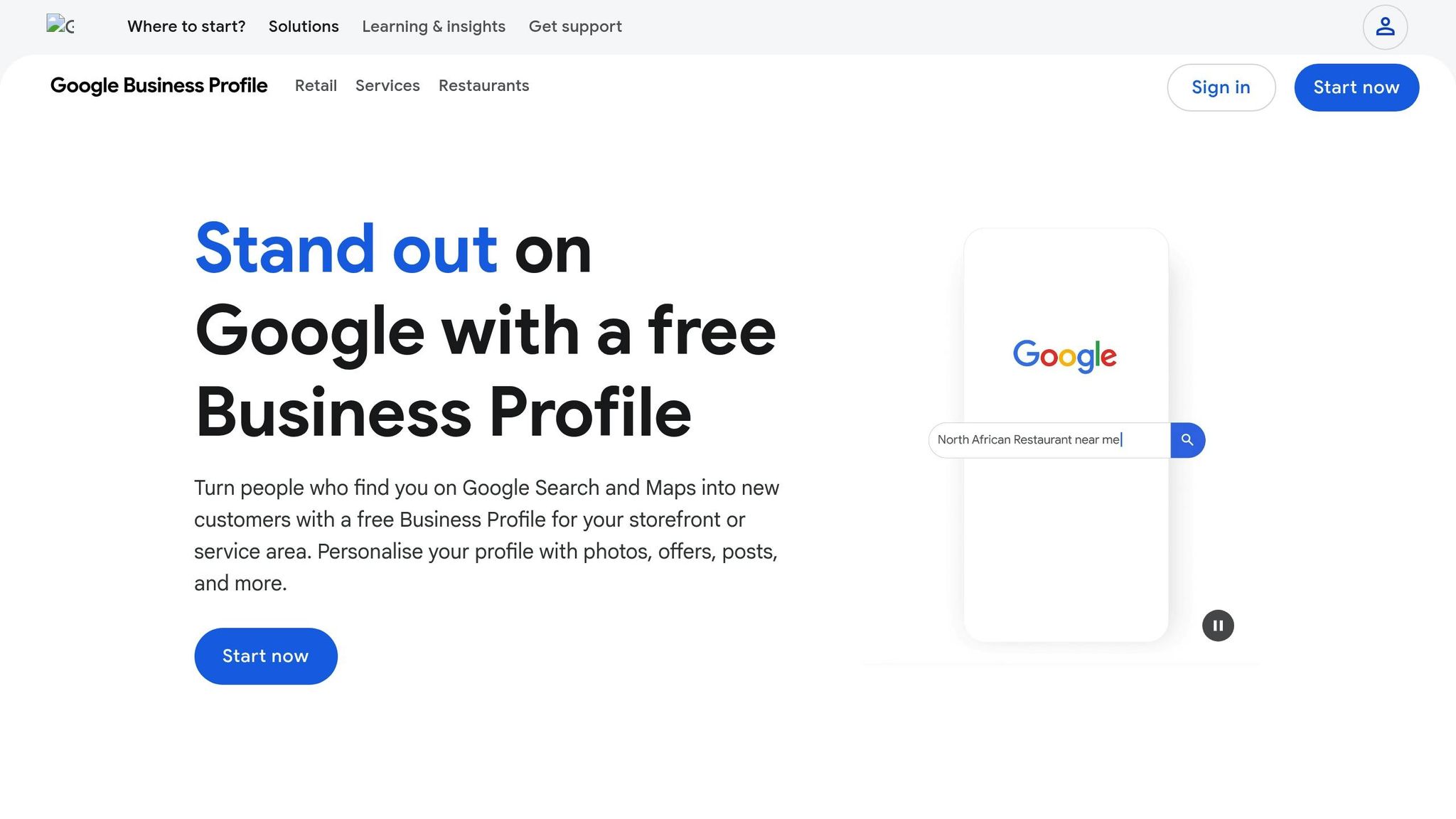
Optimizing your GBP is the first and most critical step in local SEO. Many small businesses overlook this step, leaving significant opportunities untapped.
GBP Optimization Checklist:
Categories: Select 3-10 relevant categories.
Example: If you’re a plumber, include "drainage service" or "septic tank service" in addition to "plumber."
Services: List 20-30 detailed services. Each service acts as a keyword signal to Google.
Example: A plumber might include "water heater repair" or "pipe leak detection."
Photos: Upload at least 20 photos showcasing your business, team, and services. Geotagged images help signal location accuracy.
Attributes: Fully complete sections like hours, payment methods, and unique attributes (e.g., veteran-owned, ADA-compliant).
Business Description: Use all 750 characters to describe what makes your business unique, focusing on keywords relevant to your services and location.
By fully completing your GBP, you send strong trust signals to Google, instantly putting your business ahead of 90% of competitors.
Step 2: Aligning Your Website with Your GBP
Google verifies your GBP against your website to ensure consistency. Mismatched information can harm your local rankings, even if your GBP is well-optimized.
Essential Consistency Signals:
Title Tags and H1 Headers: Include your service (e.g., "Houston Plumber") and city in both.
Google Maps Embed: Add a map of your location to your website’s homepage.
Matching Address and Phone Number: Ensure these exactly match what’s listed on your GBP.
Local Business Schema: Use schema markup to help Google understand your business details.
Think of your website as an extension of your GBP. Every page should support and reinforce the information found on your profile.
Step 3: Creating Content that Builds Relevance and Authority
Content is the backbone of any SEO strategy, but the goal of local SEO content is unique: it’s not about driving generic traffic - it’s about helping your GBP rank higher.
The Core 30 Strategy:
Structure your website around these 30 essential pages:
1 Homepage: Serves as your GBP landing page and includes all core services.
3-4 Category Pages: For broader services (e.g., "Drainage Services" or "Gas Installation").
25-30 Service Pages: Detail each specific service you offer, optimized for local keywords (e.g., "Water Heater Replacement Houston").
Each page should include:
Relevant keywords in the title, headers, and body.
Internal links that mirror your GBP’s structure.
Engaging, well-formatted content enhanced with images and videos.
Step 4: Supporting Content for Topical Relevance
When Google doesn’t fully trust your expertise, it’s time to create supporting content. But forget generic blogs or repetitive city pages. Instead, focus on FAQ-driven pages that target real customer questions.
Finding High-Value Questions:
Use Google’s "People Also Ask" section to identify common queries.
Explore Reddit for localized, real-world customer concerns.
How to Incorporate FAQs:
Add brief answers directly to your core service pages.
Create dedicated pages for in-depth answers, linking them back to your main pages.
Example: A question like "How much does water heater replacement cost?" can link to a detailed guide on pricing factors.
This approach proves your expertise to Google while addressing the exact questions your customers are asking.
Step 5: Expanding Geographically with Location-Based Content
Once Google trusts your expertise, the next step is to expand your visibility across your service area. This is done by creating geographical relevance with location-specific pages.
How to Build Geographical Pages:
Identify areas where you rank in positions 4-6 (just outside the top three).
Write content targeting specific neighborhoods, landmarks, or intersections.
Example: "Plumber near Maple Leaf Gardens, Houston."
Include local details, such as common issues in that area or nearby businesses.
By consistently targeting areas where you’re close to ranking, you’ll gradually expand your coverage zone.
Step 6: Building Authority with External Links
Even with perfect content, you need external links to solidify your credibility with Google. Two types of links are essential for local SEO:
General Authority Links: Links from relevant blogs or websites that validate your content.
Local Trust Links: Links from local organizations, such as chambers of commerce, charities, or youth sports sponsorships.
These links act as votes of confidence from other websites, proving to Google that your business is legitimate and trusted.
Step 7: The Ongoing SEO Loop
SEO isn’t one-and-done. To maintain your rankings:
Run monthly rank maps: Identify where you’re losing visibility and adjust your strategy.
Alternate between topical and geographical content: Use your ranking data to determine whether to focus on expertise or expanding your service area.
Keep your GBP active: Regularly post updates, upload photos, and respond to reviews.
This continuous improvement loop ensures your business stays ahead of competitors and maintains its top-three ranking.
Key Takeaways
Optimize Your GBP: Fully complete every section for maximum trust signals.
Focus on the Core 30: Build a website structure aligned with your GBP categories and services.
Create Supporting Content: Answer FAQs to prove expertise and build topical relevance.
Leverage Geographical Pages: Target specific neighborhoods and landmarks to expand your visibility.
Invest in Links: Build general and local links to increase authority.
Monitor Top 3% Metrics: Use ranking data to decide whether to focus on expertise or geographical expansion.
Stay Active: Regularly update your GBP and website to maintain rankings.
By following these steps, you can transform your local SEO strategy into a reliable lead-generation machine that drives consistent growth for your small business.