Local keyword research is the key to attracting Bay Area customers online. It focuses on understanding how people search for products or services in specific locations, like "coffee shop near Union Square" or "plumber Palo Alto." By combining your services with local terms - like city names, neighborhoods, or landmarks - you can target the right audience and stand out in a competitive market.
Here’s what you need to know:
Quick Tip: Optimize your Google Business Profile (GBP) to capture local traffic. Use GBP insights to identify search terms customers already use to find you.
Start by combining your core service keywords with local modifiers. Think about general terms that describe your business, products, services, or the challenges your customers face. Then, turn these into location-specific terms by including city names (like San Francisco or Oakland), neighborhoods (such as Mission District or Palo Alto), landmarks (Golden Gate Bridge), ZIP codes, or even local nicknames like "SF" that people commonly use.
Google's auto-suggest feature is a quick way to uncover popular local search phrases. The key is to merge your services or products with these geo-modifiers. For example, if you run a retail store, instead of just targeting "fashion boutique" or "gift shop", aim for terms like "fashion boutique Union Square" or "gift shop near Pier 39."
Local keyword research is crucial because it reveals what your potential customers are actually searching for. This allows you to connect with them using terms that are specific to your area. Once you’ve created your initial list of keywords, the next step is to refine and validate them with specialized tools.
Keyword research tools are essential for validating your ideas and expanding your keyword list. They provide valuable insights into search volume, competition, and trends - particularly helpful in regions like the Bay Area, where search behaviors can vary widely.
Your Google Business Profile is another goldmine of information. Check the "Search queries" section to see the exact terms people use to find your business. Google Trends can also provide insights into trending searches and seasonal patterns in your area. Don’t forget to include geographic terms in autocomplete searches and explore comparative phrases like "best", "cheapest", or urgency-driven terms like "open now" or "emergency."
Here’s why this matters: 46% of all Google searches are local, and 88% of mobile users who search for a local business either call or visit within 24 hours. Plus, "near me" searches have skyrocketed by over 900% in just two years [4]. These numbers highlight the importance of optimizing for local search intent.
Once you’ve refined your keyword list, it’s time to analyze your competitors to uncover additional opportunities. Tools like SEMrush, Ahrefs, and Moz can help you identify keywords that competitors rank for but you might have overlooked.
These platforms allow you to see which keywords are driving traffic to competing websites. For example, SEMrush's Domain Overview feature is particularly useful for discovering high-performing keywords in the San Francisco Bay Area. By analyzing your competitors, you can pinpoint untapped opportunities and focus on keywords that offer a chance for quick wins.
"Analyze what keywords successful local competitors rank for using tools like SEMrush or Ahrefs."
Long-tail keywords, while they may have lower search volumes, often lead to higher conversion rates. Comparing your keyword rankings with those of your competitors gives you the data you need to make smarter decisions and stay competitive in your market.
And here’s a compelling stat to keep in mind: about 78% of local searches lead to a purchase [3]. This underscores how vital it is to fine-tune your keyword strategy to capture local search traffic effectively.
Now that you’ve fine-tuned your keyword list and analyzed the competition, it’s time to zero in on Bay Area locations to maximize your local reach.
The Bay Area’s unique mix of geography and neighborhood pride makes hyper-local keywords incredibly effective. Unlike other regions where broad city searches dominate, locals here often search with specific neighborhood names or landmarks in mind. For example, someone in SOMA will likely search differently than someone in the Mission District, even though both are in San Francisco. This neighborhood loyalty gives businesses that target these micro-locations a real edge.
Another factor? The Bay Area’s mobile-first culture. People are constantly on the go, searching for services nearby. Entering terms like “coffee shop near Salesforce Tower” or “yoga studio Castro District” shows they’re ready to act - and businesses that appear in these searches can benefit immediately.
By focusing on hyper-local keywords, you avoid competing for broad terms like “restaurant San Francisco,” which are saturated with competitors. Instead, you can target phrases like “Italian restaurant North Beach” or “sushi near Caltrain station,” reaching customers looking for services exactly where you operate.
To create effective location-based keywords, start by understanding how locals reference Bay Area locations. Pair your core service keywords with geographic modifiers to cover a variety of search patterns.
Here are some common geo-modifiers:
For instance, a marketing agency might use keywords like:
Neighborhood-specific targeting is especially impactful in the Bay Area. Areas like Walnut Creek, San Ramon, Pleasanton, and Castro Valley each have distinct search behaviors, so tailoring your keywords to these micro-locations can help you connect with the right audience.
Don’t overlook commuter keywords, either. Many Bay Area residents live in one city and work in another. Keywords like “dentist near BART station,” “lunch delivery Financial District,” or “dry cleaning commute route” can help you capture searches tied to daily routines.
Here’s a quick guide to structuring location-modified keywords:
| Keyword Type | Example | Target Audience |
|---|---|---|
| Service + City | plumber Oakland | City-wide searches |
| Service + Neighborhood | coffee shop Mission District | Hyper-local searches |
| Service + Landmark | restaurant near Golden Gate Park | Tourists and locals |
| Service + Transit | parking near Caltrain | Commuters |
When listing your business online, always use full, formal names - write “Avenue” instead of “Ave” and include complete ZIP codes, city, and state details. This helps search engines pinpoint your location accurately, boosting your visibility in local searches.
To take your location-based strategy further, tie your keywords to Bay Area events and seasonal patterns. This approach lets you tap into timely search spikes.
For example, major tech conferences like Dreamforce, Apple’s WWDC, and Google I/O bring thousands of visitors to the region. A restaurant near Moscone Center could target phrases like “lunch near Dreamforce” or “quick dinner during WWDC week” to attract this influx of search traffic.
Seasonal trends also play a big role. The Bay Area often experiences activity surges tied to tech events or holiday shopping. Adjusting your keywords during these times can make a noticeable difference.
Cultural events like Outside Lands, Fleet Week, and Pride Month offer additional opportunities. A fitness studio might create campaigns around “workout classes during Pride weekend” or “yoga sessions during Fleet Week” to capture highly engaged local audiences.
Even weather-related keywords can be effective. Instead of generic terms like “winter services,” use phrases tied to local conditions, such as “rainy season repairs” or “fog damage car wash.” A car detailing business might focus on keywords like “salt air car protection” or “foggy weather car cleaning” to connect with Bay Area drivers.
Finally, creating content that highlights local interests can amplify your SEO efforts. Write blog posts about neighborhood events, collaborate with nearby businesses, or reference well-known landmarks. For example, a bakery could publish posts like “best pastries for Giants game tailgating” or “wedding cakes inspired by Bay Area vineyards.” By staying in tune with the community, you’ll stand out against larger, less localized competitors.
When it comes to local SEO, having the right tools can make a world of difference, especially in a competitive market like the Bay Area. With nearly half of all Google searches carrying local intent [5], using effective keyword research tools helps you connect with customers in your area. These tools provide insights that can shape your strategy and help you stand out.
To refine your keyword list and analyze competitors, it’s crucial to pick tools that focus on localized data. Here’s a breakdown of some of the most effective options:
Here’s a quick comparison of these tools:
| Tool | Focus | Key Features | Price Range |
|---|---|---|---|
| Google Keyword Planner | Free baseline research | Search volume, competition data | Free |
| SEMrush | Competitor analysis | Local rank tracking, competitor keywords | $119+/month |
| Ahrefs | Comprehensive SEO data | Keyword difficulty, SERP analysis | $99+/month |
| Moz Local | Local-specific insights | Local directory integration | $99+/month |
| Ubersuggest | Budget-friendly option | User-friendly interface, basic insights | $29+/month |
Additionally, Google’s autocomplete feature is a simple yet effective way to brainstorm keyword ideas. Start typing your service followed by "San Francisco" or another Bay Area location, and Google will suggest commonly searched terms.
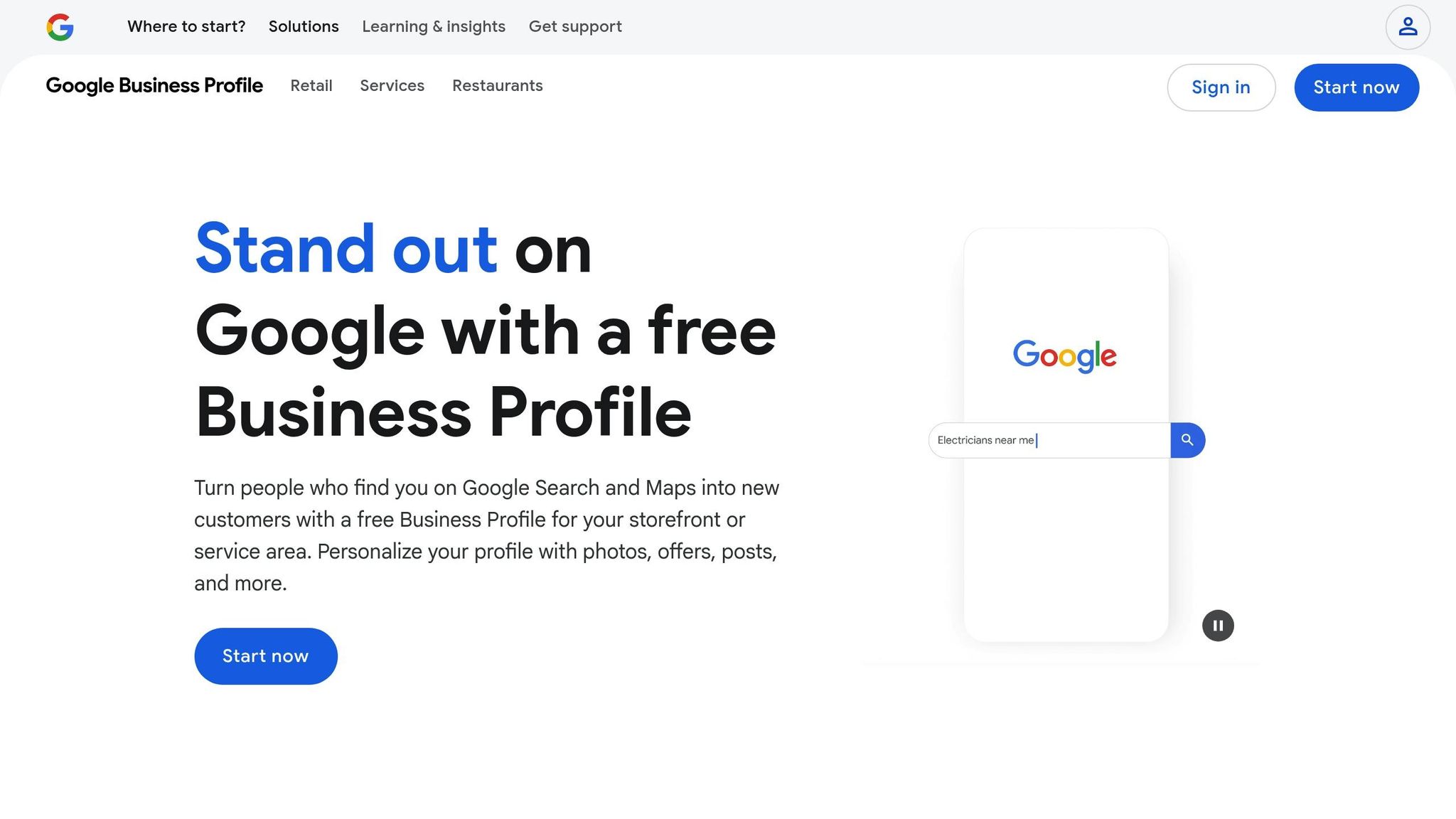
Your Google Business Profile (GBP) is a goldmine for local keyword insights. By reviewing your GBP insights, you can discover high-performing search terms that customers use to find your business. For instance, if people often search for "emergency plumber Palo Alto" to find you, but your website doesn’t emphasize emergency services, you’ve uncovered a valuable keyword opportunity.
Competitor analysis through GBP is another smart move. Check how similar businesses describe their services and note the keywords they use in their business descriptions. Also, look at customer reviews - these often reveal the language people use when talking about services. For example, a Berkeley bakery might notice competitors frequently highlight "artisan bread" or "organic pastries", while a fitness studio could find value in keywords like "classes near BART."
Local directories such as Yelp, Nextdoor, and Facebook groups are also excellent sources for understanding the way your community talks about services. These platforms often provide long-tail keyword ideas that can help refine your strategy.
In 2023, Sterling Sky conducted tests on optimizing content for terms like "near me" and "nearby." They found that while these terms primarily boost organic rankings rather than local pack placements, they can still improve visibility. Interestingly, most "near me" searches happen on desktop rather than mobile devices [1].
For Bay Area businesses looking for specialized local SEO support, Humble Help offers tailored solutions that address the unique challenges of this market. Their expertise in local SEO, including keyword research and Google Business Profile optimization, is backed by a deep understanding of Bay Area neighborhoods, commuter habits, and local competition.
Humble Help provides a free task - such as a website audit, GBP optimization, or a digital PR strategy - so businesses can experience their services before committing. Their all-in-one platform combines AI with human expertise, streamlining local SEO efforts and offering guidance on selecting and implementing keywords.
For businesses just starting out, Humble Help’s Brand Boost Package offers a strong foundation. This includes website optimization, fresh design elements, and content creation that incorporates effective local keywords, helping you improve your visibility in local search results.
Keeping up with local SEO trends is an ongoing effort. With nearly half of all internet searches showing local intent (46%) [9], businesses in the Bay Area must regularly evaluate and adjust their keyword strategies. The secret to staying ahead lies in consistently tracking performance and using data to make informed changes.
To get started, leverage tools like Google Search Console for ranking insights, Google Analytics for user behavior data, and Google Business Profile (GBP) insights for customer actions. For Bay Area businesses, it’s important to focus on hyper-local variations. For instance, "coffee shop Mission District" might outperform broader terms like "coffee shop San Francisco" when it comes to driving traffic.
Google Analytics can help you dig deeper into how users interact with your site. Pay attention to metrics like session duration, bounce rate, and conversion rates to determine whether your keywords are bringing in quality traffic. If high-traffic keywords aren’t converting, it may be time to tweak your content or approach.
GBP insights are another goldmine. They provide data on profile views, customer actions, photo interactions, website clicks, direction requests, and phone calls [2]. This information is essential for identifying which keywords lead to tangible business outcomes.
For more advanced tracking, tools like SEMrush and Ahrefs allow you to monitor local rankings and compare your performance to competitors. Platforms like BrightLocal and Moz Local specialize in tracking location-specific keywords, which is particularly helpful if you’re targeting multiple neighborhoods across the Bay Area [7].
To measure the effectiveness of your keywords in driving inquiries, track the source of new customer interactions. Whether it’s through phone number extensions, contact forms, or surveys, understanding where inquiries originate can help you assess which local search channels are delivering results [2].
Once you’ve established benchmarks, it’s time to adapt your keyword strategy to reflect changing search behaviors. For instance, voice search is on the rise, with 76% of people using it weekly to find local businesses [3]. Including conversational, question-based keywords can help you tap into this growing trend.
Keep an eye on shifts in local search trends by monitoring analytics tools. If you notice that certain terms, like "contactless pickup" or "outdoor dining", are gaining popularity, incorporate them into your content [8]. Staying on top of these trends ensures your strategy remains relevant.
Seasonal and regional factors also play a role in keyword performance. A Bay Area restaurant might see a spike in searches for "patio dining" during warmer months, while a tech company could notice increased interest in "remote work solutions" during specific times. Adjusting your keywords to match these patterns can help you align with current search behavior.
Regular content audits are another essential step. Update outdated information, refresh metadata with newer local keywords, and revise your copy to reflect modern language trends [8]. Staying informed about local algorithm updates and adapting quickly can give you a competitive edge.
Competitor research is a powerful tool for refining your keyword approach. Use platforms like SpyFu, Similarweb, and Ubersuggest to analyze competitors’ keyword strategies and uncover new opportunities.
Take a closer look at their top-ranking pages to understand what’s working for them. For example, if a competitor consistently ranks high for "best brunch Palo Alto", think about how you can create a more detailed or engaging piece on a similar topic [10].
Another tactic is conducting a link gap analysis. This helps you identify high-authority websites linking to your competitors but not to you. Securing backlinks from these sites can improve your rankings and boost your domain authority [10].
Set a schedule - whether monthly or quarterly - to review competitors’ content, new keywords, and ranking changes. This regular check-in allows you to quickly adapt to market shifts and seize new opportunities.
Local keyword research is at the heart of achieving SEO success in the Bay Area. It bridges the gap between businesses and the customers they aim to serve. With the dominance of smartphones and the rise of voice search, mastering local keywords is no longer optional - it's essential in this highly competitive market.
The Bay Area's digital environment requires a more refined approach to local SEO. A notable 67% of searches include location-specific terms beyond just "San Francisco" [2]. This means your keyword strategy has to go beyond general city names. Targeting hyper-local areas, like "coffee shop Mission District" or "plumber Palo Alto", can yield much better results than broader terms.
Your Google Business Profile is a cornerstone for local visibility. Consistency in NAP (Name, Address, Phone) information across platforms directly impacts your rankings. In such a competitive market, long-tail keywords become invaluable. Instead of competing for "restaurant San Francisco", consider phrases like "organic farm-to-table restaurant Castro District" or "gluten-free bakery Fremont." These specific keywords connect you with customers who already know what they’re looking for.
Technical performance is equally important. Aim for mobile load times under 2 seconds, and ensure your site functions seamlessly across all devices [2]. Bay Area consumers expect fast, smooth online experiences, and search engines reward sites that meet these expectations.
These insights highlight the importance of a focused, action-oriented approach.
To put these strategies into action, start by optimizing your Google Business Profile. Add high-quality photos, encourage customer reviews, and respond thoughtfully to all feedback - whether it’s positive or negative [6]. Use tools like Google Keyword Planner or Moz to uncover local search terms relevant to your business, and integrate them naturally into your website content [6].
Create content that speaks directly to specific neighborhoods in the Bay Area. Write blog posts about local events, showcase partnerships with other Bay Area businesses, and consider producing content in languages like Spanish or Chinese to connect with diverse communities [2]. Build local backlinks by collaborating with nearby businesses and listing your business on directories like Yelp and TripAdvisor [6].
For businesses looking for more hands-on support, platforms like Humble Help offer AI-driven marketing solutions tailored for small businesses. Their all-in-one platform covers website design, strategic visibility, and Google-friendly content creation. Success stories, like Amina J., a Bay Area bakery owner, highlight the potential impact of these tools:
"Humble Help's dynamic website doubled my bakery's online orders in just weeks." - Amina J., SMB Biz Owner
Consistency is key to long-term success. Regularly review your keyword performance, keep an eye on your competitors, and adjust your strategy based on seasonal patterns and local trends. Bay Area consumers are particularly review-focused, often reading multiple reviews before making a decision [2]. Maintaining an active online presence and responding to feedback is critical.
Your keyword strategy should grow alongside your business and the Bay Area market. Stay updated on algorithm changes, track performance metrics, and adapt to evolving local trends. This ongoing effort is what will help you thrive in this competitive environment.
To make your business more visible in specific Bay Area neighborhoods, try weaving hyper-local keywords into your website content, meta descriptions, and Google Business Profile. Mention neighborhood names like San Francisco, Oakland, or Berkeley to better align with what local searchers are looking for.
Take it a step further by reflecting the Bay Area's rich diversity. Use language and terms that resonate with specific communities or neighborhoods. You could also develop targeted ads or blog posts that focus on the unique needs and interests of these areas. This strategy not only helps your business show up in local searches but also builds stronger connections with your audience.
To keep tabs on and fine-tune your local keyword strategy, tools like BrightLocal, Semrush, Moz Local, SE Ranking, and Nightwatch can be incredibly helpful. These platforms come packed with features like rank tracking, insights tailored to specific locations, and automated alerts, making it easier to stay updated on shifts in your search rankings.
Using these tools, you can track your performance, spot areas where you can improve, and ensure your local SEO strategy continues to deliver results for your Bay Area business.
In the Bay Area, seasonal trends and local events can play a major role in shaping your keyword strategy. Think about tech conferences, neighborhood festivals, or holiday celebrations - these moments create prime opportunities to tap into periods of high interest with targeted keywords. By weaving event-specific and seasonal terms into your SEO plan, you can boost your visibility and draw in more local customers right when demand is surging.
To capitalize on these trends, tailor your content to reflect what's happening locally. Update your keywords to include event names or seasonal phrases tied to local activities. Not only does this help drive organic traffic, but it also positions your business as a connected and trusted part of the Bay Area community. That connection can make your business even more appealing to people in the area.
Discover strategies to elevate your business.