Your Google Business Profile (GBP) is a free tool that connects your business with customers through Google Search, Maps, and Shopping. With 92% of global searches happening on Google, it's a critical platform for local businesses. Most users find businesses through discovery searches, not by searching specific names. Understanding GBP analytics helps you track customer behavior, improve visibility, and boost growth.
Key takeaways:
Tracking key metrics on your Google Business Profile (GBP) can transform how you approach customer service and growth. Your GBP dashboard offers insights into customer behavior and highlights opportunities to refine your strategy.
Profile views are a great starting point. They show how many people have come across your business listing. This metric gives you a sense of how visible your business is and whether your listing catches attention. A well-crafted, appealing profile can make all the difference in turning viewers into customers.
Search queries shed light on the exact terms people use to find your business. By analyzing these queries, you can better understand how customers talk about your industry and tailor your content to match their language [3].
Customer actions - like website clicks, direction requests, phone calls, messages, and bookings - offer a direct window into customer intent. These actions help you grasp how people engage with your business and where to focus your efforts.
Phone calls and messages are powerful indicators of customer interest, often signaling strong purchase intent. Monitoring these metrics helps you understand customer urgency and their expectations for service.
Call volume tracking is especially useful for identifying peak inquiry times. This allows you to adjust staffing to meet demand. As Ryan Burch, Managing Partner at Tobie Group, explains:
"For our clients, it's almost 100% focused on the number of calls we're able to generate. Our clients stick with us as long as we're able to generate leads via phone calls, so we pay close attention to that." [3]
Message response times are equally crucial. Quick replies build trust and help convert inquiries into sales. Using call tracking tools can also provide insights into where calls are coming from and the quality of leads, giving you the chance to refine your GBP strategy.
By keeping an eye on these communication metrics, you can improve response times, ensure adequate staffing during busy periods, and enhance the overall customer experience.
Metrics like bookings and direction requests are clear indicators of customer intent and can guide how you allocate your resources.
Joey Randazzo, Owner of Portland SEO Growth Partners, highlights the importance of direction requests:
"Local businesses that rely on foot traffic: think about your average florist or marijuana dispensary. They don't really want the phones ringing off the hook. They want people to type in 'best florist in Portland' or 'dispensary near me.' For these businesses, 'direction requests' is the most important metric." [3]
Direction request trends help you prepare for busy times by showing when customers are planning to visit. Similarly, booking patterns - whether for appointments, reservations, or services - provide insights into peak demand periods, helping you plan staffing and inventory. Geographic data from direction requests can also inform local marketing strategies and even pinpoint areas for potential expansion.
Using this information, you can fine-tune your operations - adjusting hours, staffing, and inventory based on when and how customers engage with your business.
Metrics like website clicks and profile interactions show how engaged customers are with your listing and how effectively it drives traffic to your site.
Click-through rates (CTR) measure how well your listing encourages customers to visit your website. For example, GBP listings with photos see 35% more clicks [6], underscoring the impact of strong visuals.
Profile interaction tracking goes a step further, capturing how often customers engage with your listing - whether by viewing photos, clicking links, calling, messaging, or requesting directions. This data helps you assess overall engagement and identify areas for improvement.
Additionally, data on popular times can help you optimize staffing and plan updates or responses for when customer activity is highest. Photo view statistics also provide valuable insights; since 81% of users research a business online before visiting or making a purchase [7], compelling images can play a key role in driving conversions.
Getting to your Google Business Profile (GBP) performance data is straightforward. Here's how to locate and make sense of your customer support metrics.
You can access your GBP insights in three ways: through Google Search, the Google Maps app, or the Business Profile Manager. Keep in mind that detailed performance data is only available for verified profiles[1][10].
To get started, log in to your Business Profile Manager and select either the "Performance" or "Insights" section from the menu on the left.
The dashboard is divided into several useful sections. For example, the "How customers search for your business" section reveals the search terms people used to find you. Meanwhile, the "Where customers view your business on Google" area shows whether users found you via Google Search or Google Maps.
You'll also find a section dedicated to key interactions, such as website clicks, phone calls, direction requests, messages, and bookings[1][10]. Keep in mind that the metrics displayed vary depending on your business type.
| Metric | What It Shows |
|---|---|
| Views | The number of times your Business Profile was seen on Search and Maps[1][10] |
| Searches | The search terms people used to find your business[1][10] |
| Directions | How many people requested directions to your business[1][10] |
| Calls | The number of times customers clicked the call button on your profile[1][10] |
| Website clicks | The number of times users clicked your website link[1][10] |
| Messages | The number of unique message conversations through GBP[1][10] |
| Bookings | How many bookings were completed through your profile[1][10] |
This performance data combines interactions from both organic search results and Google Ads[1][10], giving you a well-rounded view of how your Google presence supports customer engagement.
Interpreting your dashboard data effectively can help you improve your GBP performance and enhance your customer support efforts. Focus on individual metrics, as overall totals can sometimes obscure important details[8].
Pay special attention to the "How people discovered you" section. This insight highlights where your audience is coming from and what search terms they’re using[9]. By tracking these metrics over time, you can spot patterns in customer behavior, such as trends in calls, bookings, messages, or website clicks[9].
For search queries, consider incorporating frequently searched keywords into your website and GBP content to boost visibility and relevance[4]. If your business sees a high volume of messages, ensure someone is consistently available to respond quickly. Similarly, if you notice many calls related to reservations or appointments, adding a booking link to your profile can simplify the process[4].
Make it a habit to review your GBP Insights data weekly or monthly. This regular check-in will help you spot trends, measure progress, and fine-tune your strategies as needed[4]. Additionally, stay informed about updates to how Google calculates and defines metrics to ensure your analysis stays accurate and actionable.
Tap into Google Business Profile (GBP) insights to fine-tune staffing, improve response times, and enhance customer satisfaction by focusing on key metrics. These strategies build on earlier data, helping you streamline operations and elevate your GBP management approach.
Businesses that use GBP data wisely often see impressive results. Research indicates that outstanding customer service can boost revenue by 4-8% above market averages[12]. Even more compelling, customers who receive responses within five minutes are generally more satisfied[12].
Your call and message volume data can be a game-changer for workforce planning. By analyzing peak times when customers contact you, you can align staff schedules to meet demand and cut down on wait times.
The "Popular times" feature offers valuable insights into when your business experiences spikes in phone calls and messages. Use this data to adjust staffing levels accordingly[19]. If you notice consistent patterns, such as a surge in inquiries on Friday afternoons, ensure your team is prepared to handle the load during those times.
Call volume trends, broken down by date and hour, can also guide staffing for seasonal campaigns or promotional events[16]. Meanwhile, managing message volume requires a slightly different strategy. Enable messaging features and set up automated responses for commonly asked questions[13]. According to Marketwake's February 2025 study, businesses that respond to Google Messaging inquiries within 24 hours are 50% more likely to convert leads[13].
Marketwake (February 2025) highlighted, "Fast response times improve customer satisfaction and increase conversions - businesses that reply within 24 hours are 50% more likely to convert leads!"[13]
During high-volume periods, consider offering callback options to reduce hang-ups and improve the customer experience[18]. Track abandon rates by time of day and day of the week to identify predictable peaks and adjust your approach accordingly.
Once your staffing strategy is in place, focus on tailoring your services to meet customer demand. Data on direction requests and booking trends can help you anticipate needs and allocate resources more efficiently.
If you notice a high volume of direction requests, it’s a sign of strong local interest. For example, 88% of people who perform a local search on their smartphone visit a related store within a week[17]. If these requests spike on weekends, prepare for an uptick in foot traffic by scheduling additional staff.
Booking data can provide even more specific insights. Keep an eye on which services or time slots are most popular. If early morning appointments or particular services consistently see high demand, you might consider adjusting your hours or staffing levels to accommodate.
Search query data can also reveal what’s driving the most engagement. For instance, if searches for "emergency repair" or "same-day service" are common, ensure you have enough staff available to handle these urgent requests[2].
Lastly, engage with potential customers by actively monitoring and responding to questions in the Q&A section of your GBP. Frequently asked questions can highlight service gaps or recurring concerns that you can address proactively[14][15].
Optimizing online interactions is another key component of your GBP strategy. Metrics such as website clicks, direction requests, and phone calls provide insights into customer behavior and preferences, helping you refine your engagement tactics.
For example, businesses with photos on their GBP receive 42% more direction requests and 35% more website clicks compared to those without[20]. Regularly updating your photos to showcase current services, staff, and facilities can significantly improve engagement.
Posting weekly updates is another effective way to maintain customer interest[5][15]. Use your interaction data to determine which types of posts resonate most. If special offers generate higher click-through rates than general updates, adjust your content strategy to focus on promotions.
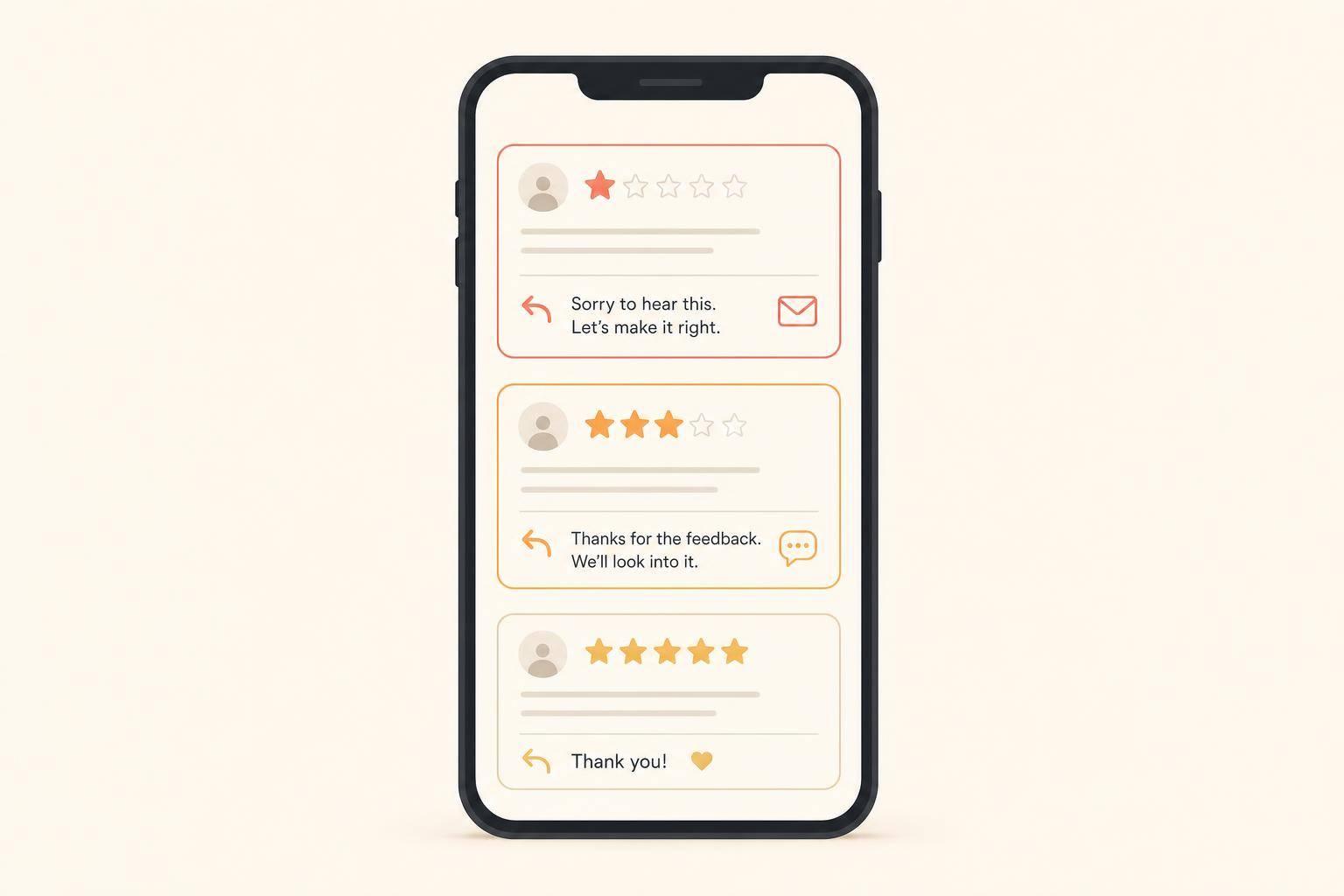
Customer reviews also play a critical role. Monitor and respond to GBP reviews to show your commitment to service and build trust with your audience[14][15]. Reviews are increasingly influential in search rankings, and they offer valuable feedback on your support performance[2].
To streamline responses, consider using branded quick-reply templates for consistent and professional communication, especially during busy times.
Lastly, predictive analytics can help you move from reactive to proactive customer support. By analyzing GBP data trends, you can anticipate customer needs, categorize tickets more effectively, and reduce response times. This approach enhances first-call resolution rates and ensures a smoother overall experience for your customers[11].
Google Business Profile (GBP) offers built-in analytics that provide helpful insights, but for some small businesses, these tools might not cover all their data analysis and management needs. Deciding whether to stick with GBP's native tools or invest in third-party platforms can make a big difference in how effectively you manage and interpret your analytics.
The key distinction between GBP's built-in analytics and third-party platforms lies in their depth and functionality. While GBP Insights and Google Analytics complement each other by mapping out customer journeys, third-party tools take it further with advanced features. The growing relevance of local search is hard to ignore - searches like "near me" or "close by" have surged by over 900% in the last three years [3]. This comparison sheds light on how GBP tools measure up against more comprehensive third-party solutions.
Choosing between GBP's native analytics and third-party platforms often depends on your business's size and specific needs. Here's a breakdown of how these options compare:
| Feature | GBP Native Analytics | Third-Party Platforms (AgencyAnalytics, BrightLocal) | Humble Help |
|---|---|---|---|
| Cost | Free | $49–$199/month | Free Brand Boost Package available |
| Multi-location Management | Individual profiles only | Centralized dashboard for all locations | Advanced centralized management |
| Bulk Editing | Limited manual updates | Simultaneous updates across locations | Streamlined bulk management |
| Review Management | Basic response capabilities | Advanced review monitoring and templates | Comprehensive review strategy |
| Analytics Depth | Basic performance metrics | Aggregated insights and custom reporting | AI-driven insights with expert analysis |
| Automation | Manual posting required | Scheduled posts and automated responses | AI-powered automation with human oversight |
| Integration | Limited to Google ecosystem | CRM and marketing tool connections | All-in-one business management platform |
| Support | Community forums | Dedicated customer support | Expert support with personalized guidance |
Third-party platforms excel in areas where GBP's tools fall short. While GBP provides basic metrics like call and direction data, platforms such as AgencyAnalytics go further with aggregated insights across locations and post-scheduling capabilities [22]. For businesses managing multiple locations, GBP's reporting is essential, but third-party tools simplify reporting with automation and deliver deeper performance insights [21].
Small businesses should consider third-party analytics tools when GBP's native features aren't enough to meet their needs. Knowing what these platforms offer can help you decide which advanced features your business might benefit from.
Managing multiple locations is a common reason to switch to third-party tools. Centralized dashboards and bulk editing can save a significant amount of time, making the investment worthwhile for multi-location businesses.
Review management is another area where third-party platforms shine. While GBP supports basic review responses, third-party tools provide AI-powered features and bulk management options [22], ensuring consistency in your brand's voice across all customer interactions.
If your business depends on CRM systems or needs automated scheduling, third-party tools offer integrated API support and more efficient workflows that outpace GBP's capabilities.
"Google Business Profile listings are a content goldmine for sharing everything from photos to news and even testimonials. They also provide the rare opportunity to share key messages even before customers reach your website." – Valerie Jennings, CEO of Jennings Social Media & MarTech (JSMM) [3]
Other features like customizable widgets, edit tracking, and aggregated star snippets [22] make third-party platforms a strong choice for businesses seeking advanced functionality.
Finally, weigh the time saved against the cost. While GBP's free tools cover the basics, they lack customization, robust technical support, and broader integrations. Paid platforms, on the other hand, offer advanced features, dedicated support, and seamless app integration [23]. For many small businesses, the efficiency gained from automation and enhanced reporting justifies the expense.
If you're planning to grow, expand your marketing efforts, or need more sophisticated analytics as your business evolves, investing in third-party tools early can set you up for long-term success with scalable analytics solutions.
Google Business Profile (GBP) analytics provide small businesses with a valuable way to understand customer behavior and grow their online presence. With over 90% of global searches happening on Google, your GBP serves as a vital connection point for potential customers [24]. The insights gained from GBP data can guide smarter decisions, from staffing schedules to marketing strategies.
Consider this: businesses with complete profiles receive 70% more inquiries [25], while verified businesses average 66 direction requests and 50 phone calls per month [26]. These numbers highlight the real potential to engage with active customers.
By leveraging these metrics, you can make immediate improvements to your operations. Keep an eye on key data points like searches, views, clicks, direction requests, and photo interactions. Use these insights to spot trends in customer behavior and fine-tune your approach. For instance, if you notice a high number of direction requests from a specific area, it might be worth focusing your advertising efforts there. If website clicks are low, consider enhancing your business description or adding special offers to draw attention.
Consistency is key. Respond to reviews within 24–48 hours, upload fresh photos regularly, and ensure your business details are always up to date. Google favors active profiles in local search rankings [24], so staying engaged can improve your visibility.
For businesses managing multiple locations or seeking advanced features, third-party tools can simplify the process with centralized control and automation.
Start today by logging into your GBP dashboard and reviewing your latest performance data. Pick one area to improve - whether it’s faster review responses, better-quality photos, or refining your description. Small, consistent updates can add up over time, boosting both your visibility and customer engagement.
GBP analytics are more than just numbers - they’re actionable insights that can drive real growth. Successful businesses use this data to adapt strategies, maintain an active online presence, and connect with their audience. For additional support, small businesses can turn to tailored services like Humble Help to enhance their online visibility and customer interactions.
To get the best out of Google Business Profile (GBP) analytics, pay attention to key insights like how customers discover your business - whether through search queries or map views - and how they engage with your profile, such as making calls, clicking links, or requesting directions. Regularly reviewing these metrics can help you spot trends, like the times your profile gets the most activity or which posts and photos resonate most with your audience. Use these insights to fine-tune your marketing efforts.
Keep your profile accurate and up to date. This means ensuring your contact details, operating hours, and listed services are always correct. Responding quickly to customer reviews not only builds trust but also encourages more interaction. Take advantage of GBP features like posts, Q&A, and photos to highlight your business and connect with potential customers. By staying active and using the data wisely, you can improve your local presence and strengthen relationships with your customers, ultimately helping your business grow.
When it comes to managing multiple Google Business Profiles (GBPs), third-party tools like BrightLocal bring some serious perks to the table that go beyond what Google’s native tools offer. These platforms deliver extra features like in-depth analytics, better rank tracking, and thorough SEO audits - giving you a clearer picture of your local SEO performance.
On top of that, they make juggling multiple locations a breeze, simplify review tracking, and provide useful insights into your competitors. This means you can sharpen your local SEO strategy and boost your visibility across different areas with less hassle. For small businesses, these tools can be a real time-saver, offering a more streamlined way to handle local marketing tasks efficiently.
To determine the most relevant metrics for your business, start by aligning them with your specific goals and the nature of your industry. For local businesses, metrics like directions requests and click-to-call actions serve as strong indicators of customer engagement and local visibility. On the other hand, if you run a service-based business, monitoring website visits and search views can provide valuable insight into your online reach and presence.
It's also important to ensure that your Google Business Profile's primary category accurately represents your main services. This not only helps prioritize the right metrics but also delivers insights tailored to your business type. Focusing on these elements will give you a better understanding of your performance and areas where you can improve to drive growth.
Discover strategies to elevate your business.