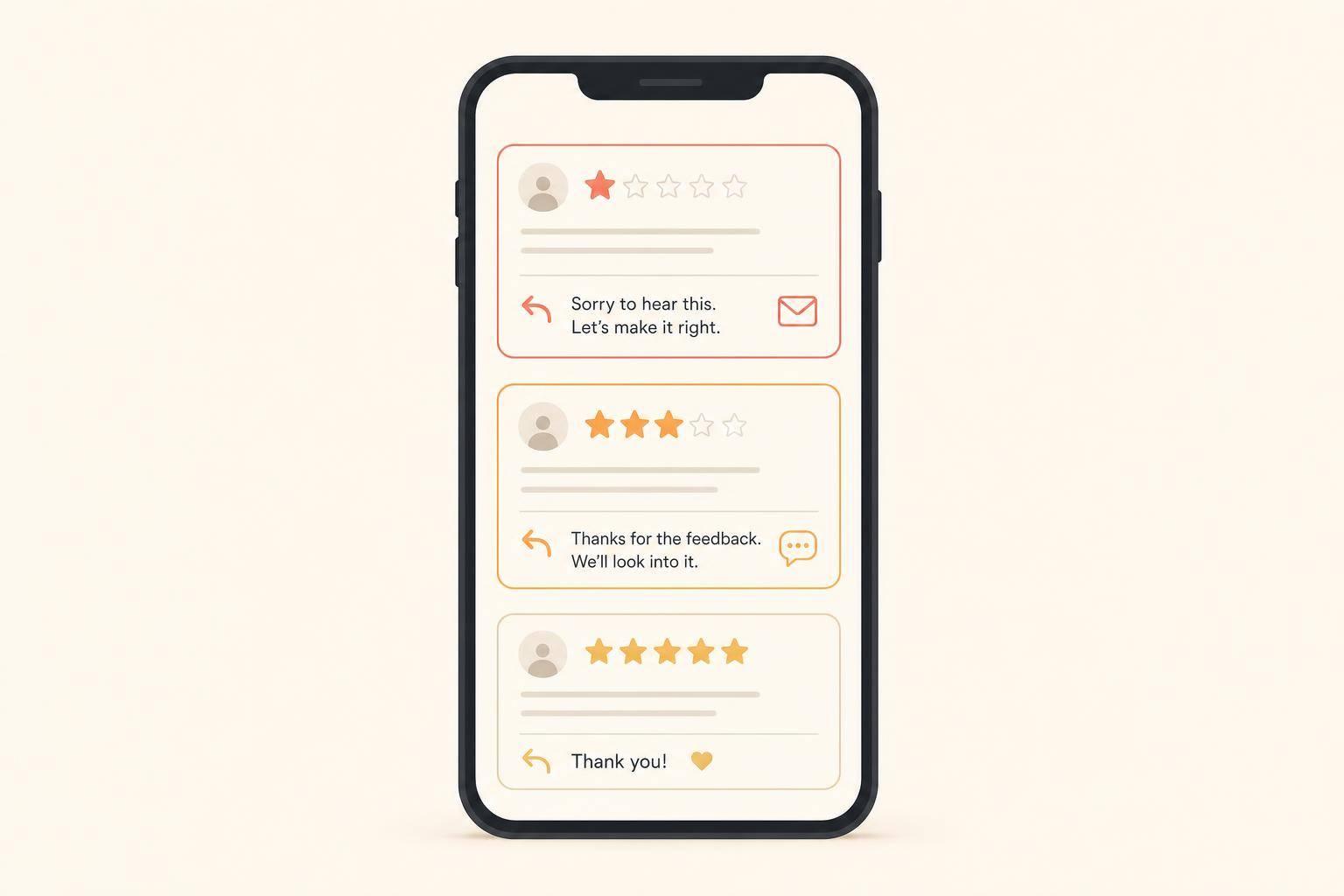
Negative reviews might feel like a setback, but they’re actually a chance to improve your business. Here's why they matter and how to handle them effectively:
Key takeaway: View criticism as an opportunity to grow. By analyzing feedback, responding thoughtfully, and making changes, you can turn challenges into stronger customer relationships and a better business.
Negative reviews can be a mixed bag - some are genuinely insightful, while others are purely emotional. The challenge lies in separating the valuable feedback from the noise.
Think of these reviews as free market research. Customers who share their dissatisfaction are essentially offering you insights at no cost. The trick is learning how to extract meaningful feedback and use it effectively to address specific issues.
As Jeff Bezos, founder of Amazon, aptly put it: "Your brand is what people say about you when you're not in the room." [3] This quote highlights the value of reviews in uncovering real customer experiences and identifying areas for improvement.
The strength of negative feedback lies in its patterns. A single complaint about slow service might be an isolated incident, but if multiple customers mention the same issue within a short period, it points to a larger problem that needs attention.
Each complaint is an opportunity to improve. Start by categorizing negative reviews into themes - common clusters often revolve around delivery delays, customer service interactions, product quality, or pricing concerns. For instance, when The Pet Loss Center (now Fond Memories Pet Cemetery & Crematorium) worked with ARC to analyze customer feedback, they identified specific communication gaps. By addressing these systematically, they improved sensitivity to customer needs from 85.7% to 100% and enhanced general communication skills from 89.9% to 96.8% [4].
Look for recurring keywords like "rude", "slow", or "overpriced", as they often signal deeper issues. Also, pay attention to operational complaints over time - consistent mentions of long wait times or poor customer service indicate areas where operational changes could make a big difference.
Frequency matters, too. Tracking key metrics can help you address problems before they spiral out of control [2].
Once you identify patterns, the next step is distinguishing actionable feedback from unhelpful complaints. The ability to separate constructive criticism from venting ensures your focus remains on areas that can drive meaningful change.
Constructive criticism is designed to help you grow, while toxic complaints often aim to tear down. The difference lies in tone, specificity, and the intent behind the feedback.
| Constructive Feedback | Unhelpful Complaints |
|---|---|
| Identifies specific issues with examples | Makes vague, general accusations |
| Offers suggestions for improvement | Focuses solely on what went wrong |
| Addresses behaviors or processes | Targets individuals with personal attacks |
| Shows empathy, even when frustrated | Expresses anger or spite |
| Highlights solvable problems | Complains about factors beyond your control |
For example, a review saying, "The food was terrible", offers little to work with. On the other hand, a review stating, "My steak was overcooked and arrived 25 minutes after my partner's meal, which ruined our anniversary dinner", provides actionable details you can address.
It’s also important to consider the source. Verified customers who provide context about their experience typically offer more reliable insights than anonymous complaints. Reviews that balance criticism with acknowledgment of what you do well often contain the most valuable feedback.
Even harsh criticism can be constructive if it’s aimed at helping your business improve. Reviews that include specific details like dates, staff names, or product descriptions give you clear starting points for investigation and action.
Keep in mind that 86% of customers are hesitant to buy from companies with negative reviews [3], and a single bad review can deter 22% of potential buyers [3]. By focusing on reviews with actionable insights, you can make meaningful changes that turn dissatisfied customers into loyal advocates.
How you respond to a negative review can be just as impactful as the review itself. A well-thought-out reply not only addresses the issue but also shows your dedication to customer care.
Timing matters. Responding within 24 hours can increase customer advocacy by 16% [6], and nearly half of consumers (45%) say they're more likely to visit a business that actively addresses negative feedback [7]. While it's important to reply quickly, don't sacrifice thoughtfulness for speed.
As Chip Bell, a renowned customer service expert, puts it:
"In the customer's mind the clock starts when he or she posts a negative review, and your reputation drops with every hour you delay providing a response. Bad reviews that remain unanswered signal to other customers you are disinterested. It also fuels the perception that the negative report by an angry customer was probably accurate." [7]
Let’s dive into how you can craft responses that not only address the issue but also build trust.
Make your response personal. Address the reviewer by name and reference specific details from their feedback. This shows you're paying attention and genuinely care about their experience.
Start by acknowledging their feelings and expressing empathy. If your business made a mistake, own it with a simple, honest statement like, "We missed the mark here, and we're sorry" [5]. Customers value sincerity over excuses.
Take, for example, Diamond Advanced Aesthetics, a New York clinic that received a complaint about a glitch in their online booking system. Instead of deflecting blame, they acknowledged the frustration and invited the customer to discuss the issue privately [5]. Similarly, The Massage Centre in London used polite, understanding language in their response, which helped ease the tension and demonstrated their commitment to customer care [5].
A strong response should include three key elements: acknowledgment of the issue, a genuine apology, and a clear plan to address the problem. For instance, if a customer complains about slow service, you might say: "Hi Sarah, thank you for bringing this to our attention. I'm sorry your wait time was longer than expected during your visit on Tuesday. We're reviewing our staffing during peak hours to prevent this from happening again."
Even if a review feels unfair, maintain professionalism. A yoga studio in Washington, DC, handled a complaint about "hidden pricing" by politely sharing a link to their current rates and providing contact details for further discussion [5].
Once you've crafted a thoughtful response, decide whether to address the issue publicly, privately, or both. Often, the best approach is to start with a public acknowledgment and then move the conversation offline for more detailed discussions. This approach shows potential customers that you're attentive, while also giving you the chance to resolve complex issues privately.
Public responses demonstrate your willingness to engage with feedback. As Kuba Rogalski, Community Manager at Brand24, explains:
"Post your response publicly, so that other people that are just bystanders see that you acknowledged the problem and expressed that you're sorry for how the person feels about your business. It shows that you listen to and care for what people think about your business." [8]
However, some situations are better handled privately from the start. For issues involving personal details, technical complexities, or highly emotional concerns, invite the reviewer to continue the discussion offline. Provide clear contact information and suggest convenient times to reach you. For example, Porch, a restaurant in Calgary, Canada, responded to a 3-star review by inviting the customer to email them directly to discuss the issue further [5].
Turning negative reviews into actionable improvements can help prevent recurring issues and create a better experience for your customers. To make this happen, you need a clear approach to analyzing feedback, implementing changes, and keeping everyone informed about your progress.
Customer feedback holds the key to understanding what drives satisfaction and loyalty. But to uncover these insights, you need to dig deeper than surface-level comments.
Start by gathering reviews from platforms like Google, Yelp, Facebook, and any industry-specific websites. Organize this feedback into categories such as service quality, product performance, staff interactions, or pricing concerns. By grouping similar feedback, you can spot patterns that might not stand out when reviews are analyzed individually.
It’s not just about how often something is mentioned. Even a couple of complaints can highlight a serious issue, while a frequently mentioned minor inconvenience might not have as much impact. For example, in 2025, a skincare brand noticed that while customers loved their products' fast absorption and lightweight feel, many negative reviews pointed out the lack of fragrance-free options. This led them to launch a fragrance-free version of their bestseller, which boosted both sales and customer satisfaction [9].
Another example comes from a home appliance company. Their customers praised the durability of their coffee maker, but several reviews mentioned how cleaning the filter was a hassle. By redesigning the filter for easier maintenance, the company saw fewer returns and a spike in positive reviews [9].
To stay ahead of changing trends, consider using automated tools to monitor feedback in real time. This proactive approach helps you adapt as customer preferences evolve.
Once you’ve identified patterns in feedback, it’s time to take action. Companies with clear goals for addressing feedback are 30% more likely to see improvements in customer satisfaction [11].
Break down broad themes into specific issues. For instance, if customers complain about poor service, figure out whether the problem is long wait times, lack of staff knowledge, or communication gaps. Each issue will require a tailored solution, such as hiring more staff, investing in training, or refining processes.
Assign tasks to specific teams and set clear deadlines. If slow checkout times are a common complaint, your operations team might work on streamlining procedures while your IT department upgrades the checkout system. Make sure every team understands the "why" behind these changes - connecting their efforts to customer feedback can help drive commitment.
Keep in mind that 74% of customers are likely to switch brands if the purchasing process feels too complicated [10]. Piloting changes on a smaller scale can help you test the waters, gather insights, and make adjustments before rolling out improvements more broadly.
Effective communication is key when rolling out improvements. Start by informing your team and then update your customers with transparency.
Begin with your employees. They need to understand not just what’s changing, but also why these changes matter. Share the specific customer feedback that inspired the updates. This approach helps employees see the direct link between customer concerns and their work, motivating them to support the changes.
"Employees want to know their concerns and worries have been taken into account and there are strategies in place to navigate the change in a way that considers their needs" [12].
Involving your team in the process can also uncover potential challenges and solutions you might not have considered.
For customers, being open about your changes builds trust. Let them know how their feedback shaped the improvements, and use multiple channels - like email, social media, website updates, or app notifications - to spread the word. Businesses using three or more feedback channels see 20% higher customer response rates [11].
Adding a personal touch can make a big difference. If a specific review led to a major change, reach out to that customer to let them know their input mattered. This kind of acknowledgment can turn a dissatisfied customer into a loyal supporter.
For example, a pet food brand in 2025 discovered that customers valued its grain-free formula for improving pets' digestion. By emphasizing this benefit in its marketing and product listings, the company saw higher click-through and conversion rates [9].
Finally, share measurable results to show customers the impact of their feedback. Whether it’s faster service, easier returns, or other concrete improvements, updating them on the outcomes reinforces that their opinions truly matter.
Turning customer complaints into opportunities can strengthen your brand and attract new business. When you transform a negative experience into a positive one, it shows your dedication to customer satisfaction in a way that even flawless reviews can't. By acting on the changes you make, you can use resolved issues as powerful tools for growth.
After resolving a customer’s issue, consider reaching out and inviting them to update their review. Timing and sincerity are key here. Make sure the customer is genuinely happy with the resolution - studies show that heartfelt apologies can significantly improve customer satisfaction [13].
When reaching out, thank the customer for bringing the issue to your attention and for their patience while it was addressed. Be transparent about the steps you took to resolve the problem. If they’re pleased with the outcome, politely suggest that they update their review to reflect their improved experience. This thoughtful approach builds trust and encourages customers to share their positive turnaround. Remember, 82% of people recommend brands based on exceptional service [14].
Once updated, these reviews can become powerful testimonials, showcasing your willingness to go the extra mile.
Negative reviews that have been resolved can be transformed into success stories that highlight your responsiveness and dedication. These stories can help turn skeptics into supporters [16].
For example, you can create case studies that detail the challenges you overcame for a customer. This adds credibility, especially since many shoppers prefer products with ratings in the 4 to 4.7-star range over those with a perfect 5-star rating [13]. Share these stories across various platforms - email campaigns, social media, or website testimonials - to emphasize your reliability. This is especially important, as 55% of consumers avoid brands they don’t trust [14].
Customer feedback is a goldmine for creating helpful content. Complaints and questions often reveal common pain points or areas of confusion. By analyzing this feedback, you can develop resources like FAQs, how-to guides, blog posts, or video tutorials to address these recurring issues. Not only does this approach help prevent future problems, but it also positions your business as a go-to source for helpful information.
Content inspired by feedback also boosts your online presence. Addressing common concerns can improve your search engine visibility, making it easier for potential customers to find your solutions [16]. Internally, sharing these insights can refine your communication strategies and help build a knowledge base that supports your commitment to customer satisfaction. By doing so, you show that you're not just solving problems - you’re actively working to prevent them in the future [15].
Keeping track of reviews across various platforms can quickly become overwhelming for busy business owners. Thankfully, technology and professional services can make the process far more manageable. With over 99.9% of customers reading reviews before deciding on products or services, having the right tools and support is essential for success [18]. Let’s look at how specialized management platforms can simplify this challenge.
Review management platforms have transformed the way businesses handle their online reputation. These tools centralize reviews, listings, feedback, and social media channels into a single dashboard, making it easier to manage everything in one place [20].
For example:
Many of these platforms now include AI-powered features like sentiment analysis to gauge customer emotions and automated responses to handle initial interactions. For instance, Chatmeter uses AI-driven sentiment analysis tailored for industries like healthcare, finance, retail, and multi-location services [20].
Pricing for these platforms varies, with basic subscriptions starting at $50–$100 per month and enterprise plans offering advanced integrations at higher costs. Some tools even provide free plans with limited features [17].
For small businesses looking for an all-in-one solution, Humble Help integrates review management with broader digital marketing tools. Their platform combines Google Business Profile optimization, local SEO strategies, and AI-driven insights, allowing businesses to manage their online presence seamlessly from one dashboard. Key features include review generation, real-time monitoring, sentiment analysis, automated responses, and analytics. Integration with existing CRM, marketing, and analytics tools ensures smooth operations [17].
While technology simplifies review management, deciding whether to handle it in-house or hire experts is an important choice. Both approaches have their advantages and challenges.
Here’s a comparison:
| Option | Pros | Cons |
|---|---|---|
| In-House Management | Full control, personalized responses, alignment with company culture, long-term skill-building | Time-intensive, requires training, higher fixed costs, challenges in hiring the right talent |
| External Review Services | Specialized expertise, time efficiency, cost savings, scalability | Additional costs, less personalization, potential communication gaps, reduced control |
In-house management allows you to maintain complete control over your brand’s voice and ensure responses reflect your values. However, it demands significant time and resources. With over 50% of customers expecting a response within 7 days, and 1 in 4 expecting one within 3 days, the workload can add up quickly [18].
"Staff typically require 3-6 months to reach full productivity; companies making poor hires can worsen reputation issues meanwhile. Hiring in-house staff is more expensive and risky than a short-term project with a company." - Tim Clarke, Thrive Local's Senior Reputation Manager [21]
On the other hand, professional services offer instant access to expertise and proven strategies. For instance, an emergency services provider in Baytown, TX, partnered with a reputation management firm when they had just five reviews. The agency launched automated email and SMS campaigns, resulting in 238 new positive reviews with an average 4.8-star rating [21].
Financially, outsourcing can be appealing. Nearly 80% of brands using outsourcing report satisfaction, and 63% cite cost savings as a key benefit [22]. While agencies charge ongoing fees, in-house management involves fixed salaries and benefits, which can be more expensive in the long run.
"Hiring an agency allows a company to avoid paying a salary or benefits, lowering the overall overhead costs. It also gives the company more flexibility because hiring staff will have high expenses for months or years. Working with an agency can be short term and just a financial commitment for a fixed period." - Tim Clarke [21]
Scalability is another key factor. External services can quickly adapt to your needs during busy periods or crises, while in-house teams may struggle to keep up. Agencies also provide an objective perspective, which can be invaluable during challenging situations [21].
Ultimately, the choice depends on your business’s size, budget, and goals. Many businesses start by outsourcing to build a strong foundation and later transition to in-house management as they grow.
Negative reviews don't have to spell doom for your business. In fact, when approached with the right mindset, they can be powerful tools for growth, showing customers that you're dedicated to improving and addressing their concerns. Businesses that thrive are those that treat feedback as a chance to learn, respond with care, and strengthen relationships over time.
Rather than reacting defensively, consider every complaint as valuable input from a customer who cared enough to speak up. This shift in perspective turns criticism into an opportunity to improve. By analyzing feedback and acting on it, you create a direct link between customer concerns and meaningful changes.
Responding quickly and with empathy to negative feedback sends a clear message: you care about your customers' experiences and take their concerns seriously [23]. Addressing issues publicly and offering real solutions not only resolves individual complaints but also shows others that your business is committed to doing the right thing.
Take recurring feedback a step further by identifying patterns. For example, if multiple customers mention slow service, unclear policies, or product issues, these are clear areas to tackle. A reported 67% of companies have improved their offerings by actively analyzing negative feedback [23]. By fixing these problems and openly sharing the improvements you’ve made, you demonstrate that criticism leads to action. This not only builds trust but can even turn dissatisfied customers into loyal advocates.
To streamline this process, tools like AI-powered review management platforms can help you monitor feedback across different channels, ensure consistent responses, and track progress over time [24]. Additionally, working with experts such as Humble Help can enhance your reputation management efforts, giving you valuable insights and strategies to maintain credibility.
Interestingly, 95% of consumers grow suspicious when a business has only glowing reviews, suspecting censorship or fake feedback [25]. A few well-managed negative reviews can actually work in your favor, showcasing your authenticity and commitment to improvement.
Ultimately, embracing criticism and acting on it sets customer-focused businesses apart from those that ignore problems and hope they fade away [1]. By treating negative reviews as opportunities, responding thoughtfully, making real changes, and using the right tools, you can turn challenges into growth. It’s not just about protecting your reputation - it’s about building a stronger, more trusted business.
Feedback that truly helps is specific, actionable, and aimed at improvement. It often comes with clear examples or suggestions, making it easier to tackle the issue. For example, a customer pointing out a delayed delivery and recommending improved tracking updates gives you something concrete to work on.
On the flip side, complaints that aren't useful are often vague or overly emotional, offering no direction for resolution. Comments like, "This was terrible", without any further details fall into this category. Prioritize reviews that provide actionable insights - they’re golden opportunities to refine your product or service.
Responding to negative reviews in a thoughtful way can transform a tough situation into a chance to improve. Start by addressing the reviewer by name to add a personal touch. Show that you understand their concerns by acknowledging them, and if it’s appropriate, offer a heartfelt apology. Aim to reply quickly and focus on presenting a clear plan or solution to address the issue.
Keep your tone professional and respectful, even if the feedback feels harsh or unfair. A constructive and sincere response not only helps rebuild trust with the reviewer but also shows other customers that you genuinely care about their opinions and are committed to making things right. Think of it as an opportunity to learn, adapt, and strengthen your business.
Businesses have plenty of options when it comes to reputation management tools. Platforms like Google Alerts, ReviewTrackers, and SentiOne make it easy to keep tabs on online reviews and social media mentions. These tools ensure you're always in the loop when it comes to customer feedback.
Addressing negative reviews promptly and professionally sends a clear message: you care about your customers' experiences and are willing to make things right. On the flip side, glowing reviews can be leveraged to showcase your strengths and build credibility. By combining the right tools with a thoughtful response strategy, businesses can transform feedback into opportunities to grow and enhance customer satisfaction.
Discover strategies to elevate your business.